Window mode follows your eyes with your camera, in this browser only: no picture or position leaves your device.
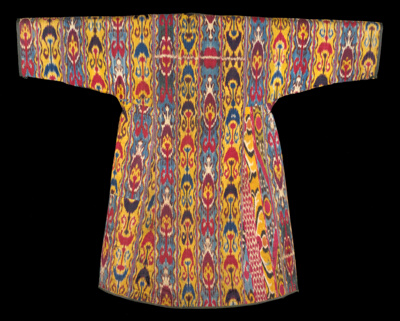
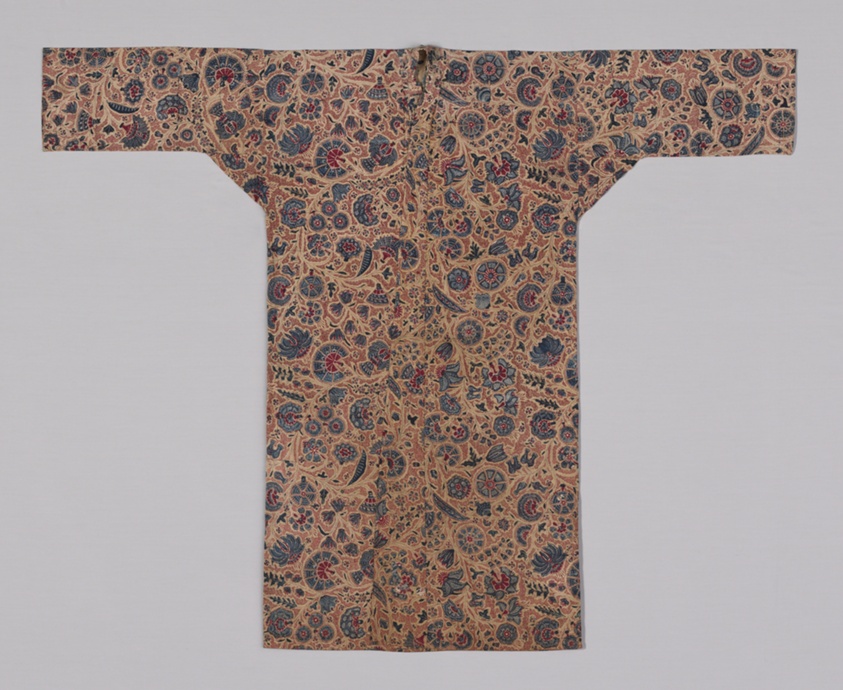
Man's Informal Robe
Made in Coromandel Coast, India, probably for the Indonesian market
Mid-18th century
- Medium
- Cotton, plain weave foundation; painted and resist-dyed
- Classification
- Costume and Accessories
- Dimensions
- 109.2 × 135.6 cm (43 1/4 × 53 1/4 in.)
- Culture
- India
- Museum
- Art Institute of Chicago, Textiles
- Credit line
- Grace R. Smith Textile Endowment
- Rights
- Public domain (CC0), as the museum states it.
- Who can see it
- Tweens profiles and older: its subjects are known and suit older children. How works are placed
View at the Art Institute of Chicago
About this work
This type of robe was called a banyan in 18th-century Europe, but the style was worn around the world. This garment could have belonged to a native of Sumatra, or a Dutch trader living in what is now modern-day Indonesia. Dutch settlers who came to the region with the Dutch East India Company (a global commercial and colonial enterprise founded in 1602 that established a major administrative hub on the island of Java soon after) often adopted regional clothing styles, such as this Indian painted cotton, which may have been manufactured for the Indonesian market.
Description © Art Institute of Chicago, CC BY 4.0