Window mode follows your eyes with your camera, in this browser only: no picture or position leaves your device.
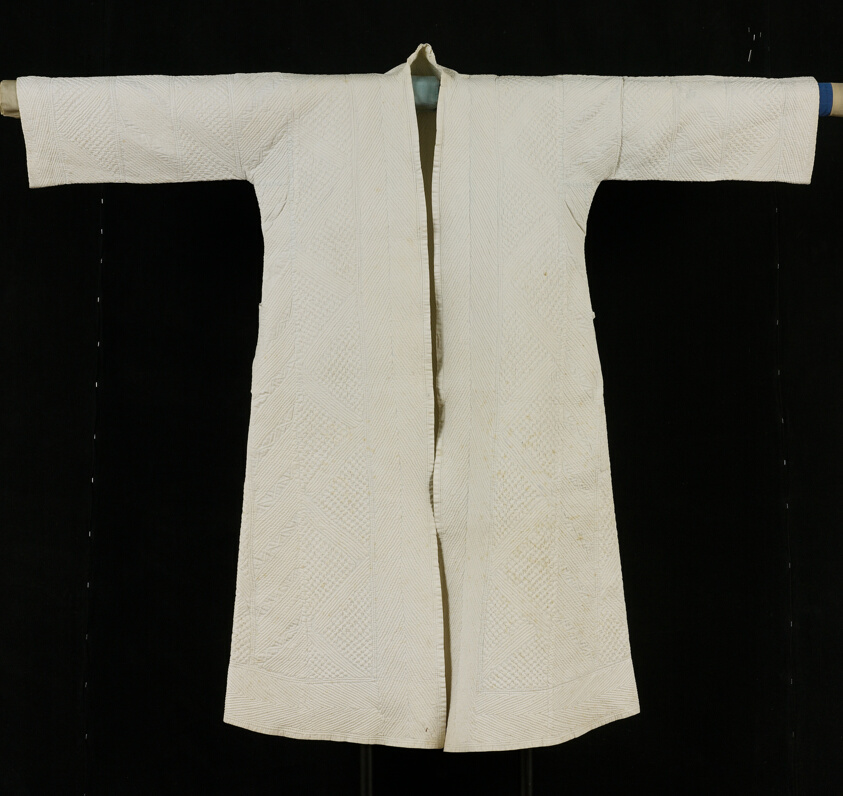
Robe
Ottoman period, 19th century
- Medium
- Cotton, plain weave; quilted with areas of raised padding; pieced
- Classification
- Textile
- Dimensions
- 135.9 × 154.3 cm (53 1/2 × 60 3/4 in.)
- Culture
- Syria
- Museum
- Art Institute of Chicago, Textiles
- Credit line
- Purchased with funds from the James D. Tigerman Estate
- Rights
- Public domain (CC0), as the museum states it.
- Who can see it
- Teens profiles and older: its museum says too little about what it shows to place it for younger viewers. How works are placed
View at the Art Institute of Chicago
About this work
In the 19th century it was popular for Syrian women and girls from wealthy, urban families to wear coats like this after visiting the hammam (public bath), although sometimes they were elegant enough to wear outside in other settings. The layers of cloth joined together with cotton padding in between—a form of quilting—were added to provide warmth and to elevate the decoration. Syria’s location on the Silk Road in earlier centuries made it a major center for trade and production. As a result, it became renowned for high-quality textiles and skilled dyers who were proficient in techniques like ikat, embroidery, and other techniques.
Description © Art Institute of Chicago, CC BY 4.0