Window mode follows your eyes with your camera, in this browser only: no picture or position leaves your device.
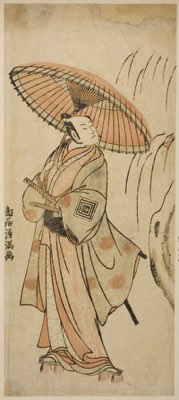
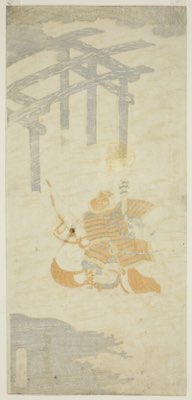
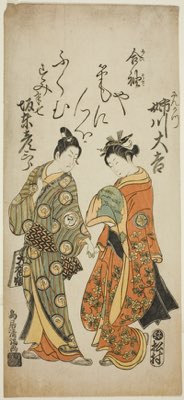
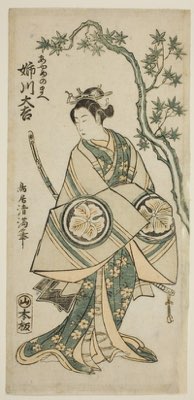
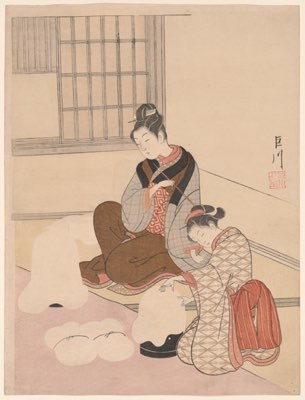
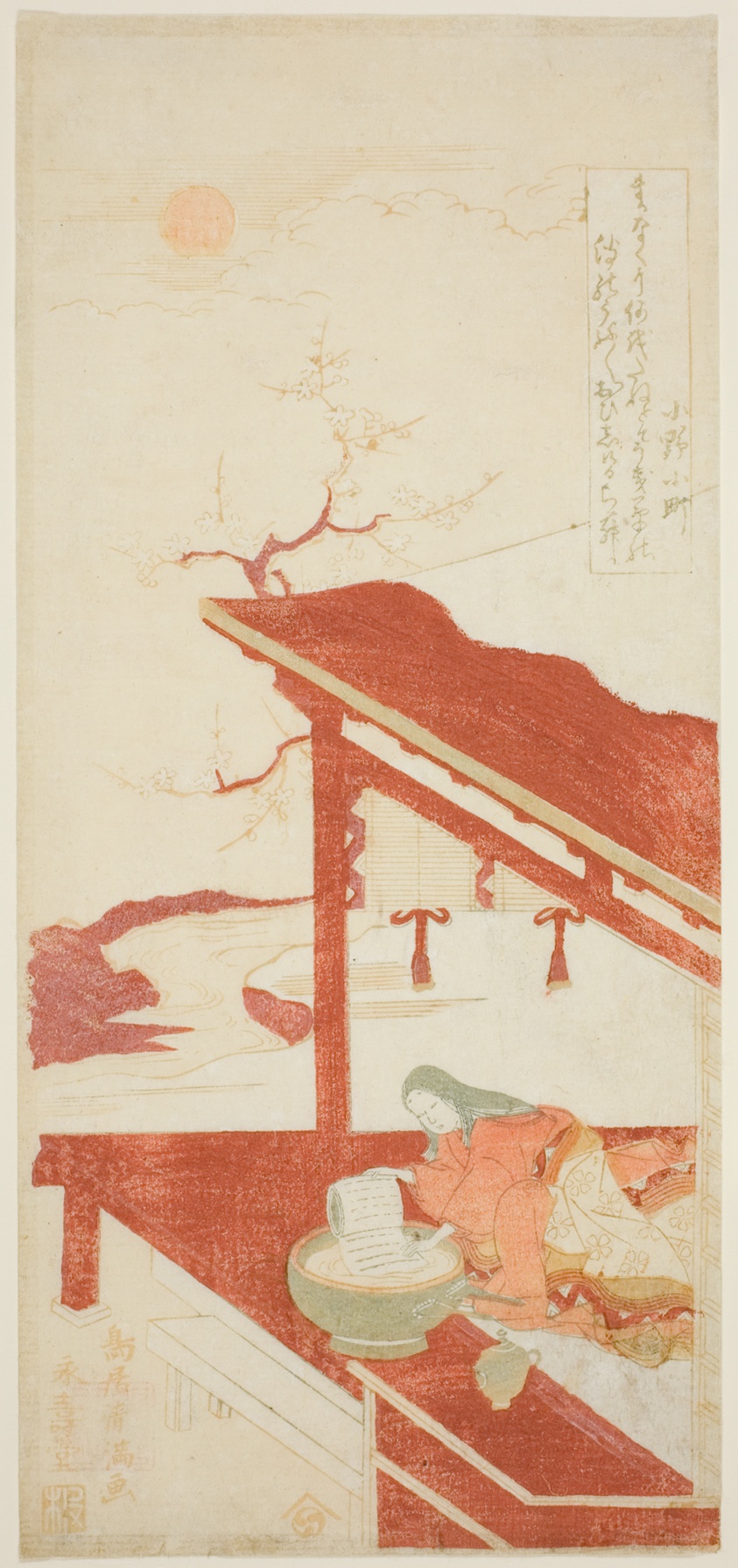
Ono no Komachi Washing the Copybook
Torii Kiyomitsu I (Japanese, 1735-1785)
Edo period (1615–1868), 1764
- Medium
- Color woodblock print; hosoban, mizu-e
- Classification
- Dimensions
- 30.8 × 14 cm (12 1/2 × 5 1/2 in.)
- Culture
- Japan
- Museum
- Art Institute of Chicago, Arts of Asia
- Credit line
- Clarence Buckingham Collection
- Rights
- Public domain (CC0), as the museum states it.
- Who can see it
- Teens profiles and older: its museum says too little about what it shows to place it for younger viewers. How works are placed
View at the Art Institute of Chicago
About this work
This print refers to the story in which poet Ono no Komachi washes a copy of an ancient text in order to disrupt a rival’s efforts to defame her. The work is a color print that does not use black ink for the outlines, also known as a water picture or a mizu-e. Mizu-e were particularly popular in Japan in the 1760s. This print was once in the private collection of architect Frank Lloyd Wright, who sold it to Art Institute benefactor Kate Buckingham in 1915.
The poem in the banner reads: No one sows them— From what seed are they? The floating grasses Flourishing profusely Amid the rippling waves.
(Translated by Felice Fischer)
Description © Art Institute of Chicago, CC BY 4.0