Window mode follows your eyes with your camera, in this browser only: no picture or position leaves your device.
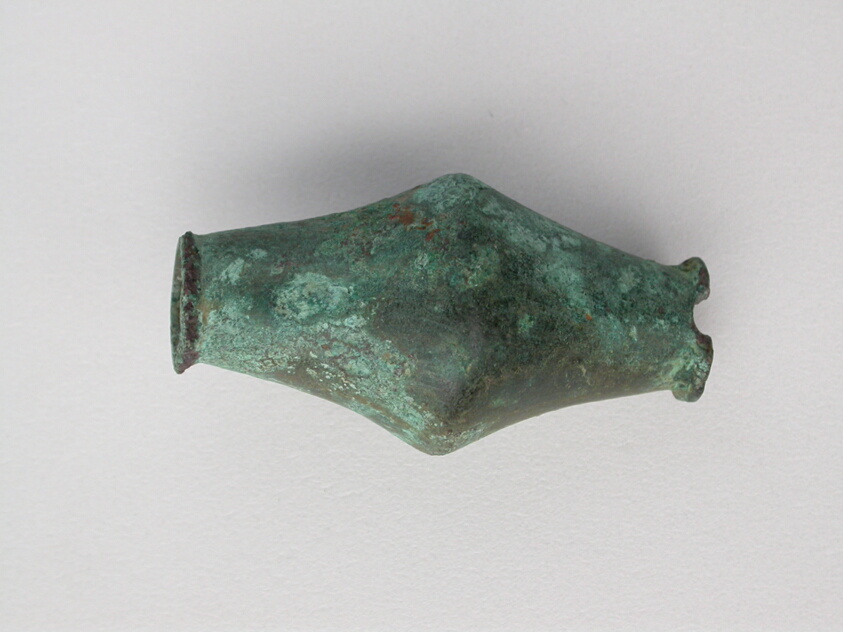
Biconical Bead
Geometric Period (800–600 BCE)
- Medium
- Bronze
- Classification
- Costume and Accessories
- Dimensions
- 3.6 × 5.1 × 3.6 cm (1 3/8 × 2 × 1 3/8 in.)
- Culture
- Greece
- Museum
- Art Institute of Chicago, Arts of Greece, Rome, and Byzantium
- Credit line
- Gift of Mr. and Mrs. Walter Alexander
- Rights
- Public domain (CC0), as the museum states it.
- Who can see it
- Tweens profiles and older: its subjects are known and suit older children. How works are placed
View at the Art Institute of Chicago
About this work
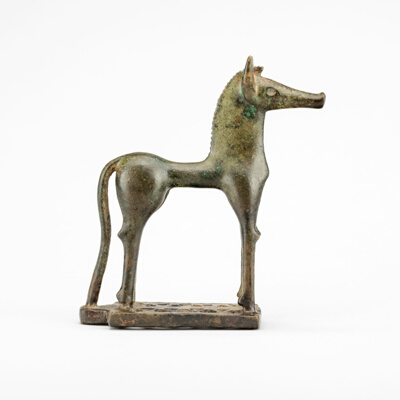
These precious bronzes objects are votives, or devotional gifts, made for gods. They come in many forms. Some are miniature sculptures of animals, mostly depicting horses, deer, and birds. Others are items of personal adornment, including beads and brooches. Quite a few seem once to have been attached to something else. This assemblage is characteristic of the thousands of votives that were hung from sacred trees or placed in sanctuaries around Greece. Once a shrine was full, the votives were gathered together and ceremonially buried to make room for more offerings. This comes from Thessaly in north-eastern Greece.
Description © Art Institute of Chicago, CC BY 4.0