Window mode follows your eyes with your camera, in this browser only: no picture or position leaves your device.
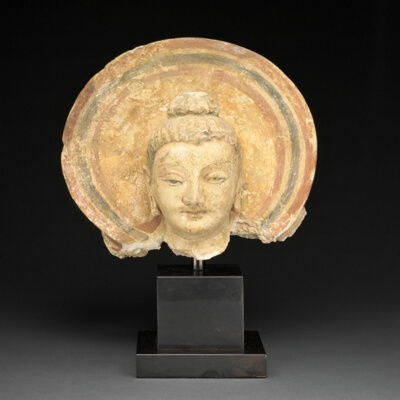
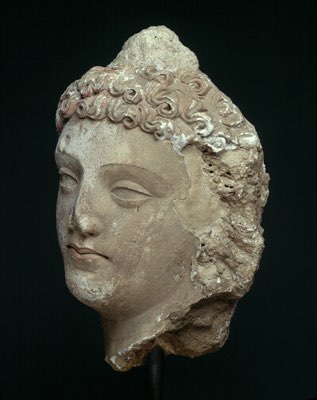
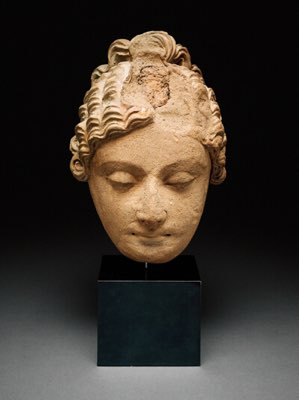
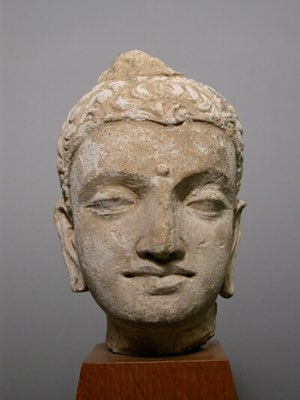
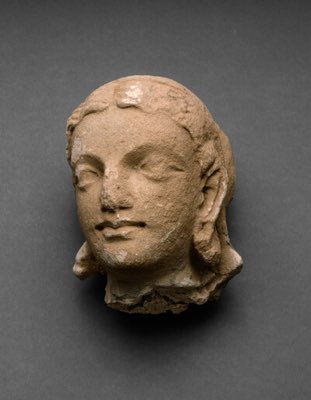
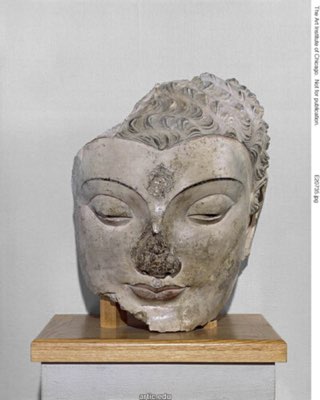
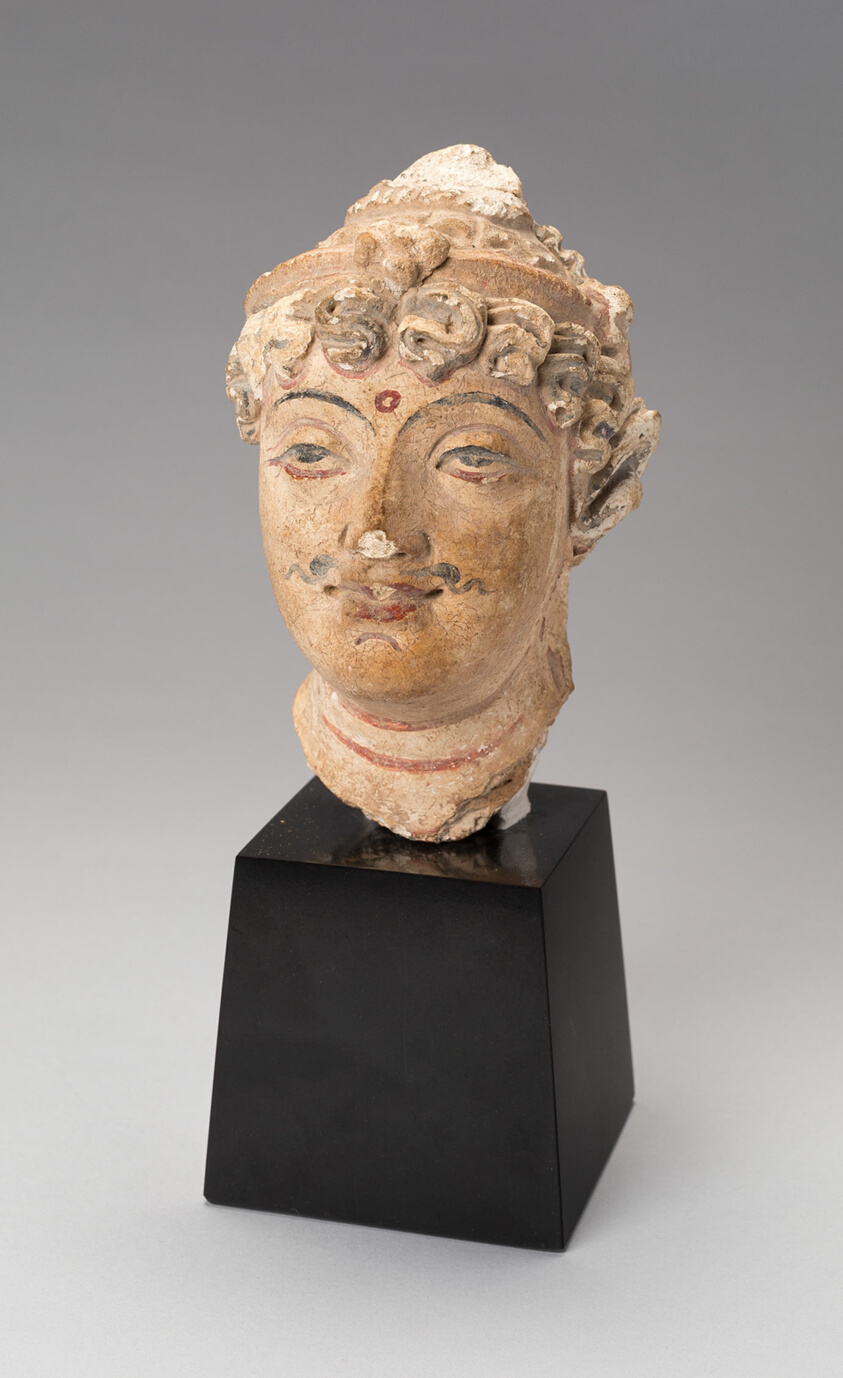
Bodhisattva Head
Afghanistan or Pakistan (Ancient region of Gandhara)
3rd century
- Medium
- stucco with pigment
- Classification
- Sculpture
- Dimensions
- 14 × 8.5 × 10.2 cm (5 1/2 × 3 5/16 × 4 in.)
- Culture
- Gandhara
- Museum
- Art Institute of Chicago, Arts of Asia
- Credit line
- Gift of Marilynn B. Alsdorf
- Rights
- Public domain (CC0), as the museum states it.
- Who can see it
- Tweens profiles and older: its subjects are known and suit older children. How works are placed
View at the Art Institute of Chicago
About this work
This Bodhisattva head comes from the ancient region of Gandhara (present-day Afghanistan and Pakistan), which was located at a key intersection on the trade routes that stretched from the Roman Empire to Han China. For this reason, Gandharan Buddhist art combined details from many different cultures, as seen here. The red circle painted on the Bodhisattva’s forehead represents the tuft of hair (urna) that is one of the 32 marks (laksanas) of a great man in ancient Indian art. The long, curly mustache is borrowed from statues of Parthian royalty from the Iranian plateau. And the naturalistic style, with its realistic details such as dimples at the corners of the mouth and almost three-dimensional curls, recalls Roman Imperial portraiture.
Description © Art Institute of Chicago, CC BY 4.0