Window mode follows your eyes with your camera, in this browser only: no picture or position leaves your device.
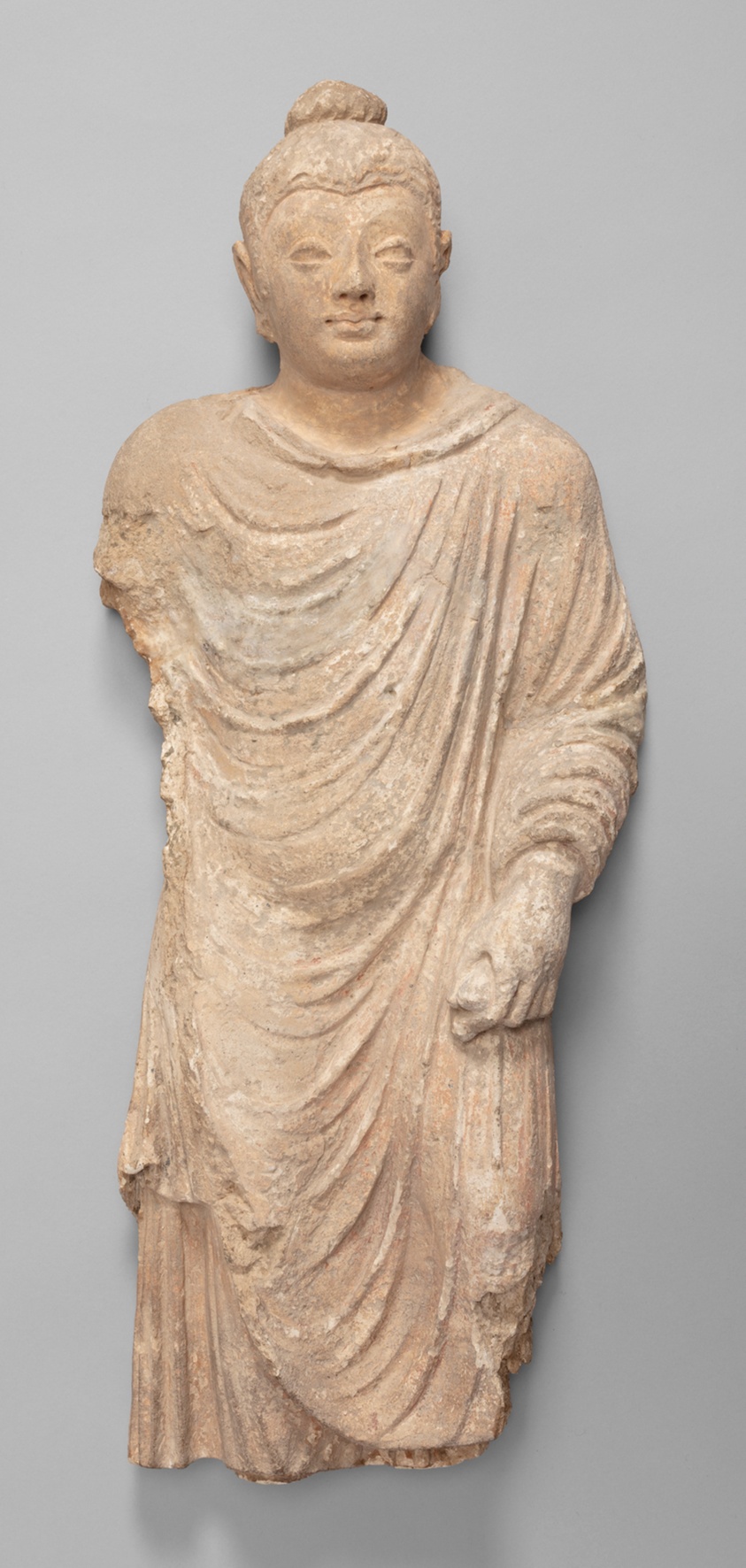
Walking Buddha
Afghanistan or Pakistan (Ancient region of Gandhara)
3rd-5th century
- Medium
- Stucco with traces of pigment
- Classification
- Sculpture
- Dimensions
- 68 × 28.9 × 9.5 cm (26 3/4 × 11 3/8 × 3 3/4 in.)
- Culture
- Gandhara
- Museum
- Art Institute of Chicago, Arts of Asia
- Credit line
- Gift of Marilynn B. Alsdorf
- Rights
- Public domain (CC0), as the museum states it.
- Who can see it
- Tweens profiles and older: its subjects are known and suit older children. How works are placed
View at the Art Institute of Chicago
About this work
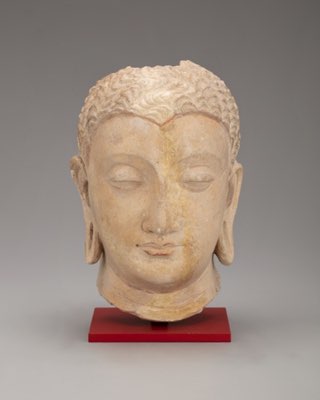
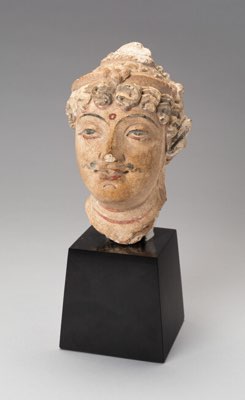
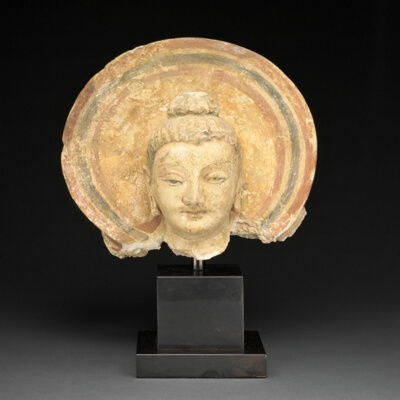
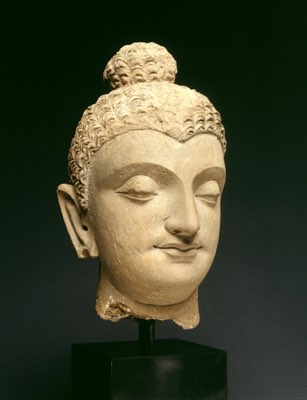
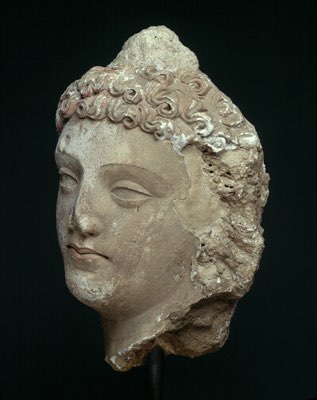
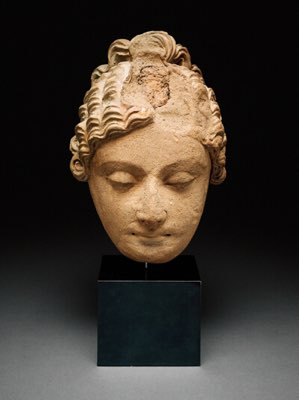
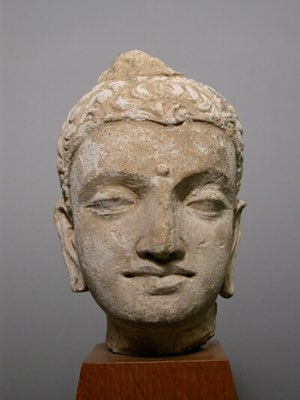
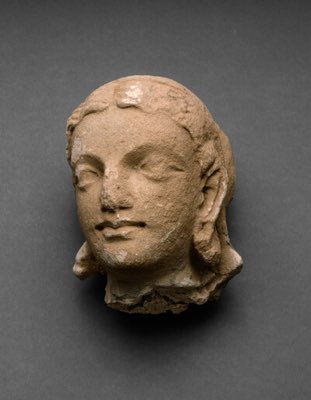
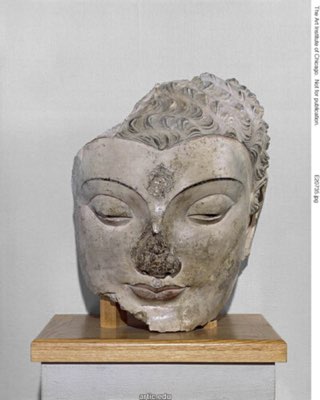
This standing Buddha comes from the ancient region of Gandhara (present-day Afghanistan and Pakistan), known for its unique artistic style combining Greek naturalism with Indian symbolism. Here the artist depicted the Buddha with the traditional bump on his head (ushnisha), a mark of overflowing wisdom. But they also modeled a naturalistic face that evokes the thickset features of a Greek boxer and layered monastic robes (sanghati) that recall a Roman toga. The sculpture was likely attached to a dome-shaped funerary monument (stupa) within a Buddhist monastic complex. Often the weight of the solid stucco head caused it to fall away from the hollow body, which is why this head and body had to be reattached sometime in the 20th century.
Description © Art Institute of Chicago, CC BY 4.0