Window mode follows your eyes with your camera, in this browser only: no picture or position leaves your device.
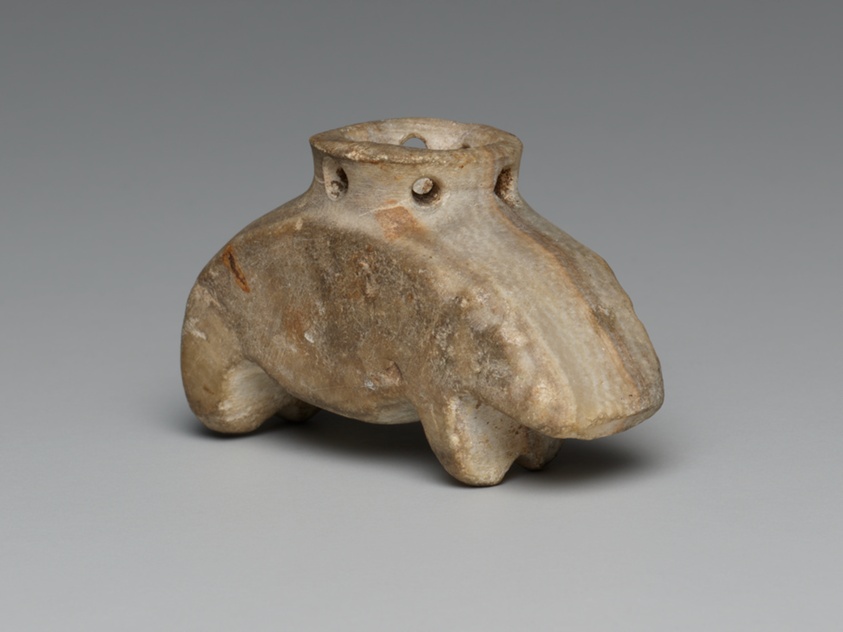
Amulet of a Hippopotamus
Predynastic Period, Naqada II–III (about 3500–3000 BCE)
- Medium
- Limestone
- Classification
- Costume and Accessories
- Dimensions
- 3.8 × 2.3 × 5.8 cm (1 1/2 × 15/16 × 2 5/16 in.)
- Culture
- Egypt
- Museum
- Art Institute of Chicago, Arts of Africa
- Credit line
- Gift of Henry H. Getty, Charles L. Hutchinson, and Norman W. Harris
- Rights
- Public domain (CC0), as the museum states it.
- Who can see it
- Tweens profiles and older: its subjects are known and suit older children. How works are placed
View at the Art Institute of Chicago
About this work
Made around 5000 years ago, this hippopotamus amulet is one of the oldest objects in the Art Institute’s collections. Ancient Egyptians had several terms for small objects like this, which we call “amulets.” Worn by the living and the dead, these charms were meant to bring protection, health, and good luck, ensuring the bearer’s well-being in both life and the afterlife.
This object was made before writing existed in ancient Egypt, so our guesses about its function come from our knowledge about later periods. Ancient Egyptians knew hippopotamuses as aggressive animals and may have worn amulets shaped like them for protection from the dangers they posed. In later periods ancient Egyptians worshipped a goddess, Taweret, whose body took the form of a hippopotamus, as a protector of laboring women and helper during childbirth. Early hippopotamus amulets like this stone example may have had similar ties to the powers that ancient Egyptians later associated with the goddess.
Description © Art Institute of Chicago, CC BY 4.0