Window mode follows your eyes with your camera, in this browser only: no picture or position leaves your device.
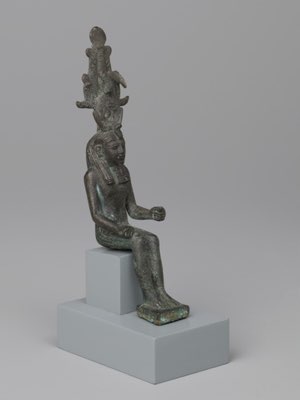
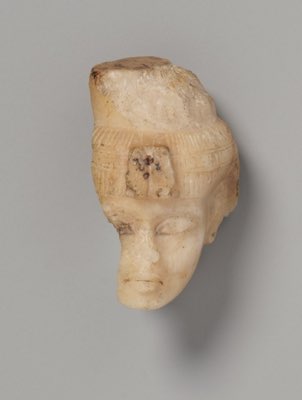
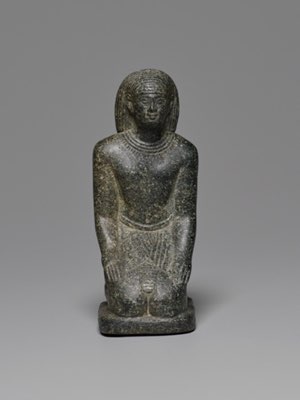
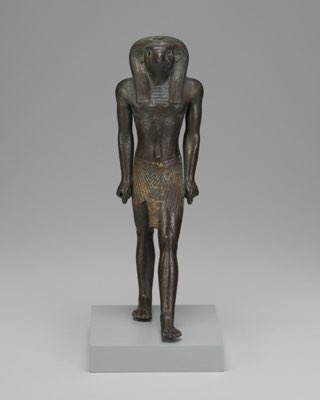
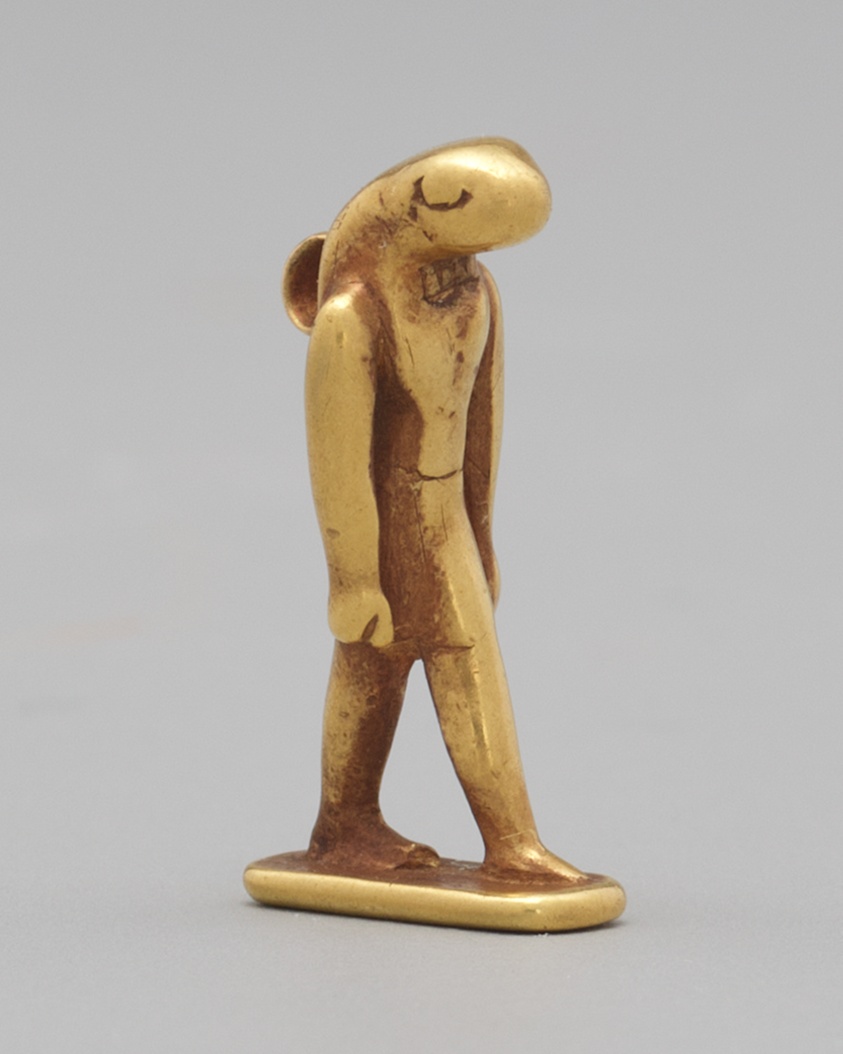
Nehebkau Amulet
Late Period, Dynasty 26–30 (664–332 BCE)
- Medium
- Gold
- Classification
- Costume and Accessories
- Dimensions
- 2 × 1 × 0.8 cm (3/4 × 3/8 × 5/16 in.)
- Culture
- Egypt
- Museum
- Art Institute of Chicago, Arts of Africa
- Credit line
- Gift of Henry H. Getty and Charles L. Hutchinson
- Rights
- Public domain (CC0), as the museum states it.
- Who can see it
- Teens profiles and older: its subject is for older viewers (war, death, the Passion, drink or the like). How works are placed
View at the Art Institute of Chicago
About this work
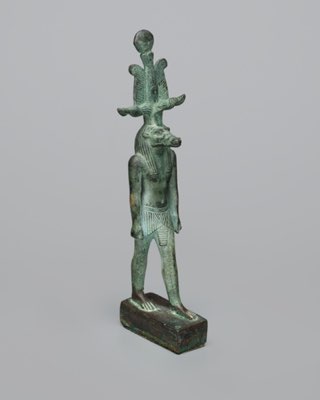
Small-scale Egyptian figurines, known as amulets, were thought to promote health and good luck. Amulets were such an important part of Egyptian religious beliefs that they were worn by both the living and the dead. They could be mounted on rings or strung as bracelets or necklaces and were often placed among a mummy's wrappings to secure the deceased’s rebirth and well-being in the afterlife. Many varieties of amulets survived, including figures of deities, parts of the human (or divine) body, animals, plants, and objects of daily life. Nehebkau, often depicted as a male with a snakehead, was one of the deities who judged the deceased before a council of the gods.
Description © Art Institute of Chicago, CC BY 4.0