Window mode follows your eyes with your camera, in this browser only: no picture or position leaves your device.
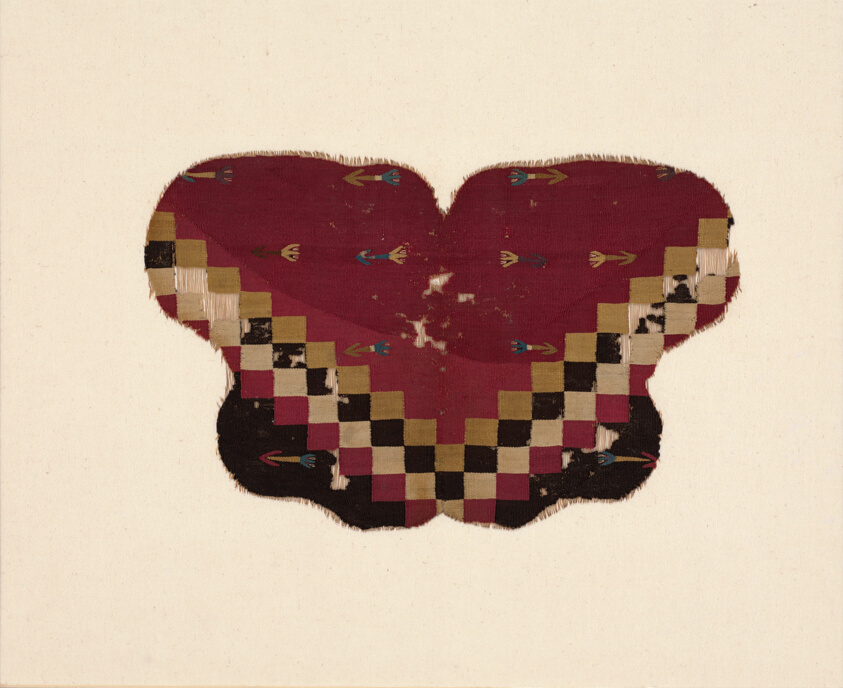
Fragment from the Shoulder of a Tunic (Uncu)
Inca (Inca or Indigenous; Viceroyalty of Peru, likely near Cuzco (now probably Peru, possibly Bolivia))
1550-1625
- Medium
- Cotton and wool (camelid), single interlocking tapestry weave with eccentric wefts
- Classification
- Costume and Accessories
- Dimensions
- 24.8 × 38.7 cm (9 3/4 × 15 1/4 in.)
- Culture
- Peru
- Museum
- Art Institute of Chicago, Textiles
- Credit line
- Bessie Bennett Endowment
- Rights
- Public domain (CC0), as the museum states it.
- Who can see it
- Tweens profiles and older: its subjects are known and suit older children. How works are placed
View at the Art Institute of Chicago
About this work
This textile was cut from the shoulder area of an Inca or Indigenous man’s tunic, called an uncu in Quechua. The maker wove the cantuta flowers in opposite directions so they would remain upright when the garment was worn. The cascades of rectangles that define the yoke were invented during the Spanish Colonial period, possibly reinventing a style from an earlier regional culture that had been conquered by the Incas. The faint line within the red threads is a diagonal break that reveals the cloth was woven in sections—a time-saving approach used after the Inca Empire’s strict rules for creating textiles waned.
This tunic waistband fragment in our collection was also part of the same garment. A third piece of the same tunic is in the collection of The Textile Museum in Washington, DC (91.8).
Description © Art Institute of Chicago, CC BY 4.0