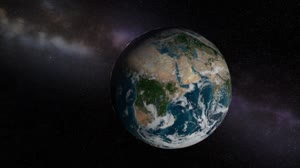
Firefly in Orbit
NASA Goddard Space Flight Center
ScienceSpace
The NASA Image and Video Library did not answer in time. Try again in a moment, or watch on the archive's own page. Open it at the NASA Image and Video Library.
Parts
About
The small satellite, with a big mission, is appropriately named "Firefly." Sponsored by the National Science Foundation (NSF), the pint-sized satellite will study the most powerful natural particle accelerator on Earth - lightning - when it launches from the Marshall Islands aboard an Air Force Falcon 1E rocket vehicle next year. In particular, Firefly will focus on Terrestrial Gamma-ray Flashes (TGFs), a little understood phenomenon first discovered by NASA's Compton Gamma-Ray Observatory in the early 1990s. Although no one knows why, it appears these flashes of gamma rays that were once thought to occur only far out in space near black holes or other high-energy cosmic phenomena are somehow linked to lightning.fly's instruments, Goddard scientist Doug Rowland and his collaborators - Universities Space Research Association in Columbia, Md., Siena College, located near Albany, N.Y., and the Hawk Institute for Space Studies in Pocomoke City, Md. - hope to answer what causes these high-energy flashes. In particular, they want to find out if lightning triggers them or if they trigger lightning. Could they be responsible for some of the high-energy particles in the Van Allen radiation belts, which damage satellites? Firefly is expected to observe up to 50 lightning strokes per day, and about one large TGF every couple days.
- Archive
- NASA Image and Video Library, in NASA
- Licence or status
- NASA media guidelines, as the NASA Image and Video Library states it.
- Credit
- NASA Goddard Space Flight Center
- Language
- English
- Country
- United States
- Subtitles
- English
- Who can watch
- The archive gives no rating. Invisible Network shows it to Tweens profiles and older, judged from its collection and subjects. How films are placed
More from NASA
 Film
Expedition 65 JAXA PAO Event
 Film
GPM Instrument Animations
 Film
An EPIC View of the 2017 Total Solar Eclipse
 Film
Can You Spot Hubble: Long
 Film
Predicting Malaria Outbreaks with NASA Satellites
 Commercial
Launching America On a Commercial Spacecraft on This Week @NASA – June 5, 2020
 Film
NASA joins last of five sections for Space Launch System Rocket stage
 Film
Science Launching on SpaceX's 30th Cargo Resupply Mission to the Space Station
 Film
Jessica Meir Speaks with Physiologist Magazine
 Film
Video File: Launch of NASA’s Next Mars Rover Perseverance Approaches
 Film
Expedition 63 HTV 9 Release
 Film