
Múscraí Singing Tradition of County Cork, Ireland
American Folklife Center
Clips are not offered for this film: the Library of Congress states its rights in its own words, not as a public licence, which leaves reuse unclear.
Parts
About
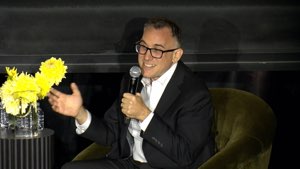
Cormac Ó hAodha is the current Lomax Scholar and Lovelace Fellow at the Kluge Center and comes from Cúil Aodha, which is a village in the Múscraí Gaeltacht of County Cork in Ireland. He is conducting extensive research in the Alan Lomax Collection within the American Folklife Center at the Library of Congress, which includes material Lomax collected some 73 years ago from singers in the Múscraí singing tradition — the same singing tradition that he is a part of. Ó’hAodha discussed his current project, which focuses on the preservation, publication, availability and sharing of intangible Irish creative heritage, specifically of the Irish song tradition of his native Múscraí. His research is aimed at digital discoverability and preservation in a global web environment for scholars and citizens alike leading ultimately to digital return of archival records to the communities from which they were originally collected. As well as being an academic and a researcher, Ó’hAodha is a singer in this tradition and performed several songs during this event. The Botkin Lecture series is part of the ongoing public programming activities at the American Folklife Center, highlighting the fields of folklife, ethnomusicology, oral history and related disciplines, foregrounding its archival holdings, and fulfilling its Congressionally-mandated mission.
Human-made No record of this work says a model made it. What this means.
- Archive
- Library of Congress, in Library of Congress: talks and concerts
- Licence or status
- Rights statement at the Library of Congress, as the Library of Congress states it.
- Credit
- Library of Congress
- Language
- English
- Country
- United States
- Who can watch
- The archive gives no rating. Invisible Network shows it to Tweens profiles and older, judged from its collection and subjects. How films are placed
More from Library of Congress: talks and concerts
 Talk
2024 Literacy Awards Applicant Information Session
 Talk
Disney Storytellers Fund at Howard University Showcase
 Talk
Rhapsody in Blue at 100
 Talk
Copyright Public Modernization Committee Public Meeting
 Talk
Spring 2024 Connecting Communities Digital Initiative Project Celebration
 Talk
Connecting Communities Digital Initiative: 2024 Summer Fuse I
 Talk
Connecting Communities Digital Initiative: 2024 Summer Fuse II
 Talk
FEDLINK 2023 Awards Ceremony
 Talk
2024 Junior Fellows Display Day
 Talk
2024 Junior Fellows Program
 Talk
History of Science Society Conference
 Talk