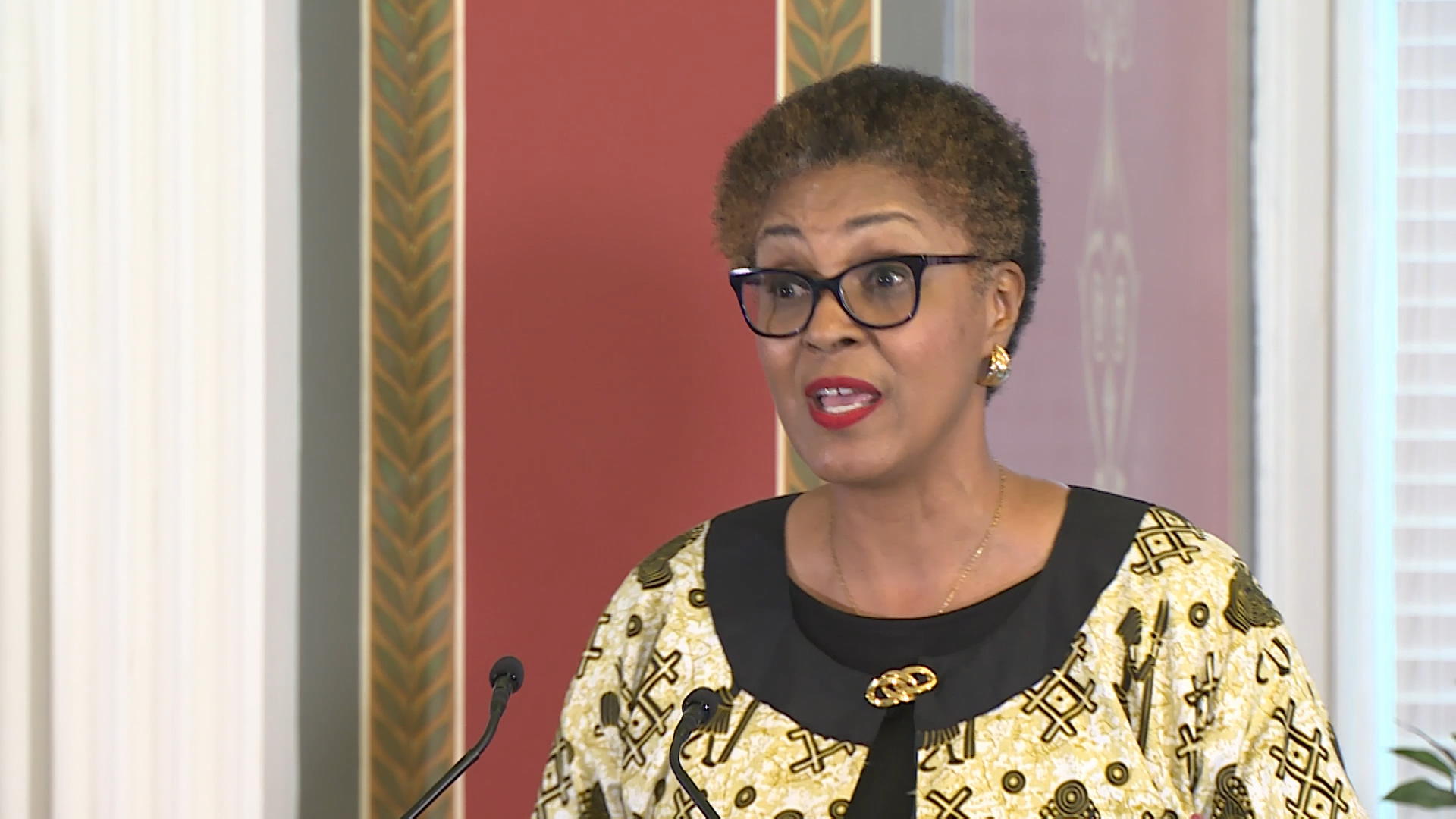
Celebrating the NAACP Records at the Library of Congress
Library Of Congress
Clips are not offered for this film: the Library of Congress states its rights in its own words, not as a public licence, which leaves reuse unclear.
Parts
About
Since 1964 the Library of Congress has served as the home of the historical records of the National Association for the Advancement of Colored People (NAACP). Now totaling approximately four million items, the NAACP records are the largest single collection ever acquired by the Library and ranks annually among the most heavily used by researchers. The NAACP records are the cornerstone of the Library’s unparalleled resources for the study of the 20th-century civil rights movement. The records were among the collections identified by the Library in a multiyear funding request to Congress to support the essential work necessary to make unprocessed special format materials available to the public. Gloria J. Browne-Marshall is a professor of constitutional law at John Jay College of Criminal Justice at the City University of New York (CUNY). As a civil rights attorney she has litigated cases for the Southern Poverty Law Center, Community Legal Services in Philadelphia and the NAACP Legal Defense Fund Inc. Browne-Marshall is the author of many articles, plays, and books, including “She Took Justice: The Black Woman, Law, and Power,” “The Constitution: Major Cases and Conflicts,” and “Race, Law and American Society: 1607 to the Present”. She is a legal commentator who covers the United States Supreme Court and major cases, with appearances on CNN, NPR, BBC, MSNBC, and CBS, and is a recipient of an NAACP Community Service Award.
Human-made No record of this work says a model made it. What this means.
- Archive
- Library of Congress, in Library of Congress: talks and concerts
- Licence or status
- Rights statement at the Library of Congress, as the Library of Congress states it.
- Credit
- Library of Congress
- Language
- English
- Country
- United States
- Who can watch
- The archive gives no rating. Invisible Network shows it to Tweens profiles and older, judged from its collection and subjects. How films are placed
More from Library of Congress: talks and concerts
 Talk
2024 Literacy Awards Applicant Information Session
 Talk
Disney Storytellers Fund at Howard University Showcase
 Talk
Rhapsody in Blue at 100
 Talk
Copyright Public Modernization Committee Public Meeting
 Talk
Spring 2024 Connecting Communities Digital Initiative Project Celebration
 Talk
Connecting Communities Digital Initiative: 2024 Summer Fuse I
 Talk
Connecting Communities Digital Initiative: 2024 Summer Fuse II
 Talk
FEDLINK 2023 Awards Ceremony
 Talk
2024 Junior Fellows Display Day
 Talk
2024 Junior Fellows Program
 Talk
History of Science Society Conference
 Talk