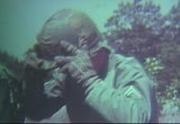
Chemical, Biological, Radiological (CBR) Decontamination Unit
National Archives and Records Administration
Education
Clips are not offered for this film: a public-domain mark that nothing bears out (no year, or a year no US term has left).
Not offered: its uploader or archive marks it public domain, and nothing the site holds bears that out (its record gives no year, or a year from 1978 on, which no US term has left), so where it is free is not known. Unclear is not offered. Open it at the Internet Archive.
Parts
About
National Archives and Records Administration - ARC Identifier 2580550 / Local Identifier 175.47 - Chemical, Biological, Radiological (CBR) Decontamination Unit - Department of Defense. Department of the Army. U.S. Army Materiel Command. U.S. Army Munitions Command. Edgewood Arsenal. (08/01/1962 - 1971). This film warned that decontamination of vehicles and persons were vitally important after a chemical, biological, or radiological attack. After an attack, units should have marked contaminated areas with approved signs indicating the time, date, and agent used. The four methods of decontamination were natural, removing, covering, and destroying. The first method, natural decontamination, was the easiest of all the methods for removing biological and chemical agents. Wind, evaporation, rain, sunlight and aging all decay biological, chemical, and radiactive material from fallout. The second method, removing, had both a wet and dry process. The dry process required brushing, wiping, or scraping CBR agents. The wet process used soapy water and disinfectant to decontaminate CBR agents. The third method, covering, used waste disposal and earth to cover the radioactive material from fallout. The fourth method, destroying, contained three methods of destruction. Super tropic bleach (STB) worked to decontaminate the Center for Disease Control's (CDC's) Agent B and G categories. Decontamination Solution 2 (DS2) decontaminated all known biological agents on rubber, plastic, and metal. It was best used on tactical vehicles and weapons. Burning was used for liquid agents. Radiological agents could not be destroyed through destruction. DVD copied by IASL Master Scanner Timothy Vollmer.
Human-made No record of this work says a model made it. What this means.
More from FedFlix: US government films
 Educational
Fred and the Voice of Food Safety: How to Avoid Food-Borne Illness
 Educational
FDA Approved - The Slide Show
 Educational
True Glory
 Educational
Duck and Cover
 Educational
BATTLE OF MIDWAY
 Educational
Vietnam War
 Educational
Island of Hope, Island of Tears
 Educational
Rural Surveillance
 Educational
China: The Roots of Madness
 Educational
Apartheid in South Africa
 Educational
India - Pakistan Refugees
 Educational