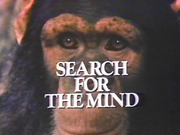
The Discovery of Animal Behaviour: Search for the Mind
John. Sparks, David. Heeley, Donald C. Johanson, British Broadcasting Corporation. Television Service., R.M. Productions., WNET (Television station : New…
Nature
Clips are not offered for this film: no licence or public-domain mark is recorded for it.
Parts
About
6 videocassettes (60 min. each) : 1/2 in (3rd videocassette)
Examines how naturalists, environmentalists and scientists have uncovered the secrets of why animals behave as they do. Presents a unique look at the work of Darwin, Pavlov, Lorenz, Morgan and other famed scientists and how their work improved man's understanding of himself through a knowledge of the social interactions of animals
Narrator, Donald Johanson
1. Natural mysteries (On container: Animals in action) -- 2. In praise of God -- 3. Search for the mind. -- 4. Question of learning -- 5. Signs and signals -- 6. Living together
Producer for BBC, John Sparks ; producer and director for WNET, David Heeley
In 1848, Charles Darwin began the quest to understand the mysteries of the animal mind. Following Darwin's achievement - suggesting a plausible process for evolution: natural selection - Lewis Henry Morgan discovered evidence of cogitation in beavers. George Romanes experimented with fish, cats, and dogs, Douglas Spalding with newborn chicks, all finding apparent mental activity. Meanwhile Jacques Loeb attempted to prove animals "mindless."
Human-made No record of this work says a model made it. What this means.
More from The VHS Vault
 Film
The New Alfred Hitchcock Presents (1985-1989)
 Film
Nickelodeon Animals Friends (2009) VHS
 Film
Amazing Animals
 Documentary
National Geographic—Amazon: Land of the Flooded Forest (1991)
 Documentary
National Geographic—Killer Whales: Wolves of the Sea (1993)
 Film
Baby's First Impressions VHS Collection
 Film
Fourways Farm (VHS Collection)
 Film
Cats
 Documentary
National Geographic—The Grizzlies (1987)
 Film
The Making of a Natural History Film
 Film
1991 VHS • Sing Hoot and Howl with the Sesame Street Animals 60 FPS
 Film