"THE EARS AND HEARING" 1950s EDUCATIONAL FILM SOUND WAVES & HEARING AIDS 59654
EducationIndustrial and advertising
Clips are not offered for this film: an uploader's Creative Commons licence on a work its record does not date to when such licences existed.
Not offered: its uploader states a Creative Commons licence, but that it is the rights holder's is not shown: its record does not date the work from 2002, when the licences were first published, or the work is another's (an older work under a later date, or a video set to another's song), and nothing else the site holds shows where it is free. Unclear is not offered. Open it at the Internet Archive.
Parts
About
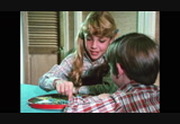
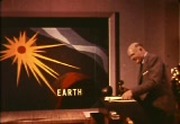
The Ears and Hearing is a 1950 educational film from Encyclopaedia Britannica Films, Inc., produced by Warren P. Everote, that shows how the human ear hears sound, the structure of the ear, how the ear transmits sound waves to the brain, and common causes of hearing impairment. The film opens with a group of people standing and facing in the same direction. A car stops at a railroad crossing. A woman talks on the phone, and a pilot speaks on a radio. A bell rings (01:26), and graphics are used to show how sound waves travel to the ear. Viewers see a man’s ear, then an animated illustration of the ear and ear drum, which shows how the ear bones work. There is footage that gives a magnified look at a person’s middle ear and vibrating ear drum (02:48). An even closer look shows the ear drum and hammer. The middle ear bones sit on a black cloth and are contrasted with the head of an ordinary pin. An illustration depicts the inner ear (04:19). The film shows the anatomy of the cochlea and how different pitch sounds impact different parts of the cochlea. Additional animation is used to show how the auditory nerve sends nerve impulses to the brain, completing the process of hearing (06:03). Images are used to show how things such as ear wax, air pressure in the middle ear, or infections from adenoids can cause hearing impairment. A man wears a hearing aid (09:10), and he adjusts the volume on the tuner. The film ends with a shot of people sitting in a theatre.
The ear is the organ of hearing and, in mammals, balance. In mammals, the ear is usually described as having three parts—the outer ear, the middle ear and the inner ear. The outer ear consists of the pinna and the ear canal. Since the outer ear is the only visible portion of the ear in most animals, the word "ear" often refers to the external part alone.[1] The middle ear includes the tympanic cavity and the three ossicles. The inner ear sits in the bony labyrinth, and contains structures which are key to several senses: the semicircular canals, which enable balance and eye tracking when moving; the utricle and saccule, which enable balance when stationary; and the cochlea, which enables hearing. The ears of vertebrates are placed somewhat symmetrically on either side of the head, an arrangement that aids sound localization.
We encourage viewers to add comments and, especially, to provide additional information about our videos by adding a comment! See something interesting? Tell people what it is and what they can see by writing something for example: "01:00:12:00 -- President Roosevelt is seen meeting with Winston Churchill at the Quebec Conference."
This film is part of the Periscope Film LLC archive, one of the largest historic military, transportation, and aviation stock footage collections in the USA. Entirely film backed, this material is available for licensing in 24p HD, 2k and 4k. For more information visit http://www.PeriscopeFilm.com
Human-made No record of this work says a model made it. What this means.