" DON'T TALK " 1942 WWII INDUSTRIAL SABOTAGE FILM FROM "CRIME DOES NOT PAY" SERIES 27464
CrimeWarIndustrial and advertising
Clips are not offered for this film: the US renewal records do not settle it.
Not offered: what its record states (its uploader's public-domain mark, or a licence not shown to be its rights holder's) leaves its US term to decide, and it is dated 1942; under US law a work of that year is free only on facts the site does not hold for it (its US renewal records, or its own country's term on 1 January 1996 for a work published abroad), and otherwise its US term runs to the end of 2037. Unclear is not offered. Open it at the Internet Archive.
Parts
About
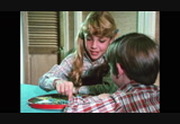
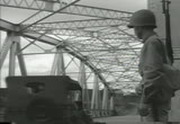
Made in 1942 and nominated for an Academy Award, this MGM short is entitled DON'T TALK. It was part of the so-called "Crime does not Pay" series, and focuses on industrial sabotage during wartime. After a valuable shipment of manganese is blown up at a material plant, the FBI try to find out how information on the manganese shipment was found out. They get a lead on one of the plotters, Beulah Anderson, who as a waitress in a café gets to pick up all kinds of scuttlebutt from the innocent but loose talking clients. Once they figure out how she is sending the information she gathers, the FBI sets a trap. The moral of the story is: Don't Talk!
MGM's Crime Does Not Pay series got started in an interesting way. After the Production Code ax fell most gangster pictures were no longer viable. The same thing happened to horror films, for other reasons. Warner Bros. took the lead by making a crime film. In this new type of film, former Public Enemy James Cagney played one of J. Edgar Hoover's "G-Men" and hunted down gangsters, while still behaving a bit like a gangster himself, at least in terms of swagger and style. MGM caught the lawman-hero bandwagon by inaugurating Crime Does Not Pay, an anti-crime, pro- good citizen series that would serve as sort of a consumer guide to warn middle America against the evils springing up around them.
0:37-0:44: Introduction to the "Crime Does Not Pay" series by the MGM crime reporter.
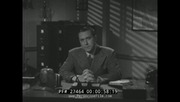
0:47-1:02: Introduction of Mr. Jack Sampson, Special Agent in Charge of a field office of the FBI, discussing the unprecedented production efforts and defense against enemy agents.
1:09-1:17: Description of a case starting on November 29, 1941, involving a large industrial plant and a shipment of federal manganese.
1:39-1:53: Discussion about the sabotage attempt and the partial destruction of the manganese shipment.
2:03-2:14: Mr. Sampson and Mr. Harmon discuss the secret nature of the manganese shipment and the need to interview five dependable men.
2:19-2:39: Investigation into the possible leak of information at local bars and cafes.
2:42-2:54: Authorities suspect sabotage at the Harmon factory plant.
3:24-3:34: A saboteur describes planting a charge in the storage bins and the FBI's presence at the plant.
4:15-4:30: Discussion about continuing the sabotage work with caution.
4:34-5:08: Introduction of Beulah Anderson, a waitress at the Elite Cafe, as a key lead in the investigation.
Human-made No record of this work says a model made it. What this means.