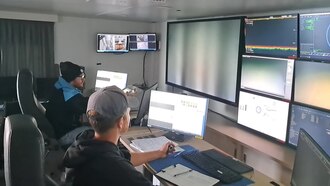
Campagne scientifique LANGOLF-TV 2026 - Procédure de mise à l'eau, pilotage du traîneau et lecture des vidéos (Ifremer 01055-116705 - 475069)
Damien Delaunay (IFREMER, Laboratoire Ecologie et Modèles pour l'Halieutique - Rue de l'Ile d'Yeu - BP 211) Damien Delaunay (IFREMER, Laboratoire Ecologie et…
Education
Make a clip
CC BY 4.0 · Damien Delaunay (IFREMER, Laboratoire Ecologie et Modèles pour l'Halieutique - Rue de l'Ile d'Yeu - BP 211) Damien Delaunay (IFREMER, Laboratoire Ecologie et Modèles pour l'Halieutique - Rue de l'Ile d'Yeu - BP 211)
Up to 60 seconds, at most the picture size of the copy it is cut from. The clip carries the title, the credit, the licence and a link back here. It is made in this browser, and nothing is sent to this site.
Or send the moment itself: https://invisiblenetwork.ai/watch/archive/commons/202894545?play=1&t=0
Parts
About
During the LANGOLF-TV scientific campaign, a video sled is deployed from the oceanographic vessel Tom Crean to acquire high-definition images of the seabed along a straight transect at 183 stations distributed across the entire Grande Vasière mudflat in the Bay of Biscay. The primary objective of the mission is to count Norway lobster (Nephrops norvegicus) burrows in order to estimate their abundance and provide the necessary data for the ICES Working Group on Natural Resources and Fisheries (WGNEPH) to develop recommendations for monitoring Norway lobster stocks in the Bay of Biscay. The images also allow for the description of benthic megafauna, the presence of macro-debris, and trawl marks. Finally, environmental parameters are recorded at each station.
Human-made No record of this work says a model made it. What this means.
More from Wikimedia Commons
 Educational
Lehren Wikipedia im Klassenzimmer
 Educational
Humphreys Education Center RAI (986628)
 Educational
Career & Technical Education Fair and Parent University Radio Interview (996372)
 Educational
Radio Around the Region- UMGC education programs through Vandal Training Center (988169)
 Educational
Content Translation Screencast (English)
 Educational
National Technical Honor Society Career & Technical Education Fair (997367)
 Educational
DoDEA Student Educational Exchange and Dialogue Event (952333)
 Educational
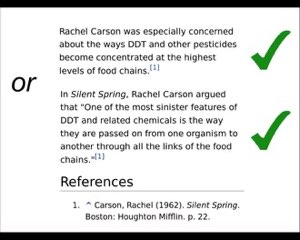
Plagiarism tutorial
 Educational
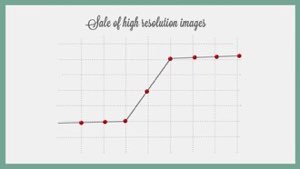
Open Data - explained in a nutshell
 Educational
Share Your Knowledge 1 Why glamwiki
 Educational
Anna Koval talks about the Wikipedia Education Program pilot at the Second Chance Schools in Corfu
 Educational