Mosselkwekerijen in de Oosterschelde Weeknummer, 79-41 - Open Beelden - 27189
Nederlands Instituut voor Beeld en Geluid
Low resolution (294×240): this is the archive's own copy. Where the browser can use the graphics chip, Enhance picture in the player's settings draws it sharper.
Make a clip
CC BY-SA 3.0 nl · Nederlands Instituut voor Beeld en Geluid
Up to 60 seconds, at most the picture size of the copy it is cut from. The clip carries the title, the credit, the licence and a link back here. It is made in this browser, and nothing is sent to this site.
Or send the moment itself: https://invisiblenetwork.ai/watch/archive/commons/12107342?play=1&t=0
Parts
About
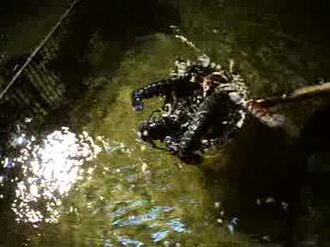
Newsreels in which Dutch subjects of a certain week are presented. The Oosterschelde is a breeding ground for different species of fish and shellfish and the domain of the mussel famers and fishermen. The mussels are sold in Yerseke, which is also the centre of the oyster farming and also contains a number of lobster farms. Mussels go through a strict inspection and are then cleaned of all sand and possible imperfections are removed before they are sold. The Netherlands is one of the largest mussel exporters, but the consumption in the Netherlands is also increasing because of the better distribution system. For the first time in a while a mussel day has been held in Yerseke for the promotion of the mussel, on which everyone could try them for free and make a boat trip in a cutter on the Oosterschelde. With the construction of a multiple buttress dam in the Oosterschelde, which will be finished in 1985, the tidal movement in this arm of the sea will be kept and with this also the mussel farming. SHOTS: aerial shot of the Oosterschelde and the building excavation for the multiple buttress dam under construction; drawing of the multiple buttress dam; cutters on the Oosterschelde; underwater fauna of the Oosterschelde, with different fish, a crab and a lobster; several close ups of mussels at the bodem of the sea; mussels are caught and thrown into the hold; aerial shot of Yerseke; bin in Yerske where oysters are stored; lobsters in lobster farms are caught and are packed in crates while still alive; close up lobsters; inspection of mussels for size and amount of meat; selling of mussels at the auction; mussels are packaged in large plastic bags; visitors at the mussel day in Yerseke; decorated cutters with visitors leaving the harbour and on the Oosterschelde.
Human-made No record of this work says a model made it. What this means.
- Archive
- Wikimedia Commons, in Wikimedia Commons
- Licence or status
- CC BY-SA 3.0 nl, as the Wikimedia Commons states it.
- Rights statement
- Creative Commons Attribution-Share Alike 3.0 nl
- Credit
- Nederlands Instituut voor Beeld en Geluid
- Who can watch
- The archive gives no rating. Invisible Network shows it to Teens profiles and older, judged from its collection and subjects. How films are placed
More from Wikimedia Commons
 Short
Making a silver chain
 Short
Jennifer Doudna Nobel Prize medal presentation
 Short
¿Qué es Wikipedia?
 Short
Wie entstehen Fossilien (CC by 4.0)
 Short
Rudy Mancuso & Maia Mitchell - Magic (Official Music Video)
 Documentary
Die wichtigsten Klimafaktoren (ZDF, Terra X) 720p 50FPS
 Short
Curiosity's Seven Minutes of Terror
 Short
Wikilovesmonuments.org
 Short
Wikipedia - FactsMatter2016
 Short
President Obama on Death of Osama bin Laden no watermark
 Short
Cassini's Grand Finale
 Cartoon