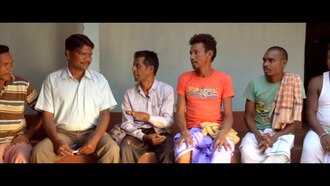
Mage Porob (2019 documentary)
Subhashish Panigrahi
Documentary
Make a clip
CC BY 4.0 · Subhashish Panigrahi
Up to 60 seconds, at most the picture size of the copy it is cut from. The clip carries the title, the credit, the licence and a link back here. It is made in this browser, and nothing is sent to this site.
Or send the moment itself: https://invisiblenetwork.ai/watch/archive/commons/105541573?play=1&t=0
Parts
About
Mage Porob is a 2019 documentary that was made in the Ho language, a vulnerable Adivasi language from eastern India. The film largely includes interviews with the villagers of the Keshpada village in Mayurbhanj district, Odisha, India and members of Birbasa, a student union based in w:Bhubaneswar.
Plot outline
The Mage Porob festival of the Ho people pushes all — young and old — from their village homes to gather for a community dance. No one stops dancing until the sun sets. The film goes deeper asking what is the Ho way of life beyond Mage Porob?
Plot summary The Ho people remember their ancestors and deities as the dehuri (elder and priest) offer the prayers and best flowers, fruits, leaves and meat. (Kujur) But a festival is not a festival without a community dance. All conflicts come to an end when Mage Porob drags the villagers to the dancing field. Even a mother with a baby taps her feet to the rhythms of dama and dumeng while holding the next dancer with one hand and the baby with the other. The entire village becomes an assembly line. The once-successful music arranger who is now partly disabled still keeps the drummers in sync with his coordinated hand gestures. The dancing field is that place where young members of the community get to meet and approach their future partners. The Sarapancha, an elected local political leader, also joins the dance group for a short while. The real world problem pauses as buckets of water are sprinkled to settle the dust right before the dance starts. The Ho way of life goes much beyond Mage Porob. The people, their language and culture have seen so much change around since the community started moving out of the Chota Nagpur Plateau of present-day Jharkhand and Odisha. All that change and the nature that every Ho calls home has shaped their animist cultural and religious practices. The film is touched by the free-flow conversations between the villagers that cite folklore, songs and the meticulous jamming of dama and dumeng, two signature percussion instruments that are seen in every single Ho cultural gathering. (Reichel) When the entire film is shot in the Keshpada village, some of the annotative additions along with subtitling were done in collaboration with the Veer Birsa Munda Ho Students Union Odisha (Birbasa) in Bhubaneswar.
Human-made No record of this work says a model made it. What this means.
More from Wikimedia Commons
 Documentary
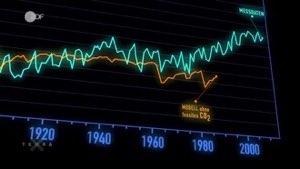
Die wichtigsten Klimafaktoren (ZDF, Terra X) 720p 50FPS
 Documentary
Around the Corner (1937) 24fps selection
 Documentary
Traditional Bird Singing Contest, Phuket - A mini documentary
 Documentary
The Himalayan - Mt.Everest Base Camp trek HD Time Lapse
 Documentary
BORDEAUX CORONAVIRUS - 24H AVANT LE CONFINEMENT
 Documentary
Teaser Isen - a documentary film about Wikimania Esino Lario
 Documentary
Wiki loves Women - English WebM - Final
 Documentary
Discovery Story - Genome Engineering with CRISPR-Cas9 (Doudna, Jinek, Charpentier)
 Documentary
WSTF NASA Fire Department's mini documentary about the memorial they did for their fallen brothers during 911 (NASA FD In Memory largeform)
 Documentary
NASA’s upcoming documentary, "Planetary Defenders", takes you inside the high-stakes world of asteroid hunting (NASA Trailer)
 Documentary
About Archives New Zealand
 Documentary