Diversity of Families
What Is a Family?
How do we define family? Is a family determined by biology, marriage, legal relationships, shared residence, emotional connections, or something else?
The answer depends partly on the perspective we use.
The U.S. Census Bureau defines a family for statistical purposes as two or more individuals who live together and are related by birth, marriage, or adoption (U.S. Census Bureau, n.d.).
This definition provides a consistent method for collecting information about households and family living arrangements. However, it does not necessarily reflect all the individuals whom someone considers family.
For example, a child may maintain meaningful relationships with parents living in separate households. An individual may consider a close family friend, mentor, or long-term caregiver part of their family, even without a biological or legal relationship.
These examples demonstrate the importance of distinguishing between statistical definitions of family and personally experienced family relationships.
Families as Interconnected Relationships
Family researcher Paul R. Amato (2014) encouraged scholars to consider how individuals personally define their family relationships.
Rather than viewing families exclusively as individuals who share a household, Amato suggested examining overlapping family networks that may extend across multiple households.
This perspective recognizes that people living in the same household may identify different individuals as members of their family.
For example, children whose parents live separately may consider both parents part of their immediate family, even though the parents are not members of the same household.
Amato's approach helps us recognize that family relationships cannot always be understood through household arrangements alone.
Understanding Fictive Kinship and Chosen Families
Fictive kinship refers to relationships in which individuals who are not related by birth, marriage, or adoption are recognized and treated as family.
Examples may include close family friends, longtime caregivers, mentors, or community members who provide ongoing emotional and practical support.
The related concept of chosen family emphasizes individuals who intentionally establish meaningful family relationships through commitment, care, trust, and mutual support.
Although these concepts overlap, they are not identical in every cultural or social context.
For children and families, these relationships may provide important sources of belonging, guidance, identity, stability, and support.
Recognizing fictive kinship and chosen families encourages educators and other professionals to understand family relationships from the perspectives of the individuals involved rather than relying exclusively on legal or household definitions (Amato, 2014).
Case Studies: Whose Definition of Family?
The following fictional scenarios demonstrate how family identity may differ depending on whether we use household-based classifications or the perspectives of individual family members.
Case Study (A)

A young girl smiles while completing schoolwork at a kitchen table with two adults who are smiling and engaging with her.
Figure: Family Relationships Across Households. Children may maintain meaningful relationships with parents and caregivers who live in different households. Family identity and household residence do not always align. AI-generated illustration.
Case Study A: Grace and Her Parents
Ella and Robert are divorced and live in separate households. Their daughter, Grace, lives primarily with Ella and spends weekends with Robert.
Robert also regularly participates in Grace's school activities and family routines. Although Ella and Robert are no longer married, both remain involved in Grace's life.
Household-based perspective
A household-based classification would identify Ella and Grace as members of the same family household. Robert would be counted separately because he lives elsewhere.
Relationship-based perspective
Grace may consider both Ella and Robert members of her immediate family, regardless of their different residences.
This example demonstrates how a child's family relationships can extend across multiple households (Amato, 2014).
Ella, a divorced mother lives with her child, Grace. Ella considers her ex-husband, Robert, to be a family member even though they do not live together and are divorced. Robert is Grace’s biological father. Grace spends every weekend with Robert, and oftentimes, Robert picks Grace up from school and has dinner with Ella and Grace during the week. Robert is important in Grace’s life and Ella supports his presence in her life.
A researcher who adopts the U.S. Census Bureau definition would say that Grace is in a single-parent family.
A researcher who adopts a definition more consistent with an understanding of modern families would say that Grace would claim to be in a two-parent family.
Case Study (B)

An adolescent girl sits at a classroom conference table with two adult men and a woman. The group talks together, with a laptop and documents on the table.
Figure: Family Relationships and School Engagement. Children and families may identify different individuals as important caregivers and family members. Educators can support inclusive communication while respecting family preferences and legal caregiving responsibilities. AI-generated illustration.
Case Study B: Allyson and Her Family Relationships
Allyson lives with her father, Adam, and his husband, Frank. Her mother, Georgia, lives in another household, and Allyson spends weekends and school vacations with her.
Although Frank is an important adult in the household, Allyson does not currently consider him one of her parents. She prefers that Adam and Georgia attend her parent-teacher conferences.
Household-based perspective
A household-based classification would identify the relationships and living arrangements within Adam's household according to the Census Bureau's statistical rules.
Relationship-based perspective
Allyson currently identifies Adam and Georgia as her parents, even though they live in different households.
Her understanding of family may change as relationships develop over time.
This example highlights the importance of listening to children's perspectives and avoiding assumptions about family roles based solely on household arrangements.
Case Study (C)


Two smiling young adults sit closely together on a couch, reading a magazine. They appear relaxed and comfortable in one another's company.
Figure: Fictive Kinship and Chosen Families. Meaningful family relationships may develop through friendship, caregiving, trust, shared experiences, and mutual support, even without biological or legal connections. AI-generated illustration.
Case Study C: Jordan and Their Chosen Family
Jordan and Aaron have been close friends since childhood. Jordan lives with their biological parents but has developed particularly strong relationships with Aaron and Aaron's parents.
Over time, Aaron's family has provided Jordan with emotional support, encouragement, and a sense of belonging.
Jordan considers Aaron's parents an important part of their family.
Household-based perspective
Because Jordan resides with their biological parents, a household-based statistical classification would focus on those relationships within Jordan's residence.
Relationship-based perspective
Jordan may identify Aaron and Aaron's parents as members of their chosen family, even though they do not live together.
This example illustrates how fictive kinship and chosen family relationships can extend beyond traditional legal or biological definitions.
Pause to Reflect!
- How might individuals within the same household define their family relationships differently?
- Why might a child's understanding of family differ from a statistical definition based on household residence?
- What are three examples of fictive kinship or chosen family relationships that you have observed in your personal, educational, or professional experiences?
- How can educators recognize and respect family relationships without assuming that every child defines family in the same way?
Family as a Social Construction
Sociologists use the term social construction to describe meanings, categories, and expectations that develop through social interactions and shared cultural understandings.
For example, money has value because societies establish and recognize systems of exchange. Although the physical materials used to create currency have practical characteristics, their monetary meaning depends on shared social agreements.
Family also has socially constructed dimensions.
While relationships, caregiving, and human connections are real experiences, societies develop expectations about which relationships should be recognized as family, how family roles should be organized, and what a family is expected to look like.
These expectations differ across cultures, historical periods, and communities.
For example, some societies emphasize multigenerational households, while others place greater emphasis on smaller households consisting of parents and children.
Similarly, cultural expectations about marriage, caregiving, gender roles, and extended family responsibilities can vary.
Understanding family as a social construction does not mean that family relationships are unimportant or imaginary. Rather, it means that the ways societies define, organize, and assign meaning to family relationships are influenced by social and cultural conditions.
The Idea of the Traditional Family
In the United States, the phrase traditional family has frequently been associated with a married heterosexual couple raising their children in a shared household.
Popular media during the mid-twentieth century often presented an idealized version of this structure, particularly through portrayals of White, middle-class families.
The television program Leave It to Beaver (1957–1963) is one example of this representation.
However, the existence of a widely promoted family ideal does not mean that all families historically followed that model.
Single-parent families, extended families, multigenerational households, blended families, and families supported by broader kinship networks have long been part of American society.
Sociologists therefore distinguish between cultural ideals about family and the diversity of actual family experiences (Benokraitis, 2015).
When one family structure is repeatedly presented as the expected or preferred arrangement, families with different structures may experience exclusion, misunderstanding, or pressure to conform.
For educators and professionals working with children, recognizing these assumptions is essential to understanding how social expectations can influence family experiences.
Family Representation in Media
Media is an important agent of socialization because it communicates messages about family relationships, gender roles, cultural expectations, and social identities.
Television programs, films, books, advertisements, and digital media may reinforce familiar family representations or introduce audiences to different forms of family life.
Several television programs provide examples of these representations:
Leave It to Beaver: Presents an idealized mid-twentieth-century nuclear family.

Friends: Illustrates close friendship networks that can be examined through the concept of fictive kinship.
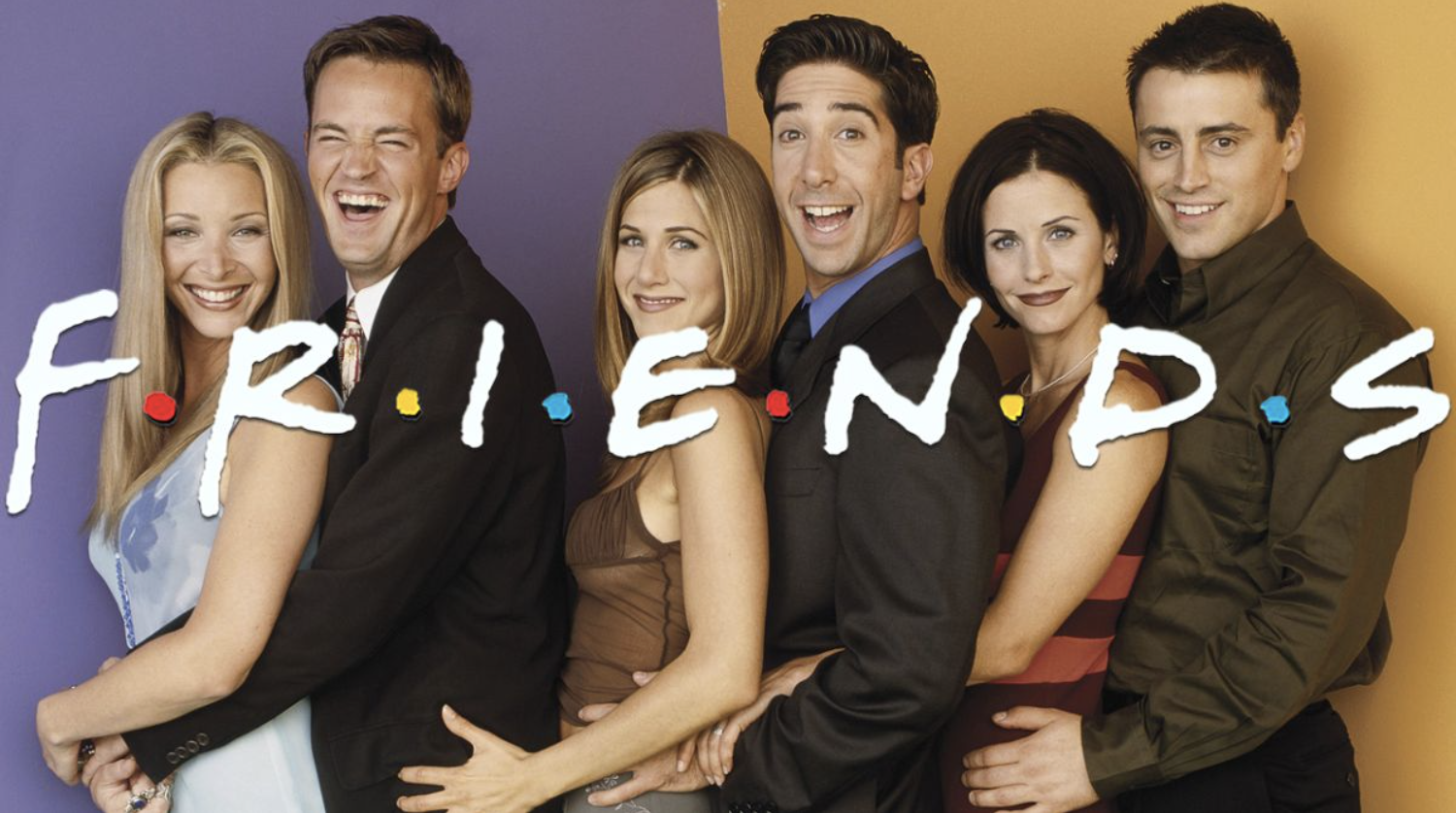
New Girl: Provides another example of close relationships and shared experiences among friends who may function as a chosen support network.

Modern Family: Features interconnected households, including blended, adoptive, and same-sex-parent family relationships.

This Is Us: Explores adoption, sibling relationships, multigenerational connections, divorce, remarriage, and changing family relationships across time.

These examples illustrate how media representations can reflect, challenge, or complicate cultural expectations about family.
Importantly, media representations do not capture the complete diversity of family experiences.
Students should consider which families are represented, whose experiences receive attention, and which relationships are absent or portrayed through stereotypes.
Pause to Reflect!
- Identify a family or chosen-family relationship portrayed in a television program, film, book, or other form of media.
- How does that representation reinforce or challenge cultural expectations about family?
- What family structures or experiences are missing from the representation?
- How might repeated exposure to particular family portrayals influence children's developing assumptions about what families should look like?
The Diversity of Contemporary Families
Contemporary families include many arrangements, such as single-parent families, two-parent families, blended families, multigenerational households, adoptive families, foster and resource families, same-sex-parent families, and chosen families.
Family relationships may also extend across households, geographic locations, generations, and caregiving arrangements.
Benokraitis (2015) examines how changes in marriage, divorce, remarriage, social expectations, and broader economic and cultural conditions influence family experiences.
However, family diversity is not simply a recent development. Many family structures that are increasingly visible today have existed across cultures and historical periods.
Rather than assuming that one structure defines a successful family, educators and other professionals should consider how relationships, caregiving practices, access to resources, and social environments influence children's experiences.
This perspective encourages us to recognize the strengths and needs of individual families without judging them solely by their structure.
Family Diversity and Social Institutions
Family definitions are also reinforced through social institutions such as schools, healthcare systems, government agencies, workplaces, and community organizations.
For example, school registration forms may ask for information about a child's parents or guardians. If the form provides spaces only for a mother and father, some families may find that the available categories do not accurately describe their relationships.
Similarly, policies surrounding school communication, emergency contacts, family participation, and caregiving responsibilities may influence whether individuals feel recognized and included.
Educators should recognize that children's family relationships can include individuals who are not their biological parents or legal guardians.
At the same time, professional responsibilities require schools and organizations to distinguish between recognizing meaningful relationships and determining who has legal authority to make decisions or access protected information.
Inclusive family engagement therefore involves both respecting family diversity and following appropriate legal, ethical, and institutional requirements.
Pause to Reflect: Examining Inclusive Practices
- Locate two official forms used by an organization serving children and families. Examples include school enrollment forms, childcare registration documents, or healthcare intake forms.
- Examine the language used to identify parents, guardians, caregivers, and other significant family members.
- Identify whether the forms provide meaningful opportunities for different family structures to be represented.
- If the forms contain restrictive or unnecessary assumptions, suggest specific revisions that would make the language more inclusive while maintaining essential legal and administrative requirements.
- Explain how these changes could contribute to more respectful and culturally responsive relationships with children and families.