From LibreTexts, under CC BY-NC-SA 4.0, as the source states it; its equations are written in TeX, which the PDF shows typeset. This page at LibreTexts.
Before we can understand how the brain reconstructs our world using mental schemas it’s critical to learn how information from the world is first sensed and perceived.
Sensation
The physical process during which our sensory organs (e.g., eyes, ears, nose among others) respond to external stimuli is called sensation. Sensation happens when you eat noodles or feel the wind on your face or hear a car horn honking in the distance. During sensation, our sense organs are engaging in transduction, the conversion of one form of energy into another. For example, physical energy such as light or a sound wave is converted into a form of electrical energy that the brain can understand.
Perception
After our brain receives the electrical signals we make sense of all this stimulation and begin to appreciate the complex world around us. This psychological process, making sense of the stimuli, is called perception. It is during this process that you are able to identify a gas leak in your home, recognize the color orange, or connect a song that reminds you of a specific afternoon spent with friends. Perception is the process of interpreting and organizing the information that we received from our senses.
Our experience influences how our brain processes information. You have tasted food that you like and food that you don’t like. There are some bands you enjoy and others you can’t stand. When eat something new or hear a new band, you process those stimuli using bottom-up processing. This is when we build up to perception from the individual pieces.
Sometimes stimuli we’ve experienced in our past will influence how we process new ones. This is called top-down processing. The best way to illustrate these two concepts is with our ability to read.
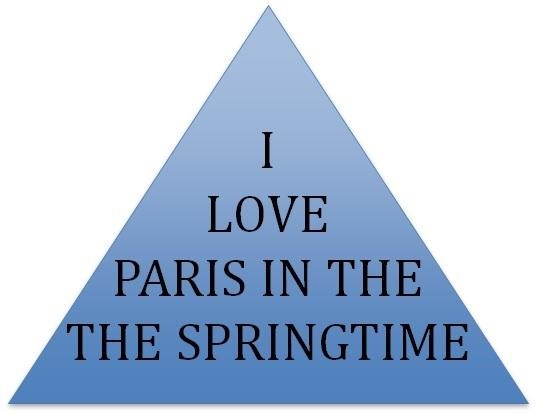
Read the following quote out loud:
Notice anything odd while you were reading the text in the triangle? Did you notice the second “the”? If not, it’s likely because you were reading this from a top-down approach. Having a second “the” doesn’t make sense. We know this and our brain knows this and doesn’t expect there to be a second one, so we tend to skip right over it. In other words, your past experience has changed the way you perceive the writing in the triangle. Someone who is just learning to read is using a bottom-up approach by carefully attending to each piece and would be less likely to make this error.