Opening the book…
Homocysteine is a sulfur-containing, non-proteinogenic (not used for making proteins) amino acid whose structure is shown in the figure below.
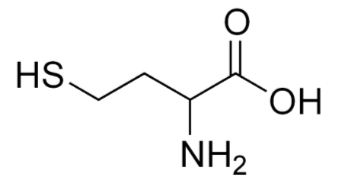
Elevated circulating homocysteine concentrations have been found in people with cardiovascular disease. Folate, vitamin \(B_6\), and vitamin \(B_{12}\) contribute to the conversion of homocysteine to methionine by providing methyl groups, thereby decreasing homocysteine concentrations, as illustrated in the figure below. Thus, based on these facts, it was hypothesized that intake of these B vitamins may decrease the risk of cardiovascular disease.

Research has found that intake of these B vitamins does decrease circulating homocysteine concentrations. However, most studies have not found that it results in improved cardiovascular disease outcomes2-4. It is debated why B vitamin intake has not resulted in improved outcomes. Some think it is because the studies have not focused on individuals with elevated homocysteine concentrations2, while others believe that homocysteine is a biomarker or indicator of cardiovascular disease, not a causative or contributing factor to cardiovascular disease development3.
References
- en.Wikipedia.org/wiki/File:Ho...ne_racemic.png
- Abraham J, Cho L. (2010) The homocysteine hypothesis: Still relevant to the prevention and treatment of cardiovascular disease? Cleve Clin J Med 77(12): 911-918.
- Cacciapuoti F. (2011) Hyper-homocysteinemia: A novel risk factor or a powerful marker for cardiovascular diseases? pathogenetic and therapeutical uncertainties. J Thromb Thrombolysis 32(1): 82-88.
- Martai-Carvajal AJ, Sola J, Lathyris D. (2015) Homocysteine-lowering interventions for preventing cardiovascular events. Cochrane Database Syst Rev. 1:CD006612.
This page titled 11.3: B Vitamins, Homocysteine and Cardiovascular Disease was last modified on Thu, 29 Jan 2026 17:50:22 GMT and is shared under a CC BY-NC-SA 4.0 license and was authored, remixed, and/or curated by Brian Lindshield via source content that was edited to the style and standards of the LibreTexts platform.
The book could not be loaded just now.