Opening the book…
- Defining and understanding measures and bar lines.
- Defining and recognizing sectional directions: “Roadmaps” in music.
- Learning basic conducting patterns.
In Section 1.2, when describing meter and time signatures, we spoke of “grouping pulse values together” to form discrete units. In music these groupings are delimited, or “bounded” by vertical strokes called bar lines. Bar lines serve as boundaries, defining a “measure” of music.For these examples we will employ a five-line staff. Use of the staff will be explained fully in Chapter 2.
The crossover period between Renaissance and Baroque music at end of the 16th Century and the beginning of the 17th Century witnessed many changes as to how music was written. The rise of the “Second Practice,” (Seconda prattica) or “New Style” (Stile moderno) of composition (early opera) and the concomitant rise of instrumental music necessitated changes in notational practice.
Since rhythmic durations in Renaissance music were organized in proportion to one another (differing forms of mensural notation), measures and their separating bar lines were not in use, nor were time signatures, as we know them. These elements came into gradual use. Scholars offer many explanations for this: practicality and ease of reading and interpretation, a shift away from multi-voiced music and toward solo or homophonic settings in dramatic music, the desire for segmenting music into discrete segments, and so forth.
Measure and Bar lines
This became common notational practice. A measure of music constituted beat groupings (or their durational equivalents) within the context of the stated time signature, bounded by a bar-line. Composers may use a double bar line to denote sectional divisions in a piece. A final bar line ends the composition.

Within measures, specified beats received greater of lesser accentuation, referred to simply as “strong” or “weak” beats. This perception is based upon how the relative strength of beats is perceived in a given time signature.

Conducting Patterns
As performers, as teachers, and as potential ensemble leaders, all musicians must have a basic understanding of typical conducting patterns. In conducting, the terms arsis and thesis will be encountered. In this context, synonyms for these terms are “upbeat” (preparatory beat) and “downbeat” (commencement beat). The common conducting patterns are shown in Figure 1.29 through Figure 1.33.
The Basic Two-Pattern: for example any simple duple or compound duple time signature. When practicing this, think “away (from the body)-up, away-up…
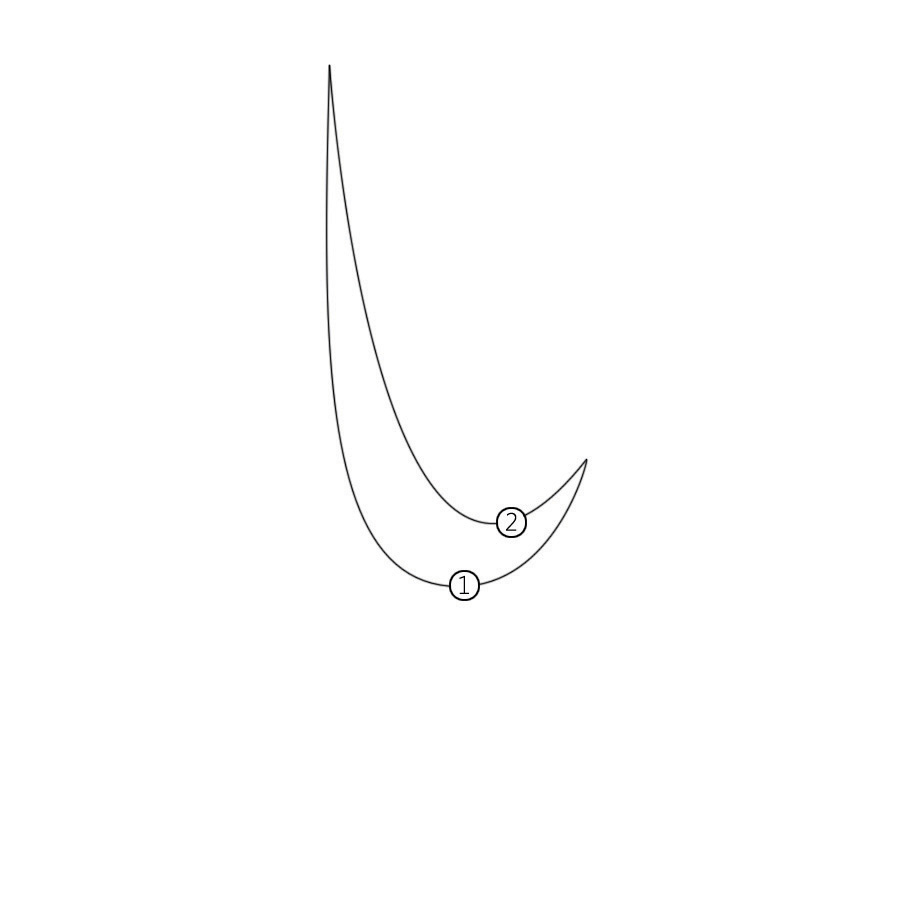
All conducting figures by Michael Paolantonio
The Basic Three-Pattern: any simple triple or compound triple time signature. Think “down-away-up…”
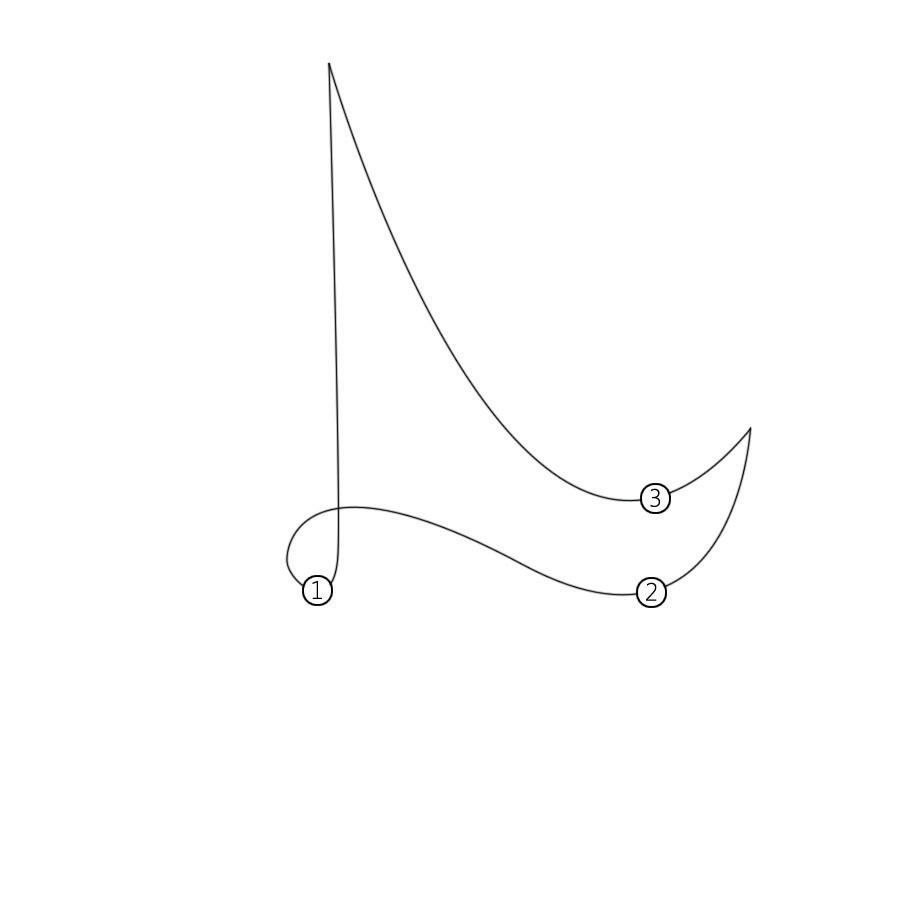
All conducting figures by Michael Paolantonio
The Basic Four-Pattern: any simple or compound quadruple time signature. Think “down-across-away-up…”
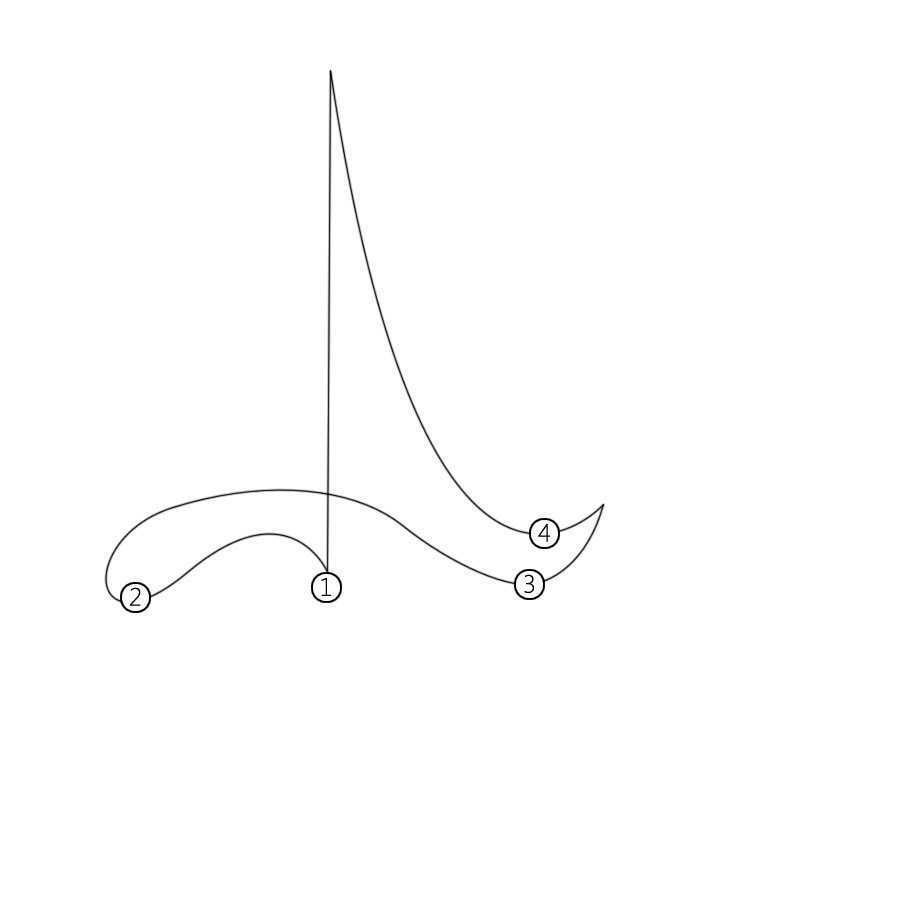
All conducting figures by Michael Paolantonio
The One-Pattern: depending upon tempo, triple meters may be conducted “in one.” Refer to Section 1.2.

All conducting figures by Michael Paolantonio
The Basic Six-Pattern:

All conducting figures by Michael Paolantonio
Repeats and Endings
Numerous expedient shortcuts evolved to facilitate writing music efficiently, as well as eliminating the redundancy of writing a given passage over again. Specific symbols, called repeat signs or repeats, came into use whereby a composer could indicate the repetition of a measure, a group of measures, or an entire passage.

A repeated section might end differently than its first iteration: the repeated section might end differently or it might make a transition to a new section. Composers employ “First and Second Endings” to serve this function.

A passage repeated multiple times is so indicated by listing the number of repetitions in the first ending. In Jazz notation and vernacular music, this may be accompanied by an instruction at the beginning of the passage that indicates the number of iterations, for example, 3x’s, meaning “repeat this passage three times.”

At times in a composition, it is desirable or necessary to repeat an entire earlier passage, or return to the beginning of the piece. Rather than re-write the particular passage, specific notational expedients evolved to accommodate this. These shortcuts employed Italian phrases, accompanied by specific symbols. These phases and symbols are directions to the performer as to what segment is repeated and how to conclude the piece.
- Da Capo (“from the head…”): return to the beginning of the piece. Abbreviated as D.C.
- Dal Segno (“from the sign…”): return to the “sign.” Abbreviated as D.S. The segno is a special symbol, shown in Figure 1.37.
- … al Fine (“to the finish”): Most often used in conjunction with Da Capo, the word Fine appears above the music at the point which tells the performer to end the piece.
- … Al Coda (“ to the tail”): Most often used in conjunction with Dal Segno, this symbol (see Figure 1.37) instructs the performer to “jump” to a final, separate, concluding section of the piece.

Conclusion
The student should be able to define and understand:
- Measures and Bar lines.
- Basic Conducting Patterns
- Repeats
- D.C. al Fine, D.S. al Coda
- Using a metronome to provide a background pulse, practice conducting patterns in 2, 3, 4, 6. Vary the tempo.
- Incomplete rhythms are given in each of the following measures. Add the appropriate durational value to complete the measure. See example.
Figure 1.38 Incomplete Measures

- For each of the following examples write in the missing time signature and label the meter type.
Figure 1.39 Identify Meter

- In each example below using “roadmaps”, draw arrows to indicate what segment is repeated and how the segment concludes. See example.
Figure 1.40 “Roadmaps”

This page titled 1.3: Music Notation Practices was last modified on Mon, 31 Aug 2026 07:15:55 GMT and is shared under a CC BY-NC-SA 3.0 license and was authored, remixed, and/or curated by Staff via source content that was edited to the style and standards of the LibreTexts platform.
The book could not be loaded just now.