Opening the book…
- Recognize phrases using gustar+infinitive to express what someone likes to do
The verb gustar is used to indicate things or activities that you like, but it is a little different in Spanish than in English. You’ll learn more about how gustar and other verbs like it work later, but for now you can see how it is used with infinitives:
| singular | plural | |
| 1a (1st) |
me gusta |
nos gusta |
| 2a (2nd) | te gusta | os gusta |
| 3a (3rd) | le gusta | les gusta |
As you see, instead of conjugating gustar to match the subject as you do with most verbs, only the third person ending is used along with different pronouns (me, te, le, nos, os, les). Gustar is frequently used in Spanish with infinitives to indicate likes (and dislikes):

- ¿Qué te gusta hacer? (What do you like to do?)
- Me gusta comer en restaurantes buenos. (I like to eat in good restaurants.)
- Te gusta cantar y bailar, ¿no? (You like to sing and dance, right?)
- Nos gusta correr todos los días. (We like to run every day.)
- Le gusta escuchar música. (He likes to listen to music.) or (She likes to listen to music.) or (You [formal] like to listen to music.)
- A usted no le gusta nadar. (You don’t like to swim.)
Useful phrases when talking about things you like or dislike:
- A mí me gusta… (I like to…; the “a mí” phrase is added for emphasis or clarification.)
- Me gusta ( ) más. [I like to (activity) more.]
- Me gusta mucho. (I like it a lot.)
- A mí también. (Me too / I do too.)
- No me gusta… (I don’t like to…)
- No me gusta nada ( ). [I don’t like to (activity) at all.]
- A mí tampoco. (Me neither / I don’t either.)
- ¿Qué te gusta hacer? (What do you like to do?)
- ¿Te gusta…? (Do you like to…?)
- ¿Y a ti? (And you?)
- ni (neither, nor)
- o (or)
- sí (yes)
- con (with)
- y (and)
- pero (but)
- Recognize phrases using gustar+infinitive to express what someone likes to do
- Comprehend spoken sentences expressing what someone likes to do
A.  Gustar + infinitive
B.  Gustar + infinitive
C.  Escuchar: Gustar + infinitive
Text only
A. Gustar + infinitive
- — A mí me gusta nadar. ¿Y a ti?— No _____ gusta nadar.
- te
- os
- le
- me
- A mi madre _____ gusta pintar.
- nos
- os
- le
- te
- A mis hermanas _____ gusta dormir.
- les
- le
- te
- me
- ¿A vosotras _____ gusta leer?
- me
- te
- os
- nos
- A nosotros _____ gusta ir a la playa.
- le
- te
- me
- nos
- A mis padres _____ gusta leer el periódico por la mañana.
- les
- me
- nos
- os
- A mí _____ gusta ver películas en el cine.
- le
- te
- me
- les
- A Antonia _____ gusta dibujar.
- os
- les
- le
- me
B. Gustar + infinitive
- A mí ____________ ____________ dormir.
- A mis hermanos ____________ ____________ jugar al baloncesto.
- A mis amigas ____________ ____________ ir al cine.
- A nosotros ____________ ____________ trabajar juntos.
- A mi padre ____________ ____________ cocinar.
- ¿A vosotras ____________ ____________ bailar?
- A mi perro ____________ ____________ comer mucho.
- A mis abuelos ____________ ____________ andar.
C. Gustar + infinitive
- Which picture corresponds to the spoken description?




- Which picture corresponds to the spoken description?




- Which picture corresponds to the spoken description?




- Which picture corresponds to the spoken description?

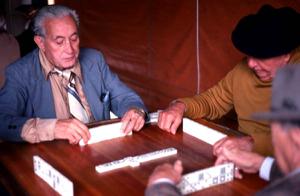


- Which picture corresponds to the spoken description?




- Which picture corresponds to the spoken description?




- Which picture corresponds to the spoken description?



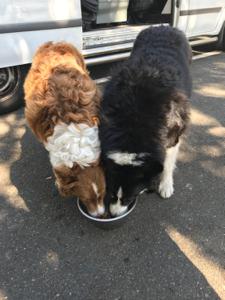
- Which picture corresponds to the spoken description?




Contributors and Attributions
- Angry cat. Located at: https://www.il.ngb.army.mil/News/Photos/igphoto/2002057146/. License: Public Domain: No Known Copyright
- Gramática: El verbo gustar + infinitivo. Authored by: SUNY Oneonta with Lumen Learning. Provided by: SUNY Oneonta. License: CC BY: Attribution
This page titled 4.5: Gramática- El verbo gustar + infinitivo was last modified on Thu, 29 Oct 2026 16:46:16 GMT and is shared under a CC BY-NC-SA 4.0 license and was authored, remixed, and/or curated by Beatrice Tseng and Karla Lemari via source content that was edited to the style and standards of the LibreTexts platform.
The book could not be loaded just now.