Opening the book…
- Recognize adjectives of nationality used to describe people
- Use the expression "ser + de" to find out where someone is from
Los países y las nacionalidades
To answer the question “¿De dónde eres?” (Where are you from), one can either answer with a country or with a nationality:
- Soy de Panamá. (I am from Panama.)
- Soy panameña. (I am Panamanian.)
- Mis padres son de Colombia. (My parents are from Colombia.)
- Son colombianos. (They are Colombian.)
A description of nationality is an adjective, so its ending has to correspond to the gender and number of the subject. Note also that while place-names are capitalized in Spanish as they are in English, adjectives of nationality are not capitalized in Spanish.
The following is a list of countries and corresponding nationalities. Bolded are all the Spanish speaking countries. You’ll have a chance to practice below.
América
Argentina, argentina/o
Belice, beliceña/o
Bolivia, boliviana/o
Brasil, brasileña/o
Canadá, canadiense
Chile, chilena/o
Colombia, colombiana/o
Costa Rica, costarricense
Cuba, cubana/o
Ecuador, ecuatoriana/o
El Salvador, salvadoreña/o
Estados Unidos, estadounidense
Guatemala, guatemalteca/o
Haití, haitiana/o
Honduras, hondureña/o
Jamaica, jamaicana/o
México, mexicana/o
Nicaragua, nicaragüense
Panamá, panameña/o
Paraguay, paraguaya/o
Perú, peruana/o
Puerto Rico, puertorriqueña/o
República Dominicana, dominicana/o
Surinam, surinamés(a)
Uruguay, uruguaya/o
Venezuela, venezolana/o
Europa
Albania, albana/o
Alemania, alemán/ alemana
Austria, austríaca/o
Azerbaiján, azerbaiyán(o)
Bélgica, belga
Bielorrusia, bielorusa/o
Bulgaria, búlgara/o
Croacia, croata
Dinamarca, Danés(a)
Eslovenia, eslovena/o
España, español/ española
Estonia, estonia/o
Finlandia, finés(a)
Francia, francés(a)
Grecia, griega/o
Hungría, húngara/o
Irlanda, irlandés(a)
Islandia, islandés(a)
Italia, italiana/o
Kazajistán, kazaja/o
Lituania, lituana/o
Moldavia, moldava/o
Mónaco, monaqués(a)
Noruega, noruega/o
Países Bajos, neerlandés(a)
Polonia, polaca/o
Portugal, portugués(a)
Reino Unido, británica/o
República Checa, checa/o
Rumanía, rumana/o
Rusia, rusa/o
Serbia, serbia/o
Suecia, sueca/o
Suiza, suiza/o
Turquía, turca/o
África
Angola, angolana/o
Argelia, argelina/o
Benin, beninés(a)
Botswana, botsuana/o
Cabo Verde, caboverdiana/o
Camerún, camerunés(a)
Congo, congoleña/o
Costa de Marfil, marfileña/o
Egipto, egipcia/o
Eritrea, eritrea/o
Etiopía, etíope
Ghana, ghanés(a)
Guinea Ecuatorial, equatoguineana/o
Kenia, keniata
Lesoto, lesotense
Marruecos, marroquí
Nigeria, nigeriana/o
República Centroafricana, centroafricana/o
Senegal, senegalés(a)
Sierra Leona, sierraleonés(a)
Somalia, somalí
Sudáfrica, sudafricana/o
Túnez, tunecina/o
Zimbabue, zimbabuense
Asia
Afganistán, afgana/o
Arabia Saudita, saudí
Armenia, armenia/o
Baréin, bareiní
Camboya, camboyana/o
Catar, catarí
China, chino/a
Corea, coreana/o
Emiratos Árabes Unidos, emiratí
Filipinas, filipina/o
India, hindú
Indonesia – indonesia/o
Irak / Iraq, irakí / iraqí
Irán, iraní
Japón, japonés(a)
Líbano, libanés(a)
Malasia, malaya/o
Omán, omaní
Paquistán / Pakistán, paquistaní / pakistaní
Singapur, singapurense
Sri Lanka, srilanqués(a) / ceilanés(a)
Tailandia, tailandés(a)
Taiwán, taiwanés(a)
Uzbekistán, uzbeka/o
Vietnam, vietnamita
Yemen, yemení
Oceanía
Australia, australiana/oNueva Zelanda, neozelandés(a)
Los países y las nacionalidades
¿De dónde son estos fanáticos del fútbol?
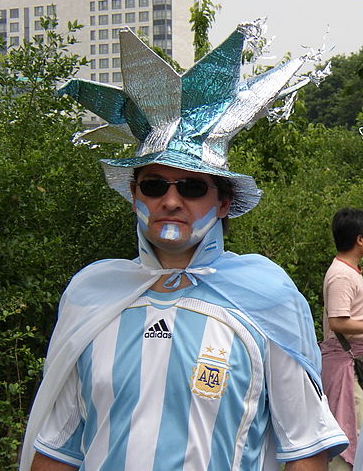 Él es de Argentina. Él es ____________ .
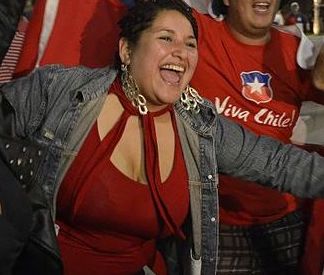 Ella es de Chile. Ella es ____________.
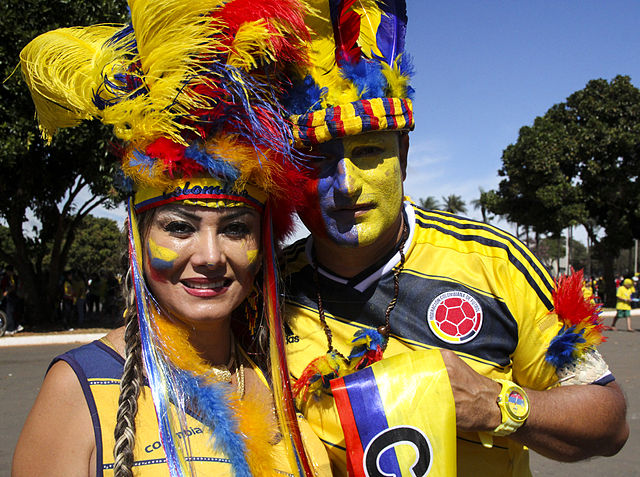 Ellos son de Colombia. Ellos son ____________.
 Él es de Costa Rica. Él es ____________.
 Ellas son de Ecuador. Ellas son ____________.
 Ellos son de México. Ellos son ____________.
 Ellos son de España. Ellos son ____________.
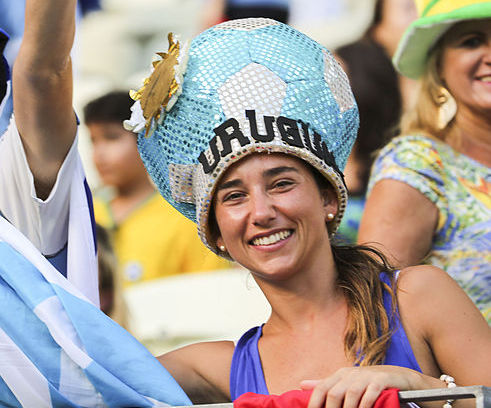 Ella es de Uruguay. Ella es ____________.
 Ellos son de los Estados Unidos. Ellos son ____________.
Contributors and Attributions
- Countries and Nationalities in Spanish: List, Sentences & Questions. Provided by: Spanish Learning Lab. Located at: https://youtu.be/cMGzBSDTO14. License: All Rights Reserved. License Terms: Standard YouTube License
- Los Paises, Las Nacionalidades Y Mu00e1s. Authored by: Athabasca University. Project: Beginner Spanish OER. License: CC BY: Attribution
- Gramu00e1tica: Los pau00edses y las nacionalidades. Authored by: SUNY Oneonta with Lumen Learning. Provided by: SUNY Oneonta. License: CC BY: Attribution
This page titled 2.3: Vocabulario- Los países y las nacionalidades was last modified on Thu, 29 Oct 2026 16:43:35 GMT and is shared under a CC BY-NC-SA 4.0 license and was authored, remixed, and/or curated by Beatrice Tseng and Karla Lemari via source content that was edited to the style and standards of the LibreTexts platform.
The book could not be loaded just now.