Opening the book…
10.3 Gramática: Los mandatos familiares –Tú (familiar) Commands-
Commands are used to give orders or advice. The tú commands (familiar) are used when you want to give an order or advice to someone you usually address with the familiar tú.
A. Affirmative tú commands (+) los mandatos familiares afirmativos
| infinitive | tú command (+) |
|---|---|
| hablar | habla |
| tomar | toma |
| comer | come |
| oir | oye |
| dormir (o:ue) | duerme |
| leer | lee |
| dar (me) | dame |
| ver | ve |
*Las terminaciones regulares
-ar → -a
-er / -ir → -e
*same for as the él / ella form of the present tense.
| 1. Me duele la cabeza. My head hurts. |
Toma una aspirina. Take an aspirin. |
|---|---|
| 2. Tengo gripe. I have the flu. |
Descansa mucho. Rest a lot. |
| 3. Me duele el estómago. My stomach hurts. |
Bebe agua con limón. Drink water with lemon. |
The following verbs have irregular affirmative tú commands.
| decir | di | salir | sal |
|---|---|---|---|
| hacer | haz | ser | sé |
| ir | **ve | tener | ten |
| poner | pon | venir | ven |
Haz los ejercicios todos los días.
Do the exercises every day.
Sé buena gente, *invítame a un café.
Be nice and treat me to a cup of coffee.
*Attach them at the end of the verb when using pronouns with commands ( ).
**The context will clarify the meaning since IR and VER have the same tú command (VE).
Ve al médico ahora mismo. Ve la película Coco, es muy buena.
Go to the doctor right now. Watch the movie Coco, it is very good.
B. Negative tú commands (-) los mandatos familiares negativos
| infinitive | present YO form | tú command (-) |
|---|---|---|
| hablar | hablø | no hables |
| tomar | tomø | no tomes |
| comer | comø | no comas |
| *jugar (u:ue) | juegø | no juegues |
| dormir (o:ue) | duermø | no duermas |
| ver | veø | no veas |
| salir | salgø | no salgas |
*Las terminaciones regulares
-ar → -es
-er / -ir → -as
*Drop the final -o of the yo form of the present tense and add these endings.
No salgas afuera, estás muy enfermo.
Don’t go out, you are very sick.
No tomes agua fría.
Don´t drink cold water.
*Verbs ending in –car, –gar and –zar have a spelling change in the negative tú commands.
buscar: c → qu, no busques en Wikipedia.
almorzar: z → c, no almuerces en Jack in the Box.
jugar: g → gu, no juegues más.
The following verbs have irregular negative tú commands.
| dar | no des |
|---|---|
| estar | no estés |
| ir | no vayas |
| saber | no sepas |
| ser | no seas |
No vayas a la escuela hoy.
Don’t go to school today.
No *me des nada para mi cumpleaños.
Don’t give me anything for my birthday.
*When using pronouns with commands (-), place them before the verb.
Actividad # 1
¡A conjugar! Let’s build our knowledge. Convert the infinitive verbs to an affirmative command ( + ). Follow the example.
| english | infinitive | present él / ella form | tú command (+) |
|---|---|---|---|
| to drink | beber | bebe | bebe |
| to read | |||
| to eat | |||
| to follow | |||
| to give | |||
| to rest | |||
| to go to bed | |||
| *to go | |||
| *to do | |||
| *to say |
Convert the infinitive verbs to a negative command (-). Follow the example.
| english | infinitive | present yo form | tú command (-) |
|---|---|---|---|
| to arrive | llegar | llegø | no llegues |
| to speak | |||
| to sleep | |||
| to start | |||
| to drive | |||
| *ir | |||
| *ser | |||
| *estar |
Actividad # 2
¡A regañar a los niños! Let’s reprimand the kids! With a partner, describe what commands (affirmative and negative) these parents give their children.






Actividad # 3
Consejos médicos. Talk to your compañero (a) and ask for their suggestions for the following symptoms. Use commands ( or -).
Ejemplo:
E1: Me duele la garganta
E2: HAZ gárgaras con agua y limón. (or No hables mucho)
| Acciones útiles | |||
|---|---|---|---|
| tomar aspirina | descansar | tomar más café | ponerse el termómetro |
| tomar jarabe | tomar antiácidos | dormir | comprar Kleenex |
| poner una curita | tomar vitamina C | beber agua | ir al médico |
Estudiante 1
- Me duele la cabeza
- No tengo energía
- No me siento bien
- Me duele la espalda
- Me corté un dedo
Estudiante 2
- Tengo gripe
- Me duele el estómago
- Creo que tengo fiebre
- Toso mucho
- Tengo la nariz tapada
Actividad # 4
Del mundo hispano. ¿Qué puedes hacer para prevenir los resfriados?
Paso 1. Read the following suggestions to avoid a cold.
*Época de resfriados y gripes
Las temperaturas están bajando y empiezan a aparecer los dichosos y molestos resfriados. Son virus y no hay medicamento contra ellos; simplemente podemos aliviar sus síntomas. Por eso la prevención es nuestra arma más poderosa para evitarlos. ¿Sabes cuál es la medida más efectiva que puedes adoptar? Se resume en una palabra: higiene. Higiene en tu cuerpo, en tu casa, en tu trabajo y en la calle. Veamos algunos consejos para prevenir los resfriados.
1. Lávate las manos a menudo: 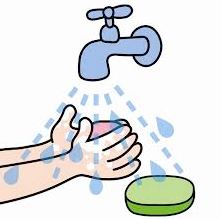
Hazlo con agua y jabón durante 60 segundos, frotando bien las palmas, el dorso y entre los dedos, sin olvidar las muñecas. Después, sécate con una toalla de un solo uso y utilízala para cerrar el grifo sin tocarlo.
2. Ventila la casa: 
Los virus y gérmenes pueden vivir durante varios días y, si no ventilas, estos se van concentrando en el interior de tu casa. Sobreviven especialmente bien en superficies lisas.
3. ¿Tienes un enfermo en casa? 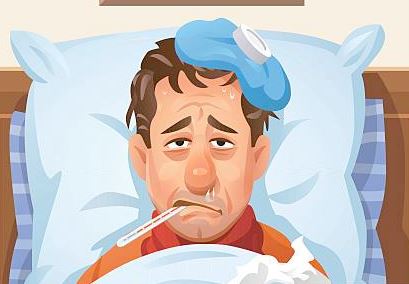
Evita compartir vasos, cubiertos, toallas u otros objetos que hayan podido estar en contacto con él.
4. Lava la ropa de casa y la de abrigo: 
En las sábanas, cojines, bufandas… se van acumulando virus y gérmenes, por lo que hay que lavar todo ello a menudo y hacerlo al menos a 60 grados.
5.No te toques la cara: 
Si tus manos han estado en contacto con algún virus y te tocas los ojos, la nariz y la boca, puede que acabes enfermando.
6. Estornuda sobre la manga de tu brazo: 
Cubrirte la boca con las manos solo favorece la transmisión de los virus.
Paso 2. Discuss with a compañero (a) which of the above recommendations you usually follow to avoid a cold. Additionally, please mention any other preventive measures you take.
*This essay is an adaptation of an article from the Spanish magazine Clara.
This page titled 10.6: Gramática- Los mandatos familiares -Tú (familiar) Commands was last modified on Thu, 22 Oct 2026 17:25:32 GMT and is shared under a CC BY-NC 4.0 license and was authored, remixed, and/or curated by Maria Y. Martell via source content that was edited to the style and standards of the LibreTexts platform.
The book could not be loaded just now.