Opening the book…

Sobre el artista: Efraín Recinos nació en Quetzaltenango en 1928 y murió en la Ciudad de Guatemala en el 2011. Fue un reconocido escultor, muralista, pintor, arquitecto, urbanista e ingeniero guatemalteco. Estudió dibujo y escultura en la Escuela Nacional de Artes Plásticas de Guatemala. También en 1968 fue a estudiar cerámica, mosaico y vidrio soplado en Inglaterra.
Learning Objectives
At the end of this chapter, students will be able to perform the following tasks in Spanish:
- I can buy clothes
- I can bargain over prices
- I can ask for sizes
- I can understand when instructed to pay at the cash register
- I can talk about events in the past
Vocabulario
- Clothing-related vocabulary and shopping and negotiation prices and buying
- Colors and additional adjectives
Mosaicos culturales
Las costumbres: Mercado al aire libre y el regateo
Estructuras gramaticales
- 7.1 Review Numbers: 100 and higher
- 7.2 Demonstrative Adjectives and Pronouns
- 7.3 Narrating the Past: Irregular Preterite Forms
Cultura
País: Guatemala
Música: Ricardo Arjona y Gaby Moreno
Personalidad: Rigoberta Menchú
Lectura
La ciudad Antigua
Vocabulario: ¡De compras!
Listen to the dialogue below.
Son las diez de la mañana y abren las tiendas. Los clientes empiezan a llegar.
Dependienta: Buenos días.¿En qué puedo servirle (ayudarle)?
Carlos: Quiero ver las camisas y sacos que están de rebaja.
Dependienta: Muy bien. ¿Qué talla usa usted?
Carlos: En camisa, una talla mediana y en saco una talla treinta y ocho (38). ¿Puedo probarme este saco?
Dependienta: Sí claro, allí está el probador.
En una zapatería...
Manuela: Me gustan estos zapatos rojos.
Empleado: ¿Qué número calza?
Manuela: Treinta y ocho (38).
Empleado: Muy bien. Ya se los traigo.
Manuela: Perdone, pero me quedan muy estrechos, ¿tiene un treinta y nueve (39)?
Empleado: Voy a revisar..Lo siento señora, pero no tenemos ese número. ¿Quiere probarse otro tipo de zapatos?
Manuela: No gracias. Voy a otra tienda.
Actividad # 1
While listening to the dialogue, circle V (verdadero/ true) or F (falso/false). If false, write the correct response.
- Carlos busca pantalones. V F
- Carlos usa talla mediana en camisas. V F
- A Manuela le quedan muy bien los zapatos. V F

| La ropa | Clothes |
|---|---|
| el abrigo | coat |
| la blusa | blouse |
| la bolsa (cartera) | purse/bag |
| los calcetines; las medias | socks |
| la camisa | shirt |
| *la camiseta | *t-shirt |
| la cartera | wallet (purse in Colombia) |
| la corbata | tie |
| la chaqueta (chamarra) | jacket |
| el cinturón (la correa) | belt |
| la falda | skirt |
| las gafas (de sol) | glasses (sunglasses) |
| los guantes | gloves |
| los jeans (vaqueros) | jeans |
| el impermeable | raincoat |
| los pantalones | pants |
| la ropa interior | underwear |
| el sombrero | hat |
| el suéter | sweater |
| el traje | suit |
| el traje de baño (el bañador) | bathing suit |
| el vestido | dress |
*Ocho (8) palabras para camiseta (t-shirt)
| Zapatos | Shoes |
|---|---|
| las botas | boots |
| las chanclas | sandals |
| las sandalias | sandals |
| los tacones | high heels |
| los tenis | tennis shoes |
| las zapatillas | tennis shoes (Spain) |
| *el par | pair |
| Adjetivos | Adjectives |
|---|---|
| ancho (a) | wide/loose |
| barato (a) | cheap |
| bueno (a) | good |
| caro (a) | expensive |
| corto (a) | short for things |
| claro (a) | light (colors) |
| elegante | elegant |
| estrecho (a), angosto (a) | narrow |
| apretado (a) | tight |
| estupendo | stupendous |
| largo (a) | long |
| mediano (a) | medium |
| nuevo (a) | new |
| oscuro (a) | dark (colors) |
| pequeño (a) | small |
| Los colores* | Colors |
|---|---|
| amarillo | yellow |
| anaranjado / naranja | orange |
| azul | blue |
| blanco | white |
| gris | grey |
| marrón, café | brown |
| negro | black |
| rojo | red |
| rosado / rosa | pink |
| verde | green |
| turquesa | turquoise |
| *colors can be used as adjectives (gender-number) |
| Ir de compras | Going Shopping |
|---|---|
| el almacén | department store |
| la caja | cash register |
| el centro comercial | shopping mall |
| el (la) cliente | customer |
| el (la) dependiente | clerk |
| en efectivo | cash |
| el mercado (al aire libre) | open air market |
| el precio fijo | fixed/set price |
| el regalo | gift |
| el tarjeta de crédito | credit card |
| la tienda | store |
| el (la) vendedor (a) | salesperson |
| Tipos de tela | Material |
|---|---|
| el algodón | cotton |
| el hilo, el lino | linen |
| la lana | wool |
| el poliéster | polyester |
| el rayón | rayon |
| la seda | silk |
| Otras palabras y expresiones | Other words and expressions |
|---|---|
| la ganga | bargain |
| el número (zapato) | shoe size |
| el probador | fitting room |
| la rebaja, la liquidación | sale, liquidation |
| la talla (la medida) | size (clothing) |
| hacer juego (con), combinar con | to match |
| “No tengo nada que ponerme.” | “I have nothing to wear.” |
| “¿Cómo me queda?” | “How do I look?” |
| “¿Esto me hace parecer (ver) gordo (a)?” | “Does this make me look fat?” |
| Verbos | Verbs |
|---|---|
| calzar | to wear (shoe size) |
| cambiar | to exchange |
| costar (o:ue) | to cost |
| devolver (o:ue) |
to return (something) |
| gastar | to spend |
| llevar | to wear; to take |
| medir (e:i) | to measure |
| probarse | to try on |
| regatear | to bargain |
| usar | to use |
| vender | to sell |
Actividad # 1
Sinónimos (synonyms) y antónimos (antonyms). Write the correct words using the vocabulary.
| Sinónimos (Synonym) | Antónimos (Antonym) |
|---|---|
| Talla
________________________________ |
Ancho
________________________________ |
| Jeans
________________________________ |
Blanco
________________________________ |
| Estrecho
________________________________ |
Pequeño
________________________________ |
| Traje de baño
________________________________ |
Caro
________________________________ |
| Cinturón
________________________________ |
Tarjeta de crédito
________________________________ |
| Rebaja
________________________________ |
Larga
________________________________ |
| Sandalias
________________________________ |
Claro
________________________________ |
Actividad # 2
Escoger. Choose the item in each group that does not belong.
- abrigo chaqueta traje de baño suéter
- llevar vender regatear corbata
- mercado cartera almacén tienda
- blusa falda vestido botas
- sandalias jeans tenis tacones
- camisa falda bolsa camiseta
- chamarra cinturón impermeable abrigo
¡Inténtalo!
Actividad # 3
Completar. Complete the following conversation about going shopping between Pablo and Anita using the correct words or expressions from the vocabulary.
| sandalias camiseta regalo centro comercial algodón jeans tarjeta de crédito rebajas ropa calzas |
|---|
Anita: ¿Quieres ir de compras al __________ ? Necesito unas __________ negras.
Pablo: Buena idea. ¿Qué número __________? Yo necesito comprarme unas botas
de invierno, unos __________ y una __________. También podemos comprar
un __________ para mi hermana. Es su cumpleaños la próxima semana.
A ella le gusta la __________ de __________ . Dice que es muy cómoda.
Anita: Pablo, tú crees que hay_____________ en las tiendas de ropa?
Pablo: No sé, pero puedo pagar con mi ________________.
¡Inténtalo!
Actividad # 4
Preguntas personales. With a partner, practice the following questions.
Estudiante 1
- ¿Te gusta ir de compras al centro comercial?
- ¿Dónde compras tu ropa usualmente? ¿Gastas mucho dinero en tu ropa?
- ¿Cuál es tu color favorito?
- ¿Qué ropa te gusta llevar para ir a la universidad?
- ¿Buscas rebajas cuando vas de compras?
Estudiante 2
- ¿Cuál es tu color favorito?
- ¿Compras ropa frecuentemente? ¿Dónde?
- ¿Cuánto calzas?
- ¿Te gusta usar la ropa ancha o estrecha?
- ¿En el verano, prefieres usar la ropa de algodón o de lino?
Actividad # 5
¡A Conversar! With a partner, write out, and then role-play a conversation between a customer and a sales salesperson in an open-air market. Use the ‘Expresiones útiles’ section below to help you with the dialogue.
| Expresiones útiles | |||
|---|---|---|---|
| “¿Qué desea?” (What would you like?) |
“¿Le puedo ayudar en algo?” (Can I help you with something?) |
“Estoy buscando…” (I’m looking for…) |
“Prefiero el (la) verde.” (I prefer the green one.) |
| Cliente (a) | Vendedor (a) / Dependiente |
|---|---|
|
|
|
|
|
|
|
|
|
|
Mosaicos Culturales: Mercado al aire libre
En latinoamérica es común encontrar mercados informales que se instalan de manera temporal durante algunos días específicos de la semana, donde se pueden comprar todo tipo de artículos.

En México y en América Central se le llaman Tianguis (A tianguis is an open-air market or bazaar traditionally held on certain market days in a town or city neighborhood. This bazaar tradition has its roots well into the pre-Hispanic period and continues in many cases essentially unchanged into the present day.)
En Madrid, España hay un mercado de pulgas (Flea market) todos los domingos. Se llama El rastro (click for more information) y tiene más de 400 años.
Regateo (Bargaining)
Es una práctica de negociación con el vendedor de mercancía para pedir un precio mejor. (Regateo is a friendly bargaining and it is an expected ritual when purchasing).

Y ahora ustedes…
- ¿Hay mercados al aire libre en tu ciudad?
- ¿Es común regatear en los Estados Unidos (E.E.U.U.)? ¿En dónde?
7.1 Gramática: Numbers: 100 to 1.000.000
- Most Spanish-speaking countries used periods (instead of commas) to separate thousands and millions.
¡Vamos a contar! (Let´s review the numbers)
| 1’s | 10’s |
100’s |
|---|---|---|
| Uno
Dos Tres Cuatro Cinco Seis Siete Ocho Nueve |
Diez: 10
Once: 11 Doce: 12 Trece: 13 Catorce: 14 Quince: 15 Diesciséis: 16 Diecisiete: 17 Dieciocho: 18 Diecinueve: 19 Veinte: 20 Veintiuno: 21 Veintidós: 22 Veintitrés: 23 . . . Treinta: 30 Treinta y uno: 31 Treinta y cinco: 35 Cuarenta: 40 Cincuenta: 50 Sesenta: 60 Setenta: 70 Ochenta:80 Noventa :90 |
Cien: 100 Ciento uno: 101 Ciento dos: 102 Ciento diez: 110 Doscientos (as): 200 Trescientos (as): 300 Cuatrocientos (as): 400 Quinientos (as): 500 Seiscientos(as): 600 Setecientos (as): 700 Ochocientos (as): 800 Novecientos (as): 900 |
| 1.000’s |
1.000.000’s |
|---|---|
| Mil: 1.000
Dos mil: 2.000 Tres mil: 3.000 Cuatro mil quinientos: 4.500 Veinte mil trescientos cuarenta y seis: 20.346 |
Un millón: 1.000.000
Dos millones: 2.000.000 Tres millones: 3.000.000 Diez millones: 10.000.000 Quince millones: 15.000.000 |
Notes:
- One million is “un millón” and millón DOES pluralize. When pluralized, it loses its accent.
- One thousand is “Mil” NOT ‘un mil.” “Mil” does not become plural unless you are talking about thousands in a non-specific way.
Por ejemplo: Hay miles de personas en la playa. (There are thousands of people on the beach.) - One hundred on the dot is “cien,” but once you cross over to 101, it becomes “ciento.”
- From two hundred through nine hundred is pluralized and may also be feminine if used to refer to a feminine noun.
Por ejemplo: Hay trescientas casas en mi barrio. (There are three hundred houses in my neighborhood.)
Actividad # 1
¡Vamos de compras! Let’s go shopping. Use the internet to find the current price of the items below, then write out the numbers in Spanish. FOLLOW THE EXAMPLES from the video.
1. ¿Cuánto cuesta un televisor que te gusta?
_______________________________ dólares.
2. ¿Cuánto cuesta una nueva computadora (ordenador) portátil que te gusta?
______________________________________ dólares.
3. ¿Cuánto cuestan unos tenis que te gustan?
______________________________________ dólares.
4. ¿Cuánto cuesta un carro nuevo que te gusta?
______________________________________ dólares.
Actividad # 2 – Write-Pair-Share
Preguntas personales. Answer the following questions in Spanish, then interview a classmate.
1. ¿En qué año naciste?
Yo nací en _______________.
2. ¿En qué año te graduaste de la escuela secundaria?
Me gradué en _______________.
3. ¿En qué año conociste (did you meet) a tu mejor amiga?
Conocí a mi mejor amiga en el año _______________.
4. ¿En qué año vas a graduarte de la universidad?
Voy a graduarme en el año _______________.
Otros años importantes de mi vida.
En _______________ _______________.
En _______________ _______________.
7.2 Gramática: Demonstratives Adjectives and Pronouns

A. Demonstratives Adjectives (Adjetivos Demostrativos)
- In Spanish, as in English, demonstrative adjectives are words used to ¨point out¨ how close something is to the speaker.
- Like other adjectives in Spanish, they agree in gender (feminine/masculine) and number (plural/singular) with the nouns they modify.
| Demonstrative Adjectives | |||
|---|---|---|---|
| Singular | Plural | ||
| Masculine (Singular) | Feminine (Singular) | Masculine (Plural) | Feminine (Plural) |
| este this) | esta (this) | estos (these) | estas (these) |
| ese (that) | esa (that) | esos (those) | esas (those) |
| aquel (that – over there) | aquella (that – over there) | aquellos (those – over there) | aquellas (those – over there) |
Ejemplos:
The demonstrative adjectives este, esta, estos, and estas are used to point out things that are close to the speaker and the listener.

The demonstrative adjectives ese, esa, esos, and esas are used to point out things that are NOT close in space and time to the speaker, but they may be close to the listener.

The demonstrative adjectives aquel, aquella, aquellos, and aquellas are used to point out things that are far away from the speaker and the listener.

B. Demonstratives Pronouns (Pronombres Demostrativos)
- Demonstrative pronouns are identical to demonstrative adjectives, except that they traditionally have an accent (*)
- Like demonstrative adjectives, these pronouns agree in gender (feminine/masculine) and number (plural/singular) with the corresponding noun.
| Demonstrative Pronouns | |||
|---|---|---|---|
| Singular | Plural | ||
| Masculine (Singular) | Feminine (Singular) | Masculine (Plural) | Feminine (Plural) |
| éste (this one) | ésta (this one) | éstos (these ones) | éstas (these ones) |
| ése (that one) | ésa (that one) | ésos (those ones) | ésas (those ones) |
| aquél (that one- over there) | aquélla (that one- over there) | aquéllos (those ones- over there) | aquéllas (those ones-over there) |
*Recently, the Real Academia accepted using demonstrative pronouns without written accents.
There are three (3) neuter demonstrative pronouns: esto, eso, and aquello. These forms refer to unidentified or unspecified things, situations, ideas, and concepts. They do not change gender or number and never carry an accent mark.
| “¿Qué es esto?” (What is this?) | “Eso es muy caro.” (That is very expensive.) | “Aquello es bonito.“ (That over there is pretty.) |
|---|
Actividad # 1
Cambiar. Change the singular sentences to plural and vice versa.
Ejemplo:
Estos vestidos son muy caros. (plural) Este vestido es muy caro. (singular)


- Aquel cinturón es de cuero:
- Estas camisetas son blancas:
- Esas faldas son muy largas:
- Estos pantalones son grises:
- Aquellos suéteres son baratos:
- Esta blusa es muy bonita:
Actividad # 2
Los pronombres demostrativos. Fill in the blanks and answer the questions to build your foundation with the demonstrative adjectives pronouns.
- ¿Prefieres estos zapatos o _______________? (those over there)
- ¿Cuál es tu gorra favorita? ______________, la uso todos los días. (this one)
- ¿Qué zapatos te gustan más? ¿______________? Voy a comprarlos. (these ones)
- ¿Cuáles gafas te gustan más? ¿Éstas o ______________? (those ones)
- ¿Cuál es tu carro? ______________; el rojo. (that one over there)
- ¿Qué blusa te gusta más? ______________; me gusta el color. (that one)
- ¿Quieres comprar estos calcetines negros o _____________ (those ones) blancos?
Actividad # 3
Tus preferencias. Paso 1. Fill in the blanks using demonstrative adjectives for THIS / THESE, THAT / THOSE, and THAT / THOSE way over there. (To give perspective, the items farthest away are the smallest photos.
Paso 2. Write a sentence to say which one you prefer using the demonstrative pronouns.
Ejemplo: Me gustan éstos (I like these ones) or Prefiero áquellos (I prefer that one over there)
  
________tenis azules. _______zapatos de tacón. ___________botas de cuero.
|
|---|
 
_________ chaqueta es azul y muy bonita. ________ chaqueta roja es más barata. 2. __________________________. |
|
_________jeans son cómodos ________jeans son baratos. 3. ____________________________. |


7.3 Gramática: Pretérito de verbos irregulares, parte 1
- These four (4) verbs: dar, ver, ir, and ser are irregular in the preterite.
- Note that SER and IR have the same form in the preterite.
| Dar: to give | |
|---|---|
| (yo) Di | (nosotros) Dimos |
| (tú) Diste | (vosotros) Disteis |
| (usted/él/ella) Dio | (ustedes/ellos/ellas) Dieron |
| Ver: to see | |
|---|---|
| (yo) Vi | (nosotros) Vimos |
| (tú) Viste | (vosotros) Visteis |
| (usted/él/ella) Vio | (ustedes/ellos/ellas) Vieron |
| Ir: to go Ser: to be |
|
|---|---|
| (yo) Fui | (nosotros) Fuimos |
| (tú) Fuiste | (vosotros) Fuisteis |
| (usted/él/ella) Fue | (ustedes/ellos/ellas) Fueron |
Completar. Using the verbs above, fill in the blanks to complete the sentences below.
1. Yo le _____ un collar de perlas a mi hermana para su cumpleaños.

2. Anoche, mis amigos _________ una película de horror en Netflix.

3. El semestre pasado tú __________ el mejor estudiante de la clase de español.

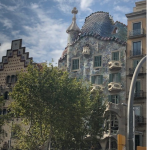
4. La profesora _____ a Barcelona el verano pasado.
Actividad # 1
Oraciones. Write seven (7) sentences using one item from each column. Use the preterite.
REMEMBER that the verbs SER and IR have the same conjugations in the past tense (preterite) The context will determine the meaning.
| tú ellos nosotros mi amigo y yo ustedes mi amiga yo |
(no) ir (no) ser (no) ver (no) dar |
al centro comercial estudiante una película de acción dependienta en una tienda a la playa a una amiga muy simpático (a) (s) |
ayer anoche la semana pasada el año pasado el semestre pasado anteayer |
|---|
- __________________________________________________________.
- __________________________________________________________.
- __________________________________________________________.
- __________________________________________________________.
- __________________________________________________________.
- __________________________________________________________.
- __________________________________________________________.
Actividad # 2
Preguntas. Interview a classmate using the following questions.
- ¿Cuándo FUISTE al centro comercial por última vez (last time)? ¿Con quién FUISTE?
- ¿VISTE a tus amigos anoche?
- ¿FUISTE a trabajar ayer?
- ¿Adónde FUISTE el verano pasado?
- ¿Cuál FUE tu clase favorita el semestre pasado?
- ¿FUISTE un buen estudiante?
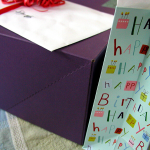
- ¿Quién te DIO regalos en tu último cumpleaños? ¿Qué te DIERON?
Pretérito de verbos irregulares, parte 2
- Verbs that end in -CAR, –GAR, and –ZAR take a spelling change in the ‘YO’ form only.
- All other forms of the verbs are regular.
- A helpful memory trick is to remember that “CAR-GAR-ZAR’s get QUÉ-GUÉ-CÉ’s.”
| Buscar: to look for / search for | |
|---|---|
| (yo) Busqué | (nosotros) Buscamos |
| (tú) Buscaste | (vosotros) Buscastéis |
| (usted/él/ella) Buscó | (ustedes/ellos/ellas) Buscaron |
Common -CAR verbs:
- Practicar (to practice)
- Sacar (to take out)
- Explicar (to explain)
- Equivocarse (to make a mistake / to be wrong)
- Tocar (to play an instrument / to touch)
| Pagar: to pay | |
|---|---|
| (yo) Pagué | (nosotros) Pagamos |
| (tú) Pagaste | (vosotros) Pagasteis |
| (usted/él/ella) Pagó | (ustedes/ellos/ellas) Pagaron |
Common -GAR verbs:
- Jugar (to play a sport or game)
- Llegar (to arrive)
- Colgar (to hang up)
- Apagar (to turn off)
| Almorzar: to eat lunch | |
|---|---|
| (yo) Almorcé | (nosotros) Almorzamos |
| (tú) Almorzaste | (vosotros) Almorzastéis |
| (usted/él/ella) Almorzó | (ustedes/ellos/ellas) Almorzaron |
Common -ZAR verbs:
- Empezar (to start / to begin)
- Alcanzar (to reach / to achieve a goal)
- Rezar (to pray)
- Abrazar (to hug)
1. Yo busqué una blusa en la tienda.

2. Yo pagué ciento veinte dólares por este reloj.

3. Yo almorcé una ensalada de pulpo.

Actividad # 1
Rellenar el espacio. Using the preterite, fill in the blank with the correct form of the verbs.
- Ayer, (yo) ________ (tocar) la guitarra y mi amigo ____________ (tocar) la batería (drums).
- Anoche, mi hermana ___________ (sacar) la basura y yo ___________(sacar) el perro a caminar.
- El lunes pasado, mi amiga___________ (llegar) tarde a la clase, pero yo ________ (llegar) a tiempo.
- La semana pasada, yo ____________ (buscar) un libro de arte en la biblioteca. busqué
- Ayer, yo _______________ (almorzar) un sándwich de jamón y queso y mis amigos ___________________ (almorzar) pizza.
- Anoche, mi novia ___________ (pagar) la cuenta en el restaurante porque yo la ____________ (pagar) el fin de semana pasado.
- Mijo, yo ya te lo _____________ (explicar) y tu padre te lo __________ (explicar) también – no peudes tener una serpiente (culebra) como mascota.

¡Inténtalo!
Actividad # 2
Preguntas. Interview a classmate using the following questions.
- ¿Cuánto PAGASTE por tu teléfono celular? ¿En qué tienda lo COMPRASTE?
- ¿A qué hora LLEGASTE a tu casa ayer?
- ¿Dónde y qué ALMORZASTE hoy?
- ¿JUGASTE videojuegos anoche? ¿Cuál? ¿Cuántas horas JUGASTE?
- ¿A qué hora APAGASTE tu teléfono anoche?
- ¿Cuándo *EMPEZASTE a estudiar español?
Pretérito de verbos irregulares, parte 3
| Pedir: to ask for / to order | |
|---|---|
| (yo) Pedí | (nosotros) Pedimos |
| (tú) Pediste | (vosotros) Pedistéis |
| (usted/él/ella) Pidió | (ustedes/ellos/ellas) Pidieron |
| Dormir: to sleep | |
|---|---|
| (yo) Dormí | (nosotros) Dormimos |
| (tú) Dormiste | (vosotros) Dormisteis |
| (usted/él/ella) Durmió | (ustedes/ellos/ellas) Durmieron |
| Preferir: to prefer | |
|---|---|
| (yo) | (nosotros) |
| (tú) | (vosotros) |
| (usted/él/ella) | (ustedes/ellos/ellas) |
| Servir: to serve | |
|---|---|
| (yo) | (nosotros) |
| (tú) | (vosotros) |
| (usted/él/ella) | (ustedes/ellos/ellas) |
Completar. Conjugate the -IR stem changers above in the preterite tense. Then, fill in the blanks to complete the sentences below.
| 1. Ayer, yo __________ churros con chocolate. | 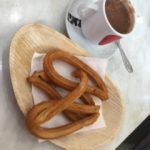 |
|---|---|
| 2. Mi hija __________ doce horas anoche. |  |
| 3. Yo me probé muchos pares de tenis,pero _______________ los verdes. |  |
| 4. Ayer, la mesera nos _____________ café. | 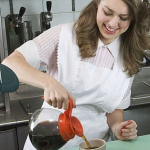 |
| Repetir: to repeat | |
|---|---|
| (yo) | (nosotros) |
| (tú) | (vosotros) |
| (usted/él/ella) | (ustedes/ellos/ellas) |
| Seguir: to follow | |
|---|---|
| (yo) | (nosotros) |
| (tú) | (vosotros) |
| (usted/él/ella) | (ustedes/ellos/ellas) |
| Conseguir: to get / to obtain | |
|---|---|
| (yo) | (nosotros) |
| (tú) | (vosotros) |
| (usted/él/ella) | (ustedes/ellos/ellas) |
| Sentir: to feel | |
|---|---|
| (yo) | (nosotros) |
| (tú) | (vosotros) |
| (usted/él/ella) | (ustedes/ellos/ellas) |
Completar. Conjugate the -IR stem changers above in the preterite tense. Then, fill in the blanks to complete the sentences below.
| 1. La profesora __________ las preguntas. |  |
|---|---|
| 2. Ayer, los patitos __________ a la niña. |  |
| 3. Yo __________ boletos para el concierto. |  |
| 4. Anoche, me __________ mal. |  |
Other common –IR stem-changers include Convertir (se) (to convert), Mentir (to lie), and Morir (to die).
Pretérito de verbos irregulares, parte 4
- The following verbs en el pretérito take entirely new stems.
- All these verbs share the same endings and they do not have accents.
- Let’s call these “los súper irregulares.”
| Tener: to have | |
|---|---|
| (yo) tuve | (nosotros) tuvimos |
| (tú) tuviste | (vosotros) tuvisteis |
| (usted/él/ella) tuvo | (ustedes/ellos/ellas) tuvieron |
| Infinitive | New Stem | Endings | Conjugations |
|---|---|---|---|
| estar poder poner querer saber venir |
estuv- pud- pus- quis- sup- vin- |
e iste o imos isteis ieron |
estuve, estuviste, estuvo, estuvimos, estuvisteis, estuvieron pude, pudiste, pudo, pudimos, pudisteis, pudieron puse, pusiste, puso, pusimos, pusisteis, pusieron quise, quisiste, quiso, quisimos, quisisteis, quisieron supe, supiste, supo, supimos, supisteis, supieron vine, viniste, vino, vinimos, vinisteis, vinieron |
| Infinitive | New Stem | Endings | Conjugations |
|---|---|---|---|
| decir traer conducir traducir |
dij- traj- conduj- traduj- |
e iste o imos isteis *ERON |
dije, dijiste, dijo, dijimos, dijisteis, dijeron traje, trajiste, trajo, trajimos, trajisteis, trajeron conduje, condujiste, condujo, condujimos, condujisteis, condujeron traduje, tradujiste, tradujo, tradujimos, tradujisteis, tradujeron |
| *Hacer | hice, hiciste, HIZO, hicimos, hicieron |
|---|---|
| *Haber | HUBO (there was) |
Ejemplos:
- ¿Qué hiciste ayer? (What did you do yesterday?)
Trabajé todo el día. (I worked all day.) - ¿Hubo mucha gente en la fiesta? (Were there a lot of people at the party?)
Sí, hubo mucha gente. (Yes, there were a lot of people.)
Actividad # 1
Rellenar el espacio. Using los verbos super irregulares, fill in the blank to complete the sentences.
- La semana pasada, mi amiga no (querer) __________ir al centro comercial conmigo (with me).
- ¿Por qué tú no _______________ (venir) a mi fiesta de cumpleaños? ¿Estás enojado conmigo?
- Ayer, (ser) ____________ el cumpleaños de mi hijo. Yo (hacer) _________ la cena y mi esposo (poner)_________la mesa.
- Yo no le (dar) _____ un regalo a mi papá en su cumpleaños porque él no (querer) ________nada.
- Mis compañeros de clase y yo ( hacer) _________________ la tarea de español.
- “Pero, Profesora… usted nunca nos (decir) ________________ eso.
- La última vez que yo (ir )________ a una fiesta, (conducir) _____________ una hora.
- ¿Tú (ver)________________la nueva película de Marvel?
¡Inténtalo!
Actividad # 2
Ayer. Read what the following people typically do. Then, using your imagination, say what they did DIFFERENTLY yesterday. Follow the example
Ejemplo:
Yo estoy en mi casa por la noche.
Ayer, yo ESTUVE en mi casa por la mañana.
- Tú vienes a la universidad todos los días.___________________________.
- Mi amigo hace ejercicio por las mañanas. ___________________________.
- Yo tengo que trabajar el sábado. ___________________________.
- Mi profesora traduce las nuevas palabras.___________________________.
- Nosotros traemos los libros a la clase.___________________________.
- Yo conduzco a mi trabajo.___________________________.
- Hay veinte estudiantes en la clase hoy.___________________________.
Actividad # 3
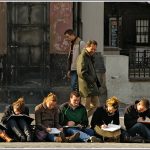
¡Vamos a escribir! Use the photos and infinitives provided to write sentences in the preterite based on what you see in the pictures.
| 1. La semana pasada, los estudiantes… |
 |
|---|---|
| 2. Anoche Patricia… |
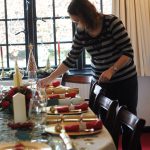 |
| 3. El viernes pasado, mis amigos y yo… |
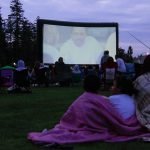 |
| 4. Este chico… |
 |
| 5. Anoche llovió mucho y por eso… |
 |
Actividad # 4
¡Vamos a hablar! Practice with a classmate the following questions.
Necesitas conjugar los verbos en el pretérito.
Ejemplo:
Estudiante 1: ¿Cuándo fue la última vez que TUVISTE un examen difícil?
Estudiante 2: TUVE un examen difícil hace dos días.
-
- Tener un examen difícil (TUVISTE. . . )
- Estar enfermo/a
- Saber (found out) algo interesante o un chisme (gossip)
- Venir a la clase tarde
- Haber una fiesta en tu casa
- Traducir algo del inglés al español
- Decir una mentira a su familia (a lie)
Hace + length of time (ago):
la semana pasada (last week)
ayer (yesterday)
el año pasado (last year)
Actividad # 5
Encuesta: ¿Qué hiciste? Find out what your classmates DID on the following times and occasions.
Ejemplo:
E1: ¿Qué hiciste __________?
E2: (Yo) __________.
| Nombre de tu compañero | Actividad que hizo | |
|---|---|---|
| Anoche | ||
| Esta mañana | ||
| El fin de semana pasado | ||
| En tus últimas vacaciones | ||
| En tu último cumpleaños |
Actividad # 6
¿Cuánto tiempo hace…? In groups, listen to Mariana’s video and respond to the following questions on how long she did those activities.
Preguntas de comprensión
- ¿Cuánto tiempo hace que Mariana fue al cine?
- ¿Qué hizo Mariana hace tres meses?
- ¿Con quién habló ella por teléfono?
- ¿Cuándo jugó ella videojuegos y qué videojuego jugó?
Actividad # 7
Canción: “A Primera Vista” (Bahiano)
Paso 1. Antes de escuchar… Responde a la siguiente pregunta:
¿Crees en el amor a primera vista?
Paso 2. Letra (Lyrics). Fill in the blanks with the correct form of the pretérito of the verbs in parenthesis
Verso Uno:
Cuando no tuve nada, __________ (pedir)
Cuando todo era ausencia, __________ (esperar)
En los días de frío, __________ (temblar)
Cuando tuve coraje, __________ (llamar)
Cuando llegó carta, la __________ (abrir)
Cuando escuché a Prince, __________ (bailar)
Al brillar la mirada, __________ (entender)
Cuando tuve alas, __________ (volar)
Cuando me llamaste, yo __________ (ir)
Cuando me di cuenta, estaba ahí
Cuando te encontré, me perdí
Y cuando te vi, me enamoré
Chorus:
Amarazáia, zoe, zaia, zaia
A hinhingá do hanhan. Oh!
Amarazáia, zoe, zaia, zaia
A hinhingá do hanhan. Oh! (2x)
Verso Dos:
Cuando no tuve nada, __________ (pedir)
Cuando todo era ausencia, __________ (esperar)
En los días de frío, __________ (temblar)
Cuando tuve coraje, __________ (llamar)
Cuando llegó carta, la __________ (abrir)
Cuando escuché a Bob Marley, __________ (bailar)
Al brillar la mirada, __________ (entender)
Cuando tuve alas, __________ (volar)
Cuando me llamaste, yo __________ (ir)
Cuando me di cuenta, estaba ahí
Cuando te encontré, me perdí
Y cuando te vi, me enamoré
Chorus (2x)
Paso 3. Escuchemos la canción.
Cultura: Guatemala


Capital: Ciudad de Guatemala
Extensión territorial: 108.889 km² (42.042 millas cuadradas)
Analogía con USA: Es del tamaño de Virginia
Población: 17.357.886 habitantes
Idiomas: español (oficial) y 21 lenguas mayas
Ciudades importantes:
- Mazatenango
- Quetzaltenango
- Puerto Barrios
- Escuintla
Datos curiosos:
Guatemala es el único país de Latinoamérica con 4 volcanes activos: Volcán de Pacaya, Volcán Santiaguito, Volcán de Fuego, Volcán Tacaná.

Música: Ricardo Arjona y Gaby Moreno
Canción: Fuiste tú
Letra de la Canción:
Fuiste tú
tenerte fue una foto tuya puesta en mi cartera,
un beso y verte hacer pequeño por la carretera.
lo tuyo fue la intermitencia y la melancolía,
lo mío fue aceptarlo todo porque te quería.
verte llegar fue luz, verte partir un blues.
Fuiste tú
de más está decir que sobra decir tantas cosas,
o aprendes a querer la espina o no aceptes rosas.
jamás te dije una mentira o te inventé un chantaje,
las nubes grises también forman parte de paisaje.
y no me veas así, si hubo un culpable aquí…
Fuiste tú
[Coro]
Que fácil fue tocar el cielo la primera vez,
cuando los besos fueron el motor de arranque,
que encendió la luz que hoy se desaparece
Así se disfraza el amor para su conveniencia
aceptando todo sin hacer preguntas
y dejando al tiempo la estocada a muerte.
nada más que decir…
sólo queda insistir…
dilo
Fuiste tú,
la luz de neón del barrio sabe que estoy tan cansada,
me ha visto caminar descalza por la madrugada.
estoy en medio del que soy y del que tú quisieras,
queriendo despertar pensando como no quisiera.
Y no me veas así, si hubo un culpable aquí…
Fuiste tú.
[Coro]
Personalidad: Rigoberta Menchú

Rigoberta Menchú es una líder maya quiché (Indigenous people from western Guatemala) y defensora de los derechos humanos.
Nació en Uspantan, Guatemala, el 9 de enero de 1959. Su misión personal es ayudar a la gente indígena de su país y de todo el mundo.
Ella recibió el Premio Nobel de la Paz (Nobel Peace Prize) en 1992.
El 7 de mayo de 2011 fue candidata a la presidencia de su país. Rigoberta Menchú tiene una meta (goal) importante: justicia social para Guatemala y toda la América Latina.
Preguntas de comprensión. After reading the short biography of Rigoberta Menchú, answer the following questions.
- ¿Dónde y cuándo nació Rigoberta Menchú?
- ¿Qué pasó en el año 1992?
- ¿Por qué es importante Rigoberta Menchú?
- ¿Quién es Rigoberta Menchú?
Lectura: Ciudad Antigua Guatemala

Paso 1. Read the following paragraph about the city of Antigua Guatemala
A 25 kilómetros al oeste de la Ciudad de Guatemala y a una altitud de 1470 metros sobre el nivel del mar, se encuentra la hermosa ciudad colonial de Antigua.
Antigua Guatemala fue fundada en 1543 y fue capital de gran importancia hasta 1773, cuando un terremoto (earthquake) la destruyó. Sin embargo (however), conserva el carácter original de su arquitectura. La ciudad de Antigua fue declarada Patrimonio de la Humanidad por la UNESCO en 1979.
Es un importante destino turístico guatemalteco por su bien conservada arquitectura barroca española y por el gran número de ruinas de iglesias católicas. Algunos lugares de interés para visitar son los palacios de los capitanes generales, el palacio del ayuntamiento, el arco de Santa Catalina, el convento de la Merced y la catedral.
Una fecha muy apropiada para conocer Antigua, es durante las celebraciones de la Semana Santa (holy Week). Cuando se puede disfrutar de uno de los rituales católicos más impresionantes del mundo, celebrados de manera sincrética con la cultura maya.
Paso 2. Comprensión. Based on the reading, indicate if the following statements are true (CIERTO) or false (FALSO). If false, write the correct information.
- Antigua Guatemala fue fundada en 1543. C F
- El terremoto destruyó por completo toda la arquitectura colonial. C F
- Las iglesias católicas son un punto de interés turístico. C F
- La celebración de la Semana Santa muestra únicamente los rituales católicos. C F
This page titled 7.1: Capítulo 7 - ¡De compras! was last modified on Thu, 22 Oct 2026 17:25:23 GMT and is shared under a CC BY-NC 4.0 license and was authored, remixed, and/or curated by Maria Y. Martell via source content that was edited to the style and standards of the LibreTexts platform.
The book could not be loaded just now.