Opening the book…
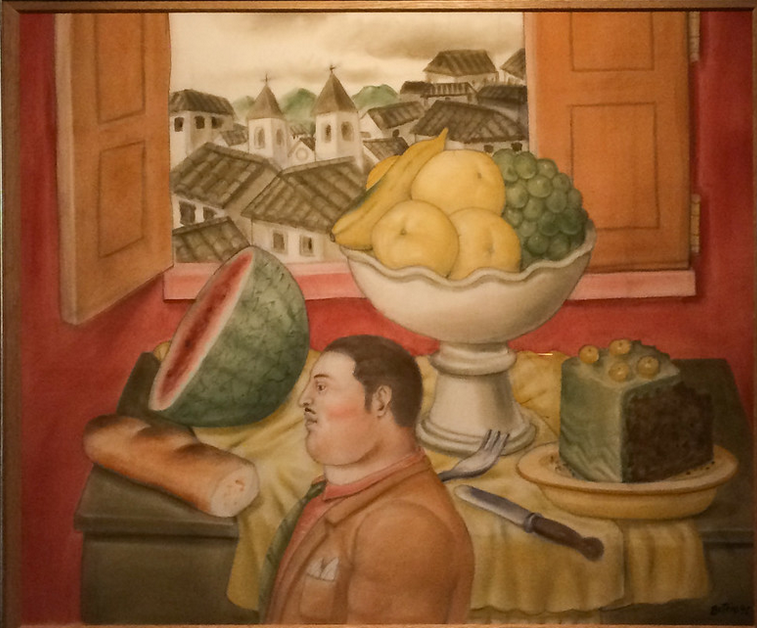
Still Life and Landscape with Man (Fernando Botero)
Sobre el artista: Fernando Botero nace en Medellín, Colombia, en 1932 y muere en 2023. Él es un artista dedicado a la escultura, la pintura y el dibujo. Su arte se caracteriza por otorgarles mucho volumen a las figuras humanas y animales.
Capítulo 6: ¡Buen Provecho!
Learning Objectives
At the end of this chapter, students will be able to perform the following tasks in Spanish:
- I can talk about foods, drinks, eating preferences, and meals
- I can discuss likes and dislikes
- I can order in a restaurant
- I can talk about events in the past
Vocabulario
- Food, food description, and meals of the day
- Restaurant related vocabulary
Mosaicos culturales
Las costumbres: hacer la sobremesa y el cafecito
Estructuras gramaticales
- 6.1 Referring to Objects Already Mentioned: Direct Object Pronouns
- 6.2 Indicating to/for Whom an action is done: Indirect Object Pronouns
- 6.3 Expressing Likes and Dislikes: Verbs like GUSTAR
- 6.4 Narrating the Past: Preterite Forms of Regular Verbs
Escritura
Imagine your own restaurant
Cultura
País: Colombia
Música: Carlos Vives
Personalidad: Gabriel García Márquez
Lectura
Cartagena de Indias
Vocabulario: desayuno, almuerzo y cena
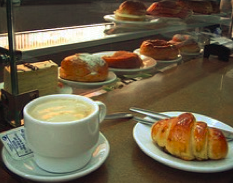
| El desayuno | Breakfast |
|---|---|
| la avena | oatmeal bun |
| el bollo |
bun (Spanish) |
| el cereal | cereal |
| la dona | donuts |
| los huevos (fritos, duros) | eggs (fried, hard-boiled) |
| los huevos revueltos | scrambled eggs butter |
| la mantequilla | butter |
| el pan tostado | toast bread |
| el pan a la francesa toast | toast French |
| los panqueques | pancakes |
| la salchicha | sausage |
| el tocino | bacon |
¡Inténtalo!
| El almuerzo y la cena | Lunch and Dinner |
|---|---|
| el arroz | rice |
| el caldo | broth |
| la ensalada | salad |
| los fideos | noodles |
| la papa (patata) al horno | baked potato |
| las papas fritas | fried potatoes (fries) |
| el perro caliente | hot dog |
| el sándwich | sandwich |
| la sopa | soup |
¡Inténtalo!
| Los postres | Desserts |
|---|---|
| el arroz con leche | rice pudding |
| el dulce de membrillo | quince paste |
| el flan | flan |
| la fruta y queso | fruit and cheese |
| las galletas | cookies |
| el helado | ice cream |
| el pastel | cake |
| el pastel de queso | cheesecake |
| el pastel de chocolate | chocolate cake |
| el pastel tres leches | tres leches cake |
¡Inténtalo!
| El restaurante | The restaurant |
|---|---|
| el ambiente | atmosphere |
| el (la) camarero (a) la camarera | waiter/waitress |
| el (la) mesero (a) la mesera |
waiter/waitress (Latin Am.) |
| comer fuera la comida | eat out food / takeout |
| la cuenta | the check / food bill |
| el (la) dueño | check owner |
| entremeses | appetizers |
| el menú (la carta) | the menu |
| el plato (principal) | main dish |
| la propina | tip |
| la tarjeta de crédito | credit card |
¡Inténtalo!
| Verbos | Verbs |
|---|---|
| almorzar | to have lunch |
| desayunar | to have breakfast |
| cenar | to have dinner |
| comer | to eat |
| dejar propina | leave a tip |
| escoger | to choose |
| merendar (e:ie) | to snack |
| pagar | to pay |
| pedir (e:i) | to order |
| probar (o:ue) | to taste |
| recomendar (e:ie) | to recommend |
| saber | to taste (like) |
| servir (e:i) | to serve |
Vocabulario: La comida
| La mesa y los cubiertos |
Table Setting and Utensils |
|---|---|
| la cuchara | spoon |
| la cucharita | teaspoon |
| el cucharón | ladle |
| el cuchillo | knife |
| el cuenco | bowl |
| la fuente de sopa | soup tureen |
| la jarra | pitcher |
| el mantel | tablecloth |
| el platillo | saucer |
| el plato | plate |
| el plato hondo | deep dish |
| el salero | salt shaker |
| la servilleta | napkin |
| la taza (el pocillo) | cup |
| el tenedor | fork |
| el vaso | water glass |
¡Inténtalo!
| Las verduras | Vegetables |
|
el apio |
celery |
|---|---|
| las arvejas (los guisantes) | green peas |
| la berenjena |
eggplant |
|
el brócoli |
broccoli |
| la cebolla | onion |
| los champiñones | mushrooms |
| los espárragos | asparagus |
| los frijoles | beans |
| la lechuga | lettuce |
| el maíz | corn |
| la mazorca de maíz | ear of corn |
| la calabaza |
pumpkin /squash |
| el calabacín | zucchini |
| las papas / patatas (fritas) | potatoes / French fries el |
| el rábano | radish |
| el pepino | cucumber |
| la zanahoria | carrot |
¡Inténtalo!
| Las frutas |
Fruits |
|---|---|
| los arándanos | cranberries |
| la banana (*el plátano; el banano) | banana |
| el durazno / melocotón | peach |
| la fresa (la frutilla) | strawberries |
| la granada | pomegranate |
| el kiwi | kiwi |
| el limón | lemon |
| la manzana | apple |
| la naranja | orange |
| las pasas | raisins |
| la pera | pear |
| la piña | pineapple |
| la toronja (el pomelo) | grapefruit |
| la sandía | watermelon |
| las uvas | grapes |
| el tomate | tomato |

¡Inténtalo!
| La merienda |
Snacks |
|---|---|
| la barra de cereales | granola bars |
| las nueces | nuts |
| el queso | cheese |
| las sobras | leftovers |
| el yogur | yogurt |
¡Inténtalo!

| La carne | Meat |
|---|---|
| el ave | poultry |
| el bistec | steak |
| la carne | meat |
| la carne de res | beef |
| la carne molida | ground beef |
| la chuleta (de cerdo / de puerco) | porkchop |
| la hamburguesa | hamburger |
| el hígado | liver |
| el jamón | ham |
| el pavo (guajolote) | turkey |
| el pollo (asado) | roast chicken |
| el pollo frito | fried chicken |
¡Inténtalo!
| El pescado y los mariscos | Fish and seafood |
|---|---|
| las almejas | clams |
| el atún | tuna |
| los camarones | shrimp |
| el cangrejo | crab |
| la langosta | lobster |
| las ostras | oysters |
| el salmón | salmon |
¡Inténtalo!
| Las bebidas | Drinks |
|---|---|
| el agua (mineral) | (mineral) water |
| el batido (de leche, de frutas) | (milk, fruit) shake |
| el café | coffee |
| la cerveza | beer |
| el jugo (de fruta) | (fruit) juice |
| *el zumo (España) | juice (Spain) |
| la jamaica | hibiscus flower drink |
| la horchata | delicious sweet rice drink |
| la leche | milk |
| el refresco | soft drink |
| el té caliente | hot tea |
| el té frío (helado) | iced tea |
| el vino (blanco / tinto) | wine (white/red) |
¡Inténtalo!
| Los condimentos, las especias y otros ingredientes | Condiments, Spices, and Other Ingredients |
|---|---|
| el aceite | oil |
| la aceituna | olives |
| el aderezo | dressing (salad) |
| el ajo | garlic |
| el almíbar | syrup |
| el azúcar | sugar |
| el conservador | preservative |
| la harina | flour |
| la jalea | jelly |
| la mantequilla | butter |
| la mayonesa | mayonnaise |
| la miel | honey |
| la mostaza | mustard |
| la pimienta | black pepper |
| la sal | salt |
| el vinagre | vinegar |
¡Inténtalo!
Actividad # 1
¡Inténtalo!
Check for answers
Actividad # 2 Pre-chapter activity
An important part of this chapter involves describing meals. In this activity, you will interpret the paragraph below that describes typical meals in the author’s country and what he eats for each meal. Then, follow the steps outlined below to discuss what you eat for breakfast, lunch, snack, and dinner.
Hola. Me llamo José María. Soy estudiante en la Universidad de Costa Rica. Soy tico (es decir, que soy de Costa Rica; los costarricenses nos llamamos “ticos”). En mi país, el desayuno más típico es el gallo pinto—un plato que consiste en una combinación de arroz, frijoles, cebolla y culantro. Se sirve con huevos, queso y salsa Lizano. Yo desayuno gallo pinto dos o tres días por semana. Cuando no desayuno gallo pinto, desayuno cereales o frutas con yogur. En Costa Rica, las frutas son muy deliciosas y frescas. Mis frutas preferidas son la piña, la pitaya (dragon fruit) y el maracuyá (passion fruit). En mi país, tomamos un breve (brief) descanso del trabajo o de las clases antes del almuerzo que llamamos “la hora del cafecito.” Son unos quince o veinte minutos. Hablamos con los compañeros, tomamos un cafecito y merendamos unas galletas. Los días en que yo desayuno el gallo pinto, como las sobras para el almuerzo porque es barato y saludable. A veces, almuerzo un sándwich de algún tipo u otro. Entre el almuerzo y la cena, merendamos otra vez. Tomamos un cafecito por la tarde con una merienda como el chifrijo, los gallos con picadillo o las chorreadas. La cena más típica de mi país es el casado. Tiene pollo, arroz, frijoles, ensalada de lechuga, tomate y plátano maduro. Yo ceno casado con frecuencia, pero también a veces para la cena yo como sopa, ceviche y más.
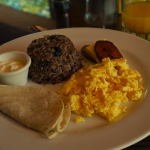
Reading Comprehension. Based on the above paragraph, answer the following questions:
- Describe el desayuno típico en Costa Rica (Name and describe it)
- ¿Cuáles son las frutas favoritas de José María?
- ¿Por qué come sobras José?
- Nombra las comidas que come José para la cena
Paso 1: Look at the following charts and circle each food that describes typical meals in your country and what you typically eat in your day-to-day life.
| El desayuno más típico de mi país consiste en:
La fruta El yogur Los cereales Los panqueques Los huevos La carne El arroz Los frijoles Algo más: _________________________________________ |
En un día típico, yo desayuno:
La fruta El yogur Los cereales Los panqueques Los huevos La carne El arroz Los frijoles Algo más: _________________________________________ |
|---|---|
| Una merienda típica de mi país consiste en:
La fruta El yogur El café El queso Los vegetales Las galletas Algo más: _________________________________________ |
En un día típico, yo meriendo:
La fruta El yogur El café El queso Los vegetales Las galletas Algo más: _________________________________________ |
| El almuerzo más típico de mi país consiste en:
Los sándwiches Las frutas La sopa La pizza Macarrones con queso Algo más: _________________________________________ |
En un día típico, yo almuerzo:
Los sándwiches Las frutas La sopa La pizza Macarrones con queso Algo más: _________________________________________ |
| La cena más típica de mi país consiste en:
La carne El pollo El pescado El arroz Los frijoles Los vegetales Las papas Las hamburguesas La sopa Barbacoa Algo más: _________________________________________ |
En un día típico, yo ceno:
La carne El pollo El pescado El arroz Los frijoles Los vegetales Las papas Las hamburguesas La sopa Barbacoa Algo más: _________________________________________ |
Paso 2: Write a paragraph in Spanish describing typical meals in your country and what you eat for each meal on a typical day.
You can start with:
Una comida típica de mi país es ___________________.
Normalmente para el desayuno yo como ___________________ and so on…
Post-activity:
What did you notice about important new vocabulary words and/or verbs and grammar that have to do with discussing food and meals in Spanish? (this part can be written in English)
______________________________________________________________
______________________________________________________________.
Based on what you have learned so far, write five questions in Spanish that you can use to interview a native speaker about typical dishes in their community and/or what they typically eat.
- ______________________________________________________________
- ______________________________________________________________
- ______________________________________________________________
- ______________________________________________________________
- ______________________________________________________________
Actividad # 3
Definiciones: los alimentos. Match each definition in the left column with the appropriate food in the right column.
La paella (Credit: María Martell) |
|
|---|
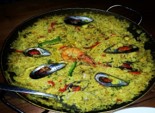
¡Inténtalo!
Actividad # 4
Las frutas. Look at the images and answer the questions.
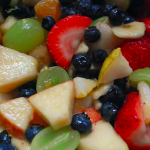 1. ¿Qué hay en esta (this) ensalada de frutas?
Hay:
_____________________________________________________________.
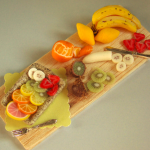 2. ¿Qué hay en esta ensalada de frutas que no tiene la anterior?
Hay:
______________________________________________________________.
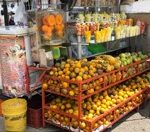
3. ¿Qué frutas reconoces (recognize) en esta foto?
Reconozco:
______________________________________________________________.
4. ¿Cuál es tu fruta favorita y por qué?
______________________________________________________________.
5. ¿Qué frutas comes para la merienda (snack) o postre?
______________________________________________________________.
Actividad # 5 Mi plato
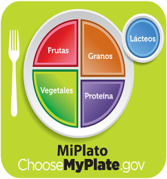
Paso 1: First, categorize as much of our vocabulary as you can of each section of Mi plato
Frutas: _____________________________________________
Granos:_____________________________________________
Vegetales (verduras):__________________________________
Proteína:____________________________________________
Lácteos:______________________________________________
Paso 2: Click on this site: Elegir mi plato (pamphlet about a healthy lifestyle), and open the link in a new tab. Read, take notes, and complete the following:
1. Lo que entendí: what I understood:
_________________________________________
2. Nuevas palabras y expresiones que aprendí: new words and expressions I learned:
_________________________________________
3. Lo que NO entendí: what I did not understand:
_________________________________________
4. ¿Por qué es importante comer frutas y vegetales?
_________________________________________
Actividad # 6
Las comidas. Respond to the following questions using complete phrases.
1. ¿Qué desayunas en un día típico?
_________________________________________
2. ¿Qué desayunas cuando sales a un restaurante?
_________________________________________
3. ¿A qué hora almuerzas normalmente?
_________________________________________
4. ¿Cuál es tu merienda favorita?
_________________________________________
5. ¿Qué tipo de sándwich prefieres?
_________________________________________
6. ¿Qué cenas en un día típico?
_________________________________________
7. ¿Qué bebes con tu cena usualmente?
_________________________________________
8. ¿Cuál es tu postre favorito?
_________________________________________
9. ¿Eres vegetariano(a)?
_________________________________________
Actividad # 7
ENCUESTA: Las comidas y bebidas favoritas. Ask your compañeros about
their favorite foods and drinks.
Ejemplo:
E 1: ¿Cuál es tu bebida favorita?
E 2: Mi bebida favorita es el agua.
| tu compañero | Bebida favorita | Desayuno típico | Almuerzo típico | Cena favorita | Postre favorito |
|---|---|---|---|---|---|
| En Resumen (In Summary): En el restaurante |
|---|
Vocabulario en contexto
Ana y María salieron a cenar a un restaurante el viernes pasado.
Mesero (Waiter): “Buenas noches, ¿Qué desean beber?”
Ana: “Yo quiero una copa de vino tinto”
María: “Para mí, un vaso de agua mineral”
– —El mesero les sirvió las bebidas.
Mesero: “¿Están listas para ordenar (pedir)?”
Ana: “Me gustaría una ensalada y el *bistec al punto con papa asada y brócoli”
María: “Yo quiero los camarones al ajillo con arroz”
Mesero: “¿Quiere ensalada o sopa?”
María: “No, solo el plato principal”
–El mesero les sirvió la comida. Ellas comieron con gusto.-
Mesero: ¿Desean postre o café?
Ana: “No, gracias, yo estoy bien.”
María: “Sí, deseo el pastel de queso y un cortado, más tarde…”
Ana: “Perdón, ¿nos puede traer la cuenta, por favor?”
Mesero: “Aquí tiene la cuenta.”
Ana: “María, yo pago la cuenta y tú dejas la propina.”
*el bistec (la carne) se puede preparar en una variedad de maneras:
|
|---|
Actividad # 1: Comprensiòn Auditiva (Listening comprehension)
While listening to the dialogue, circle V (verdadero/ true) and F (falso/false). If false, write the correct response.
1. María pidió un vaso de agua mineral.
________________________________________________
2. Ana y María pidieron ensalada.
________________________________________________
3. Ana no desea postre.
________________________________________________
4. Las dos pagaron la cuenta.
________________________________________________
Most restaurant conversations occur predictably. You will give yourself a conversational advantage if you can anticipate common phrases based on the situation.
1. Llegada (Arrival )
| Mesero; camarero mesera (Waiter ) | Clientes (Customers) |
|---|---|
|
|
Nota Cultural
In most Spanish-speaking countries, after food is delivered, the server generally stops by once to see if everyone is content and then gives the group their space. It is considered rude for the server to continually stop by and interject while the group is dining and socializing. Some Americans misinterpret this as poor service since we are accustomed to regular check-ins from servers.
Along those same lines, diners have to ask the server for the check-in in most places. It is considered rude for a server to drop it off, as if to say, “It’s time to go.”
2. El Pedido (Ordering/Requesting)
| Mesero; camarero mesera (Waiter ) |
Clientes (Customers) |
|---|---|
| – “¿Están listos para ordenar (pedir)?” (Are you ready to order? ) | “Sí, estamos listos.” (Yes, we are ready.) |
| “¿Qué desean / quieren de tomar?” (What would you like to drink? )
“¿Qué desean / quieren de comer?”(What would you like to eat? ) |
“”Yo quiero…”” (I want.)
“”Para mí…”” (For me.) “”Me gustaría…”” (I would like…) “”Me puede traer…”” (Can you bring me…) -bebidas (drinks)- un vaso de: agua, jugo, té frío. (a glass of: water, juice, ice tea) Una copa de: vino blanco/tinto. (a cup of white/red wine) una botella de: agua, vino. (a bottle of water, wine) comida/alimento (meal / food )- Una ensalada mixta. (a mixed salad) Una sopa de. (a soup “of the day”) La pechuga a la plancha. (grilled breast ) Las chuletas de cerdo. (pork chops) Los camarones al ajillo. (garlic shrimp) |
| – “¡Buen Provecho!” (Enjoy!) | “Gracias!” (Thank you!) |
| – “¿Desean / quieren algo más?” (Would you like something else?) | “No, gracias.” (No, thank you.)
-o- “”Sí, quiero otra…”” (Yes, I want another…) cerveza. (beer ) Vaso de agua. (glass of water ) |
| – “¿Desean / quieren postre o café?” (Would you like dessert or coffee?) | “No, gracias.” (No, thank you.)
-o- “”Sí, quiero…”” (Yes, I want…) un flan (flan) un helado de (ice cream) un pastel de queso (cheesecake) un café con leche (coffee with milk) un té con limón (tea with lemon) |
3. La Salida (The Exit)
| Mesero; camarero mesera (Waiter ) | Clientes (Customers) |
|---|---|
| – “¿Cómo estuvo todo?” (How was everything?) | “Todo bien / todo muy bueno.” (Everything was fine / very good.) |
| “Enseguida.” (Right away.)
“Aquí tiene / está la cuenta.” (Here is the bill.) |
“La cuenta, por favor.” (Check, please.)
“¿Me puede traer la cuenta?” (May I have the bill? / Can you bring me the check? ) |
| “Sí, aceptamos.” (Yes, it is accepted.)
“No, solo en efectivo.” (No, just cash.) |
– “¿Aceptan tarjetas de crédito?” (Do you accept credit cards? ) |
| “Hasta luego.” (See you later.) | – “Muchas gracias por todo.” (Thanks for everything) |
Actividad # 2
Situaciones. Work with two or more compañeros to act out the following situations in Spanish. Using the restaurant phrases.
- You walk into a restaurant and ask for a table for three people to see the menu.
- You and your friend just finished your lunch at a restaurant. You offer to pay the bill and ask your friend to leave the tip.
- You are at a restaurant. The waiter comes and asks you what you want to drink. You order a glass of iced tea and a regular glass of water.
- You are at a restaurant and very hungry. You order a salad, main course, wine, and dessert. The server brings the food back. When it is time to pay, you realize you have no cash.
- You walk into a café in Madrid. You order a coffee with milk and a glass of mineral water.
Actividad # 3
ENTREVISTA. Practice the following questions with a compañero.
Estudiante 1
- ¿Qué clase de restaurante te gusta más?
- ¿Qué tipo de comida te encanta? Y ¿por qué?
- ¿Cuántas veces por semana comes fuera de casa? ¿Comes en algún (any) restaurante en particular? ¿Dónde?
- ¿Vas mucho a restaurantes de servicio rápido? ¿Cuál es tu favorito? ¿Qué pides normalmente?
Estudiante 2
- ¿Cuál es tu restaurante favorito? Y ¿Por qué?
- ¿Comes en restaurantes de comida rápida? ¿Qué comes normalmente?
- ¿Cuál es el restaurante más barato cerca (near) de tu casa? ¿Cómo es el ambiente?
- ¿Prefieres comer fuera o en tu casa?
Mosaicos Culturales: Las costumbres
Hacer la sobre mesa
Después de comer, los hispanos permanecen sentados (remain seated) alrededor de la mesa para conversar y compartir historias. A esto se le llama “hacer la sobremesa”.

Y ahora ustedes…
- ¿Haces la sobremesa con tu familia?
- ¿Se hace la sobremesa en este país?
Generalmente en los países hispanos se sirve café después del postre. Normalmente es un café tipo espreso o cortadito y se sirve en tazas pequeñas.

Y ahora ustedes…
- ¿Se bebe mucho café en este país? ¿Qué tipo es más común?
- ¿Ustedes beben café después del postre?
6.1 Gramática: Direct Object Pronouns (Los pronombres de complemento directo)
Before we start with Direct Objects, it is important to review some terms first:
Subject: The do-er of the action
Verb: The action
Direct Object: Receives the action
To easily identify the direct object of a sentence, ask yourself WHO or WHAT is being “verbed.”
Ejemplo: Yo compro comida en Sprouts. (I buy food in Sprouts)
Subject: Yo ( I )
Verb: compro ( buy )
Direct Object: comida ( food )
WHAT do I buy? Food
Actividad # 1
Los complementos directos. Identify the Subject, Verb, and Direct Object using S, V, and DO in the following sentences.
- Mis amigos beben mucho café todos los días.
- Yo preparo tacos todos los martes.
- Ella cocina la cena para su familia.
- Jorge y Gloria meriendan barras de cereal a menudo (often).
- Mi esposo y yo no comemos carne roja.
NOTE: Personal A refers to using an “a” when a person is the sentence’s direct object.
Llamo a mis papá una vez por semana. ( I call my dad once a week. )
Llevo a mis hijos a la escuela. ( I take my kids to school. )
*We DO NOT use the personal a with the verb Tener or Hay.
Yo tengo muchos primos. ( I have a lot of cousins. )
Hay veinte estudiantes en la clase de español. ( There are twenty students in the Spanish class. )
Actividad # 2
La “A” personal. Determine if a personal “a” is required in each sentence. If so, put “a” in the blank. If not, put an “x.”
- Tú necesitas _____ un carro nuevo.
- Llevo ______ mi mochila a la clase.
- Hay _____ diez personas aquí.
- Yo no tengo_____ novia.
- El papá lleva ______ sus hijos a la escuela.
- Yo necesito llamar ______mi mamá.
*Direct Object Pronouns
Like in English, we use Direct Object Pronouns, or complementos directos, to replace the direct object after establishing what we are talking about. We do this to avoid repetition in speech and writing.
For example, if I said:
I prefer to eat eggs for breakfast. I eat eggs almost every day. I prepare eggs in different ways. Sometimes, I eat eggs for lunch and dinner. I feel that eggs are a good source of protein.
People listening to me would think: already with the eggs, we get it!! (English speakers will have replaced eggs for THEM after the first sentence.
NOTE: To use los complementos directos, remember to conjugate the verb based on the person doing the action, just like always.
Direct Object Pronouns
| When I receive the action => Me | When we receive an action => Nos |
|---|---|
| When you (informal) receive the action => Te | When you all (Spain) receive the action => Os |
| When you (formal), he, she, or singular noun receives the action => Lo, La | When you guys, they, or plural noun receives the action => Los, Las |
Ejemplos:
- Invito a mis amigos (I am inviting WHO? —Mis amigos!) =>
LOS invito a cenar todos los sábados. I replaced mis amigos for LOS - Pago mi cuenta en el restaurante McDonald’s (I pay WHAT? —The bill) =>
LA pago en efectivo (
*Position of Direct Object Pronouns
- Before the conjugated verb & negative commands.
- LOS tengo en mi mochila. => I have THEM in my backpack
- ¡No LOS ponga en la mesa! => Don´t put THEM on the table
- “¿Tienes las llaves del carro?” Sí, LAS tengo. => Yes, I have THEM
- When you have TWO VERBS Attached to the second verb (infinitive) or before the first verb.
- Quiero comprarLAS / LAS quiero comprar. => I want to buy THEM
- Estoy tomándoLO / LO estoy tomando. => I am taking IT / I am drinking IT
- Affirmative commands (attached to the command)
- ¡Dígame la verdad! => Tell ME the truth!
- ¡Llámala ahora! => Call HER now!
Actividad # 3
El complemento directo. Read the following sentences and do the following:
- Underline the direct object.
- In the blank, write the pronoun you would use to replace it.
- Rewrite each sentence using the Direct Object Pronoun. Follow the example.
Ejemplo:
2. LA
3. Yo no LA bebo. (I don’t drink it.)
1. Mi media naranja (better half) come mucho chocolate.
_____________________________________________
2. Mi profesora bebe café colombiano todos los días.
______________________________________________
3. Necesito comprar la carne mañana.
(a) __________________________________________
(b) __________________________________________
4. Marta y Paco preparan los mariscos para la cena.
____________________________________________
5. Voy a llamar a mis padres mañana.
(a) __________________________________________
(b) __________________________________________
Actividad # 4
Conversación: Las comidas del día. Say if we eat the following foods for breakfast (el desayuno), lunch (el almuerzo), or dinner (la cena). Follow the example.
Ejemplo:
¿las hamburguesas? LAS comemos para el almuerzo y la cena (I am replacing las hamburguesas for LAS)
LAS como para el almuerzo y la cena.
| 1. Los huevos revueltos | 6. Los espárragos |
|---|---|
| 2. La sopa | 7. El tocino |
| 3. Un sándwich | 8. Las enchiladas |
| 4. Los panqueques | 9. El pollo |
| 5. La ensalada de lechuga | 10.Las chuletas de cerdo |
Tricky Verbs: These verbs take Direct Object Pronouns
Buscar (to look for) Esperar (to wait for)Escuchar (to listen to) Mirar (to look at)
Ver (to see)
Actividad # 5
¡A responder! Answer the following questions. Be prepared to share your answers.
Ejemplo: ¿Ves a tu novio hoy? (No, no LO veo / Sí, LO veo.)
- ¿Buscas un supermercado?
- ¿Ves a tus amigas hoy?
- ¿Esperas por tu profesor?
- ¿Siempre escuchas a tus padres?
- ¿Miras la televisión todos los días?
Actividad # 6
¡Hablemos! Work with a classmate, taking turns asking and answering these questions. Usa el complemento directo in your answers.
- ¿Quién prepara la comida en tu casa?
- ¿Dónde comes el almuerzo normalmente?
- ¿Llamas a tus padres con frecuencia?
- ¿Vas a hacer tu tarea esta noche?
- ¿Ves a tus amigos los fines de semana? ¿Qué hacen?
- ¿Miras tu Facebook o Instagram con frecuencia?
- ¿Quiénes TE llaman en tu cumpleaños?
- ¿Quién TE ayuda cuando lo necesitas (when you need it)?
- ¿Quién TE manda mensajes de texto?
6.2 Gramática: Indirect Object Pronouns (Los pronombres de complemento indirecto)
- In addition to a subject and a direct object, a sentence may have an indirect object (I.O.)
Ejemplo:
Yo LES sirvo la cena a mis hijos. (I serve dinner to my kids.)
Indirect Object: Les (my )
Direct Object: La cena (dinner )
- An indirect Object describes TO WHOM or FOR WHOM? An action is done. An Indirect Object Pronoun ( I.O.P.) can be used in place of an indirect object (*Native speakers often use BOTH the indirect object and the indirect object pronoun for added clarification, emphasis, or just because they are in the habit of doing so).
Ejemplo:
Yo LES preparo el almuerzo (a mis hijos)
Indirect Object Pronouns (I.O.P.)
| Me (to, for me) | Nos (to, for us) |
|---|---|
| Te (to, for you/familiar) | Os (to, for you) |
| Le (to, for you/formal, him, her) | Les (to, for you all, them) |
Ejemplos:
- Yo LE doy de comer a mi perro. (to him) “I feed my dog.”
- El profesor LES explica la lección a los estudiantes. (to them ) “The teacher explains the lesson to the students.”
- Ella NOS cocina la cena todos los días. (to us ) “She cooks us dinner every day.”
Position of Indirect Object Pronouns
- The indirect pronoun goes in front of the conjugated verb.
El mesero NOS sirve la comida. (The waiter serves us the food.)
- When you have TWO verbs in a sentence, the indirect pronouns go in front of the conjugated verb OR attached to the second verb (infinitive).
El chef LES va a preparar una cena especial a ellas. (The chef is going to prepare them a special dinner.)
El chef va a prepararLES una cena especial a ellas. (The chef is going to prepare a special dinner for them.)
Atención:
When using LE or LES, it is common to use an A to specify the person (or thing) involved.
La profesora LES trae dulces a los estudiantes. (The professor brings students candy.)
- Some verbs in Spanish must be used with I.O.P when referring to people.
Here’s a way to remember:
| The verbs are: |
|
|---|---|
| Servir | Enseñar |
| Decir | Explicar |
| Dar | Comprar |
| Prestar | Mandar/Mostrar |
| Regalar | Hablar/Hacer |
Actividad # 1
Completar. Complete the following sentences using the I.O.P.
Ejemplo:
Los profesores_____dan poca tarea a los estudiantes.
Los profesores LES dan poca tarea a los estudiantes.
- El señor Ruiz ______ envía flores a su esposa.
- La profesora ______ habla a los estudiantes.
- Mi mamá ______ cocina la cena todos los días (a mí).
- Carlos ______ prepara el desayuno a sus hijos.
- Yo ______ doy consejos a mis amigos.
- Ella no ______ pregunta nada (nothing) a la profesora.
- María no ______ dice la verdad a nosotros.
¡Inténtalo!
Actividad # 2
Traducir. Translate the following phrases into Spanish. Include the I.O.P.
- The teacher explains the lesson to us.
- My dad cooks for me every day.
- I am going to send a text to my friend later. (two ways)
- I always tell her the truth.
- I want to give my mom a gift for her birthday. (two ways)
Actividad # 3
DECIR y DAR. With a compañero(a) talk about what you say and give in the following situations.
Ejemplo:
A tu hermana en su cumpleaños.
Yo LE digo: ¡Feliz cumpleaños! y LE doy un regalo
- A tu profesor(a) al final del semestre.
- A tu media naranja en su cumpleaños.
- A tu jefe en diciembre.
- A tu mamá en el Día de la Madre (on Mother’s Day).
- A la barista cuando compras café.
6.3 Gramática: Gustar y verbos similares
We have already seen GUSTAR here and there, and you may have noticed that it conjugates differently from our usual AR-verbs.
For example: To say “I like” we do not say “yo gusto”, we say “me gusta.”
The literal translation is that: “Something” is pleasing to me.
The sentence structure is different because instead of someone doing something, something is happening to someone.
PASO 1: Pick your pronoun (indirect)
| To me | Me | To us | Nos |
|---|---|---|---|
| To you (familiar) | Te | To you all (Spain) | Os |
| To him
To her To you (formal) |
Le | To them
To you all (Latin America) |
Les |
PASO 2: GUSTA or GUSTAN
You will choose which form of GUSTAR to use based on what follows it (Singular or Infinitive):
Ejemplo:
!Atención!
Gusta – Singular noun:
Me gusta el café. I like coffee.
NOTE: If you use a noun, it must be accompanied by its definite article (el or la)
Gusta – Infinitive(s)/Verb:
¿Te gusta *comer en restaurantes? Do you like to eat in restaurants?
*If you use a verb, leave it in the infinitive (do not conjugate). You can list as many as you like!
¿Te gusta desayunar, almorzar y cenar en tu casa?
Do you like to eat breakfast, lunch, and dinner at your house?
!Atención!
Gustan – Plural noun:
Me gustan los tacos al pastor. I like tacos al pastor.
¿Te gustan las hamburguesas? Do you like hamburgers?
NOTE: If you use a noun, it must be accompanied by its definite article ( los or las).
Ejemplos:
1. ¿Te gusta la fruta o la ensalada mucho?
Me gusta mucho la fruta. I like fruit a lot.
2. ¿Qué no te gusta?
No me gusta la comida rápida. I don’t like fast food.
3. ¿A ellos les gustan los tacos al pastor?
Sí, a ellos les gustan mucho los tacos al pastor. Yes, they like al pastor tacos a lot.
| “AAAAAAdditional information” |
|---|
The proposition A + noun or pronoun may be used to EMPHASIZE or SPECIFY the name of the person referred to by the indirect object pronoun.
| NEVER use YO or TÚ with the verb GUSTAR (and similar verbs) |
|||
|---|---|---|---|
| A mí | Me | A nosotros | Nos |
| A ti | Te | A vosotros | Os |
| A él A Jaime A mi hermano A ella A María A mi amiga A usted |
Le | A ellos A ellas A Pedro y a Lupe A mis amigos A mis padres |
Les |
Actividad # 1
PASO 1: ¿Te gusta o no? Respond to the following questions about what you like and like to do.
- ¿Te gusta el café?
- ¿Te gusta la comida rápida?
- ¿Te gustan los refrescos?
- ¿Te gustan los tacos al pastor?
- ¿Te gusta cenar en restaurantes?
- ¿Te gusta comer sobras?
- ¿Te gustan los helados y las galletas?
PASO 2. ¡Vamos a hablar! Use the questions in PASO 1 to initiate a conversation with a partner.
Use the following reactions to help you continue the conversation:
AGREEING: Me too / Me neither
- A mí también => Me too (use when agreeing with a positive statement).
- Me gusta la leche. “¡A mí también!” (I like milk too )
- A mí tampoco => Me neither (use when agreeing with a negative statement).
- No me gusta la leche. “¡A mí tampoco!” (I don’t like milk either )
DISAGREEING: I do / I don’t
- A mí, sí. => I do (use when disagreeing with a negative statement).
- No me gusta la leche. “¡A mí, sí!” (Well, I like milk.)
- A mí, no => I don’t (use when disagreeing with a positive statement).
- Me gusta la leche. “¡A mí, no!” (Well, I don’t like milk.)
Actividad # 2
Los gustos. Use clues in each sentence to determine which Indirect Object Pronoun is needed and which form of GUSTAR is appropriate.
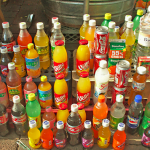
- A la profesora ____ __________ cocinar mucho.
- ¿A ti _____ __________ las hamburguesas?
- A mi familia _____ ________ salir a comer en restaurantes.
- A Pepe y Lupe _____ _________ desayunar en McDonald’s.
- ¿A ustedes _____ _________ merendar frutas?
- ¿A ti _____ _________ los sándwiches de pavo?
- A ellos no _____ _______ beber refrescos.
- A mis amigas y a mí _____ ________ la pizza.
- A Pedro y a José no _____ ________ ir a los bares.
- A nosotros _____ ________ la comida picante.
¡Inténtalo!
Otros verbos como GUSTAR
*The following verbs are conjugated just like GUSTAR*
| aburrir | to bore |
|---|---|
| caer bien / mal | to (not) get along well with |
| dar asco | to be put off |
| disgusta | to be upset |
| doler | to hurt |
| encantar | to love, like a lot |
| faltar | to lack, be missing; to be in need of |
| fascinar | to fascinate, to be fascinated by |
| hacer falta | to miss; to need |
| hacer gracia | to amuse |
| molestar | to bother, to be bothered |
| importar | to care about; to matter, to be important to |
| interesar | to interest, to be interested by |
| parecer | to seem |
| preocupar | to worry, to be worried of |
| quedar | to be left over; to fit (clothing) |
| sorprender | to surprise; to be surprised of |
Remember the formula:
|
(“A”dditional information) + I.O.P. + Verbo + Sujeto |
|||
|---|---|---|---|
|
“A” so-and-so A + prepositional pronoun, name, or title (A mi, a ti, a usted, a él, etc.) (A Ramón) (A Sofia y a mi) (A mis padres) (A Lupe y a Renata) *Additional information is “a” optional, helps emphasize and/or clarify |
Me => Nos Te => Os Le => Les *This pronoun is required |
AR Verbs: -a / -an ER & IR Verbs: -e / -en *Only use third-person conjugations Singular: With infinitives (no matter how many) Plural: With plural nouns ONLY |
Infinitive *Do not conjugate -O- Noun *When using a noun, you need to use its DEFINITE article (el, la, los, las) |
Ejemplos:
Me fascinAN las películas extranjeras. I love foreign films.
Mi familia me hace mucha falta. I miss my family.
A mí me faltAN dos clases para graduarme. I need two more classes to graduate.
Esa camisa me queda bien. That shirt fits me well.
Actividad # 3
Mi restaurante favorito. Fill in the blanks using verbs like GUSTAR to complete the paragraph.
| Aburrir to bore Encantar to love (things) to really like
Faltar to lack Fascinar to fascinate; to really like Importarto matter Interesar to interest Molestar to bother; to annoy Quedar to remain; to have left |
|---|

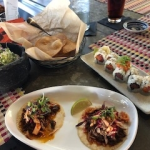
Mi restaurante favorito: SumoMaya
A mis amigas y a mí _____ _____ (encantar) el restaurante mexicano-japonés SumoMaya. A mí _____ _____ (fascinar) el guacamole y el sushi. A mis amigas _____ _____ (molestar) la comida picante y por eso ellas siempre piden los platos japoneses. Al chef _____ _____ (importar) usar ingredientes frescos y a nosotros _____ _____. (interesar) Saber (to know) cuáles son los ingredientes de cada plato. El servicio es excelente y muy rápido, pero una vez, cuando salió la comida (food came out) , yo le dije (told) al mesero, “Perdona, pero a nosotros ________ _____________ (faltar) los tacos de pescado,” él se disculpó (apologized) y nos los trajo (brought them) inmediatamente. ¡Qué buen servicio! A mi esposo ______ ______________ (gustar) los precios económicos de este restaurante y las porciones grandes. ¡Siempre a nosotros (always)_________ ______________ (quedar) muchas sobras!¡Inténtalo!
Actividad # 4
Preguntar. With a partner, take turns asking questions about the following people. Follow the example.
Ejemplo: fascinar / a la profesora USE THIS: creer que (use to ask/give an opinion)
E1: ¿Qué crees que le fascina a la profesora?
E2: Pues, no sé. Creo que le fascina cocinar y bailar.
- Preocupar / a tus padres
- Encantar / a tu media naranja
- Importar / a tu mejor amigo
- Hacer falta / a ti
- Molestar / a la profesora
- Aburrir / a los estudiantes
Actividad # 5
Encuesta. Complete the table below with your classmate’s information. Be prepared to share with the whole class.
Start the conversation with, “¿Te gusta (n) / encanta (n) / fascina (n) _____ ?”
Encuentra a alguien que / a quien (Find someone who )
| Frases | Nombre (Name ) |
|---|---|
| Le gusta hablar español | |
| Le encanta nadar | |
| Le fascinan las frutas | |
| Le encanta escuchar hip-hop | |
| Le aburren las películas románticas | |
| Le encanta jugar videojuegos | |
| Le molesta hacer tareas | |
| Le interesa la política | |
| Le falta un semestre para graduarse | |
| No le gustan las verduras | |
| Le preocupa su futuro |
Actividad # 6
¡Vamos a contar! Use ME QUEDA or ME QUEDAN to say how much / how many items you have left.
1. Si (if) tienes nueve manzanas y comes tres, ¿cuántas manzanas te quedan?

2. Si tienes dos zapatos y pierdes (loose) uno, ¿cuántos zapatos te quedan?

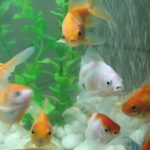
3. Si tienes veinticuatro peces y mueren (died) once, ¿cuántos peces te quedan?
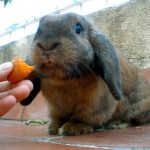
4. Si tienes dos zanahorias y le das (you give one) una a tu conejito, ¿cuántas zanahorias te quedan?
5. Si tienes tres novios y rompes (break up) con uno, ¿cuántos novios te quedan?

Actividad # 7
¿Cuánto te gusta? For each of the activities below, say how much you like it using the following expressions:
| No me interesa nada (I’m not interested) Me gusta. (I like it)
¡Me encanta! (I love it! ) |
|---|
- Leer novelas gráficas
- Jugar videojuegos
- Limpiar la casa
- Viajar
- Ir al cine
- Salir con mis amigos
- Cocinar
- Trabajar como voluntario/a
Actividad # 8
¡Hablemos! With a partner, take turns asking and answering the following questions.
- ¿Qué comes normalmente para el desayuno?
- ¿Qué comidas te gustan más para la cena?
- ¿Nombra DOS verduras (vegetales) que NO te gustan? Y ¿Por qué?
- ¿Qué tipo de comida te fascina?
- ¿Te gusta cocinar? ¿Qué comidas preparas para tu familia o tus amigos?
- ¿Qué cosas te molestan?
- ¿Cuántas clases te faltan para graduarte?
- ¿Qué país hispano te interesa más? Y ¿por qué?
- ¿Qué te encanta de tu media naranja (better half) (esposa, novio)?
Actividad # 9
La comida. Listen to Ángela and David in groups and respond to the following questions.
Ángela (Chile) talks about food and some typical Chilean products.
- ¿Qué comidas come Ángela para el desayuno?
- Menciona DOS comidas o productos típicos chilenos.
- ¿Por qué prefiere Ángela la leche en polvo?
- ¿A qué hora come Ángela su cena?
- ¿Le gusta cocinar a ella?
David (Colombia) talks about food and some typical Colombian foods.
- ¿Qué come David para el desayuno y a qué hora?
- ¿David compra su almuerzo?
- ¿Por qué el entrevistador piensa que la dieta de David es muy básica?
- ¿Qué es el arequipe?
- ¿Dónde compra David los productos colombianos?
Actividad # 10
Y ahora ustedes…
Paso 1. Write a list of foods or food products that represent your country (or region) in your opinion.
Paso 2. Think about ONE food you like and ONE food you don´t like, and why.
Paso 3. Prepare the visuals for Paso 1 and Paso 2. (They can be real or pictures.)
Paso 4. Prepare an oral presentation (or a video recording) explaining and showing which foods represent your country or region, and what you like and don´t like (see Paso 1 and 2).
Presentación de la profesora. View the instructor´s video to understand what is expected.
Paso 1. Write a list of foods or food products that represent your country (or region) in your opinion.
Ejemplo:
- el sancocho
- la arepa
- la bandeja paisa
- los plátanos
- la yuca
- el chorizo
Paso 2. Think about ONE food you like and one you don’t like to eat.
- “Me GUSTAN las frutas.”
- “No me GUSTA el pan.”
6.4 Gramática: Preterit of regular verbs (Pretérito de verbos regulares)
Spanish has TWO simple past tenses: the preterite and the imperfect. (we will study the imperfect tense in chapter 9).
El pretérito is used to discuss actions in the past that were:
- One-time occurrences
- Interrupting actions
- Actions that occurred during a specific time period that are now over
The preterite of regular verbs is formed as follows:
| Singular and Plural Forms | -AR Verbs : tomar (to take ) | -ER Verbs : comer (to eat ) | -IR Verbs : salir (to leave/to go out ) |
|---|---|---|---|
| Singular Forms | Yo => tomé
Tu => tomaste Ud./él/ella => tomó |
Yo => comí
Tu => comiste Ud./él/ella => comió |
Yo => salí
Tu => saliste Ud./él/ella => salió |
| Plural Forms | Nosotros/as => tomamos
Vosotros/as => tomasteis Uds./ellos/ellas => tomaron |
Nosotros/as => comimos
Vosotros/as => comisteis Uds./ellos/ellas => comieron |
Nosotros/as => salimos
Vosotros/as => salisteis Uds./ellos/ellas => salieron |
| Note: there are NO stem changes for -AR and -ER verbs, and the endings for -ER and -IR verbs are the same. |
|---|
Ejemplos:
1. ¿Qué comieron ustedes anoche? What did you (all) eat last night?
“Comimos una ensalada con pollo.” We ate a salad with chicken.
2. ¿A qué hora saliste de tu casa esta mañana? At what time did you leave this morning?
“Salí a las ocho.” I left at eight.
Time expressions used with the preterite
(Click the link to practice pronunciation)
| anoche | last night |
|---|---|
| anteayer | the day before yesterday |
| ayer | yesterday |
| de repente | suddenly |
| el otro día | the other day |
| el año pasado | last year |
| el mes pasado | last month |
| la semana pasada | last week |
| el verano pasado | last summer |
| esta mañana | this morning |
| esta tarde | this afternoon |
| una vez | once |
| dos veces | twice |
| ya | already |
| por/durante (… + cantidad de tiempo) | for/during (…+ amount of time) |
Actividad # 1
Paso 1. Write down the English equivalent of the verbs given in the word bank.
| Banco de palabras
tomar _________ comprar _________ asistir a_________ correr _________ escribir _________ limpiar__________ beber _________ hablar __________ nadar __________ comer _________ desayunar _______ |
|---|
Paso 2. Using the pretérito. Fill in the blanks with the appropriate form of one of the verbs in the word bank (there are more verbs than you need).
- Esta mañana, yo _________ huevos con tocino.
- El verano pasado mis amigos y yo ___________ en el Océano Pacífico.
- Mi hermana ___________ cinco millas ayer.
- Anoche, ella __________ una taza de té antes de dormir.
- Una vez, yo ___________ 30 textos (texts) en una hora.
- La semana pasada, mi mamá ___________ la comida en Sprouts.
¡Inténtalo!
Actividad # 2
Preguntas personales. Using el pretérito, work with a compañero and take turns asking and answering the following questions.
- ¿Qué desayunaste esta mañana?
- ¿Dónde almorzaste ayer?
- ¿Trabajaste mucho la semana pasada?
- ¿Compraste un carro nuevo el año pasado?
- ¿Cuántas clases tomasteel semestre pasado?
- ¿Cuántos textos escribiste hoy en la clase?
Escritura: Mi restaurante
- Imagine you want to open a restaurant and need a business partner.
- Write a detailed plan about the restaurant that you have in mind to help convince your partner.
- Include the answers to the following questions to help you write the plan:
- ¿Cómo se llama el restaurante?
- ¿Qué tipo de restaurante va a hacer? (mexicano, americano, chino, japonés etc.)
- Ubicación (location) ¿Dónde está?
- ¿Cuántos meser@s y cocineros va a necesitar?
- ¿Va a servir tres comidas diarias o solamente el desayuno y almuerzo (o almuerzo y cena)
- Horario del restaurante
- Incluya el menú
Cultura: Colombia
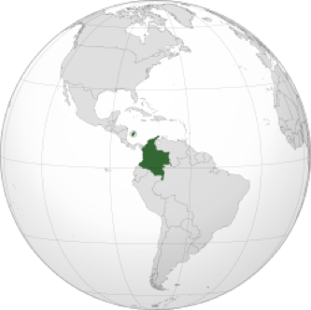
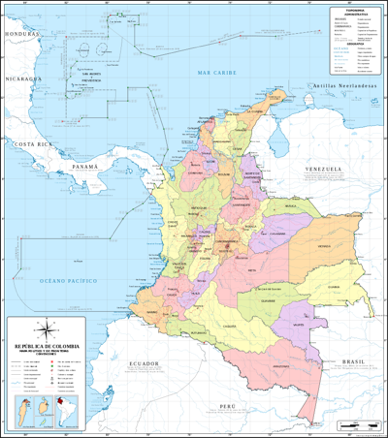
Capital: Bogotá
Extensión territorial: 1,141,748 km² (440,831 millas cuadradas)
Analogía con territorio en los Estados Unidos: dos veces el territorio de Texas
Población: 51.609.000 habitantes
Idiomas: español (oficial) y 65 lenguas nativas
Ciudades importantes:
- Cartagena
- Medellín
- Cali
- Barranquilla
Datos curiosos:
- El único país de Sudamérica que tiene costa en el mar Caribe y en el océano Pacífico.
- Principal productor mundial de esmeraldas.
Música: Carlos Vives
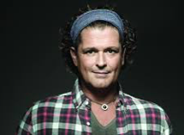
Canción: La tierra del olvido
Letra de la Canción:
Como la luna que alumbra
Por la noche los caminos
Como las hojas al viento
Como el sol que espanta el frío
Como la tierra a la lluvia
Como el mar que espera al rio
Así espero tu regreso
A la tierra del olvido
Como naufragan mis miedos
Si navego en tu mirada
Como alertas mis sentidos
Con tu voz enamorada
Con tu sonrisa de niña
Como me mueves el alma
Como me quitas el sueño
Como me robas la calma
Tú tienes la llave de mi corazón
Yo te quiero
Más que mi vida porque sin tu amor
Yo me muero
Tú tienes la llave de mi corazón
Yo te quiero
Más que mi vida porque sin tu amor
Yo me muero
Como la luna que alumbra
Por la noche los caminos
Como las hojas al viento
Como el sol que espanta el frío
Como la tierra a la lluvia
Como el mar que espera al río
Así espero tu regreso…
Biografía: Carlos Vives es un cantante, actor y compositor colombiano. Nació el 7 de agosto de 1961 en Santa Marta. Ha ganado (has won) dos premios Grammy y quince premios Grammy Latinos.
Answer the following questions after you have viewed the video and read the biography.
- ¿Cuántos años tiene Carlos Vives ahora?
- En la canción, cuando cantan: “Yo te quiero” (I love you), en tu opinión, ¿A quién se refiere?
- ¿Te gustó la canción? ¿Por qué? (el ritmo, la letra (lyrics), los cantantes…etc.)
- ¿Cuál de todos los cantantes (singers) en esta canción te gustó más y por qué?
Personalidad: Gabriel García Márquez
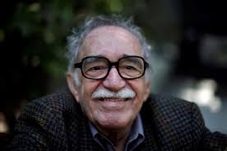
Escritor, periodista, guionista y editor.
Nació en Aracataca, Magdalena, el 6 de marzo de 1927 y murió en la Ciudad de México el 17 de abril de 2014.
Recibió el Premio Nobel de Literatura en 1982. Es considerado el representante del movimiento literario Realismo Mágico de los años 1960 en Latinoamérica. Su obra más conocida es la novela ‘Cien años de soledad’ (1967). Este libro narra la historia de la familia Buendía y está traducido a 37 lenguas.
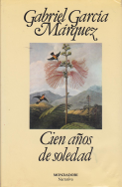

Preguntas de comprensión. After reading the short biography of Gabriel García Márquez, answer the following questions.
- ¿Dónde y cuándo nació García Márquez?
- ¿Qué pasó en el año 1982?
- ¿Cuál es el tema (theme) de Cien años de soledad?
- ¿Te gusta leer? ¿Estás leyendo un libro en este momento? ¿Cuál es el título y quién es el autor (autora)?
Lectura: Cartagena de Indias
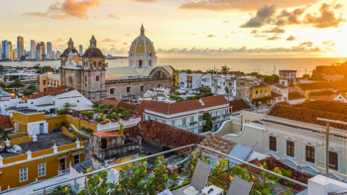
Paso 1. Read the following paragraph about the city of Cartagena (Colombia).
La ciudad de Cartagena es un destino turístico colombiano muy popular. Está ubicada (located) en la costa del mar Caribe.
Junto al mar, la parte vieja (old city) de la ciudad es un área amurallada con edificios del siglo XVI. Tiene plazas, calles de adoquines y construcciones coloridas de la época colonial española.
Cartagena tiene un clima tropical de aproximadamente 30 grados centígrados todo el año. Por esa razón es un destino popular en cualquier época del año.
Desde Cartagena es posible viajar en bote a la Isla de Barú, que tiene playas de arena blanca y palmeras. También se pueden visitar las Islas del Rosario, que tienen arrecifes de coral muy famosos.
Además de las bellezas naturales, Cartagena tiene muchas opciones de vida nocturna y restaurantes de fama mundial. Durante el mes de marzo de cada año, Cartagena es la sede de uno de los festivales de cine más importantes del mundo.
Paso 2. Comprensión. Based on the reading, indicate if the following statements are true (CIERTO) or false (FALSO). If false, write the correct information.
- Cartagena es una ciudad muy turística.
- La parte vieja de Cartagena tiene construcciones muy modernas.
- Cartagena tiene el mismo clima todo el año.
- En marzo, se celebra un festival de música importante.
This page titled 6.1: Capítulo 6- ¡Buen Provecho! was last modified on Thu, 22 Oct 2026 17:25:24 GMT and is shared under a CC BY-NC 4.0 license and was authored, remixed, and/or curated by Maria Y. Martell via source content that was edited to the style and standards of the LibreTexts platform.
The book could not be loaded just now.