Opening the book…
6.3 Gramática: Gustar y verbos similares
We have already seen GUSTAR here and there, and you may have noticed that it conjugates differently from our usual AR-verbs.
For example: To say “I like” we do not say “yo gusto”, we say “me gusta.”
The literal translation is that: “Something” is pleasing to me.
The sentence structure is different because instead of someone doing something, something is happening to someone.
PASO 1: Pick your pronoun (indirect)
| To me | Me | To us | Nos |
|---|---|---|---|
| To you (familiar) | Te | To you all (Spain) | Os |
| To him
To her To you (formal) |
Le | To them
To you all (Latin America) |
Les |
PASO 2: GUSTA or GUSTAN
You will choose which form of GUSTAR to use based on what follows it (Singular or Infinitive):
Ejemplo:
!Atención!
Gusta – Singular noun:
Me gusta el café. I like coffee.
NOTE: If you use a noun, it must be accompanied by its definite article (el or la)
Gusta – Infinitive(s)/Verb:
¿Te gusta *comer en restaurantes? Do you like to eat in restaurants?
*If you use a verb, leave it in the infinitive (do not conjugate). You can list as many as you like!
¿Te gusta desayunar, almorzar y cenar en tu casa?
Do you like to eat breakfast, lunch, and dinner at your house?
!Atención!
Gustan – Plural noun:
Me gustan los tacos al pastor. I like tacos al pastor.
¿Te gustan las hamburguesas? Do you like hamburgers?
NOTE: If you use a noun, it must be accompanied by its definite article ( los or las).
Ejemplos:
1. ¿Te gusta la fruta o la ensalada mucho?
Me gusta mucho la fruta. I like fruit a lot.
2. ¿Qué no te gusta?
No me gusta la comida rápida. I don’t like fast food.
3. ¿A ellos les gustan los tacos al pastor?
Sí, a ellos les gustan mucho los tacos al pastor. Yes, they like al pastor tacos a lot.
| “AAAAAAdditional information” |
|---|
The proposition A + noun or pronoun may be used to EMPHASIZE or SPECIFY the name of the person referred to by the indirect object pronoun.
| NEVER use YO or TÚ with the verb GUSTAR (and similar verbs) | |||
|---|---|---|---|
| A mí | Me | A nosotros | Nos |
| A ti | Te | A vosotros | Os |
| A él A Jaime A mi hermano A ella A María A mi amiga A usted |
Le | A ellos A ellas A Pedro y a Lupe A mis amigos A mis padres |
Les |
Actividad # 1
PASO 1: ¿Te gusta o no? Respond to the following questions about what you like and like to do.
- ¿Te gusta el café?
- ¿Te gusta la comida rápida?
- ¿Te gustan los refrescos?
- ¿Te gustan los tacos al pastor?
- ¿Te gusta cenar en restaurantes?
- ¿Te gusta comer sobras?
- ¿Te gustan los helados y las galletas?
PASO 2. ¡Vamos a hablar! Use the questions in PASO 1 to initiate a conversation with a partner.
Use the following reactions to help you continue the conversation:
AGREEING: Me too / Me neither
- A mí también => Me too (use when agreeing with a positive statement).
- Me gusta la leche. “¡A mí también!” (I like milk too )
- A mí tampoco => Me neither (use when agreeing with a negative statement).
- No me gusta la leche. “¡A mí tampoco!” (I don’t like milk either )
DISAGREEING: I do / I don’t
- A mí, sí. => I do (use when disagreeing with a negative statement).
- No me gusta la leche. “¡A mí, sí!” (Well, I like milk.)
- A mí, no => I don’t (use when disagreeing with a positive statement).
- Me gusta la leche. “¡A mí, no!” (Well, I don’t like milk.)
Actividad # 2
Los gustos. Use clues in each sentence to determine which Indirect Object Pronoun is needed and which form of GUSTAR is appropriate.
- A la profesora ____ __________ cocinar mucho.
- ¿A ti _____ __________ las hamburguesas?
- A mi familia _____ ________ salir a comer en restaurantes.
- A Pepe y Lupe _____ _________ desayunar en McDonald’s.
- ¿A ustedes _____ _________ merendar frutas?
- ¿A ti _____ _________ los sándwiches de pavo?
- A ellos no _____ _______ beber refrescos.
- A mis amigas y a mí _____ ________ la pizza.
- A Pedro y a José no _____ ________ ir a los bares.
- A nosotros _____ ________ la comida picante.
¡Inténtalo!
Otros verbos como GUSTAR
*The following verbs are conjugated just like GUSTAR*
| aburrir | to bore |
|---|---|
| caer bien / mal | to (not) get along well with |
| dar asco | to be put off |
| disgusta | to be upset |
| doler | to hurt |
| encantar | to love, like a lot |
| faltar | to lack, be missing; to be in need of |
| fascinar | to fascinate, to be fascinated by |
| hacer falta | to miss; to need |
| hacer gracia | to amuse |
| molestar | to bother, to be bothered |
| importar | to care about; to matter, to be important to |
| interesar | to interest, to be interested by |
| parecer | to seem |
| preocupar | to worry, to be worried of |
| quedar | to be left over; to fit (clothing) |
| sorprender | to surprise; to be surprised of |
Remember the formula:
|
(“A”dditional information) + I.O.P. + Verbo + Sujeto |
|||
|---|---|---|---|
|
“A” so-and-so A + prepositional pronoun, name, or title (A mi, a ti, a usted, a él, etc.) (A Ramón) (A Sofia y a mi) (A mis padres) (A Lupe y a Renata) *Additional information is “a” optional, helps emphasize and/or clarify |
Me => Nos Te => Os Le => Les *This pronoun is required |
AR Verbs: -a / -an ER & IR Verbs: -e / -en *Only use third-person conjugations Singular: With infinitives (no matter how many) Plural: With plural nouns ONLY |
Infinitive *Do not conjugate -O- Noun *When using a noun, you need to use its DEFINITE article (el, la, los, las) |
Ejemplos:
Me fascinAN las películas extranjeras. I love foreign films.
Mi familia me hace mucha falta. I miss my family.
A mí me faltAN dos clases para graduarme. I need two more classes to graduate.
Esa camisa me queda bien. That shirt fits me well.
Actividad # 3
Mi restaurante favorito. Fill in the blanks using verbs like GUSTAR to complete the paragraph.
| Aburrir to bore Encantar to love (things) to really like
Faltar to lack Fascinar to fascinate; to really like Importarto matter Interesar to interest Molestar to bother; to annoy Quedar to remain; to have left |
|---|

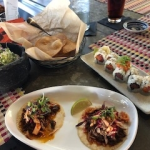
Mi restaurante favorito: SumoMaya
A mis amigas y a mí _____ _____ (encantar) el restaurante mexicano-japonés SumoMaya. A mí _____ _____ (fascinar) el guacamole y el sushi. A mis amigas _____ _____ (molestar) la comida picante y por eso ellas siempre piden los platos japoneses. Al chef _____ _____ (importar) usar ingredientes frescos y a nosotros _____ _____. (interesar) Saber (to know) cuáles son los ingredientes de cada plato. El servicio es excelente y muy rápido, pero una vez, cuando salió la comida (food came out) , yo le dije (told) al mesero, “Perdona, pero a nosotros ________ _____________ (faltar) los tacos de pescado,” él se disculpó (apologized) y nos los trajo (brought them) inmediatamente. ¡Qué buen servicio! A mi esposo ______ ______________ (gustar) los precios económicos de este restaurante y las porciones grandes. ¡Siempre a nosotros (always)_________ ______________ (quedar) muchas sobras!¡Inténtalo!
Actividad # 4
Preguntar. With a partner, take turns asking questions about the following people. Follow the example.
Ejemplo: fascinar / a la profesora USE THIS: creer que (use to ask/give an opinion)
E1: ¿Qué crees que le fascina a la profesora?
E2: Pues, no sé. Creo que le fascina cocinar y bailar.
- Preocupar / a tus padres
- Encantar / a tu media naranja
- Importar / a tu mejor amigo
- Hacer falta / a ti
- Molestar / a la profesora
- Aburrir / a los estudiantes
Actividad # 5
Encuesta. Complete the table below with your classmate’s information. Be prepared to share with the whole class.
Start the conversation with, “¿Te gusta (n) / encanta (n) / fascina (n) _____ ?”
Encuentra a alguien que / a quien (Find someone who )
| Frases | Nombre (Name ) |
|---|---|
| Le gusta hablar español | |
| Le encanta nadar | |
| Le fascinan las frutas | |
| Le encanta escuchar hip-hop | |
| Le aburren las películas románticas | |
| Le encanta jugar videojuegos | |
| Le molesta hacer tareas | |
| Le interesa la política | |
| Le falta un semestre para graduarse | |
| No le gustan las verduras | |
| Le preocupa su futuro |
Actividad # 6
¡Vamos a contar! Use ME QUEDA or ME QUEDAN to say how much / how many items you have left.
1. Si (if) tienes nueve manzanas y comes tres, ¿cuántas manzanas te quedan?

2. Si tienes dos zapatos y pierdes (loose) uno, ¿cuántos zapatos te quedan?

3. Si tienes veinticuatro peces y mueren (died) once, ¿cuántos peces te quedan?

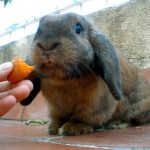
4. Si tienes dos zanahorias y le das (you give one) una a tu conejito, ¿cuántas zanahorias te quedan?
5. Si tienes tres novios y rompes (break up) con uno, ¿cuántos novios te quedan?

Actividad # 7
¿Cuánto te gusta? For each of the activities below, say how much you like it using the following expressions:
| No me interesa nada (I’m not interested) Me gusta. (I like it)
¡Me encanta! (I love it! ) |
|---|
- Leer novelas gráficas
- Jugar videojuegos
- Limpiar la casa
- Viajar
- Ir al cine
- Salir con mis amigos
- Cocinar
- Trabajar como voluntario/a
Actividad # 8
¡Hablemos! With a partner, take turns asking and answering the following questions.
- ¿Qué comes normalmente para el desayuno?
- ¿Qué comidas te gustan más para la cena?
- ¿Nombra DOS verduras (vegetales) que NO te gustan? Y ¿Por qué?
- ¿Qué tipo de comida te fascina?
- ¿Te gusta cocinar? ¿Qué comidas preparas para tu familia o tus amigos?
- ¿Qué cosas te molestan?
- ¿Cuántas clases te faltan para graduarte?
- ¿Qué país hispano te interesa más? Y ¿por qué?
- ¿Qué te encanta de tu media naranja (better half) (esposa, novio)?
Actividad # 9
La comida. Listen to Ángela and David in groups and respond to the following questions.
Ángela (Chile) talks about food and some typical Chilean products.
- ¿Qué comidas come Ángela para el desayuno?
- Menciona DOS comidas o productos típicos chilenos.
- ¿Por qué prefiere Ángela la leche en polvo?
- ¿A qué hora come Ángela su cena?
- ¿Le gusta cocinar a ella?
David (Colombia) talks about food and some typical Colombian foods.
- ¿Qué come David para el desayuno y a qué hora?
- ¿David compra su almuerzo?
- ¿Por qué el entrevistador piensa que la dieta de David es muy básica?
- ¿Qué es el arequipe?
- ¿Dónde compra David los productos colombianos?
Actividad # 10
Y ahora ustedes…
Paso 1. Write a list of foods or food products that represent your country (or region) in your opinion.
Paso 2. Think about ONE food you like and ONE food you don´t like, and why.
Paso 3. Prepare the visuals for Paso 1 and Paso 2. (They can be real or pictures.)
Paso 4. Prepare an oral presentation (or a video recording) explaining and showing which foods represent your country or region, and what you like and don´t like (see Paso 1 and 2).
Presentación de la profesora. View the instructor´s video to understand what is expected.
Paso 1. Write a list of foods or food products that represent your country (or region) in your opinion.
Ejemplo:
- el sancocho
- la arepa
- la bandeja paisa
- los plátanos
- la yuca
- el chorizo
Paso 2. Think about ONE food you like and one you don’t like to eat.
- “Me GUSTAN las frutas.”
- “No me GUSTA el pan.”
This page titled 6.6: Gustar y verbos similares was last modified on Thu, 22 Oct 2026 17:25:26 GMT and is shared under a CC BY-NC 4.0 license and was authored, remixed, and/or curated by Maria Y. Martell via source content that was edited to the style and standards of the LibreTexts platform.
The book could not be loaded just now.