Opening the book…
In many ways, Rome defines Western Civilization. Even more so than Greece, the Roman Republic and the Roman Empire that followed created the idea of a single, united civilization sharing certain attributes and providing a lasting intellectual and political legacy. Its boundaries, from what is today England to Turkey and from Germany to Spain, mark out the heartland of what its’ inhabitants would later consider to be “The West” in so many words. The Greek intellectual legacy was eagerly taken up by the Romans and combined with unprecedented organization and engineering on a scale the Greeks had never imagined, even under Alexander the Great.
The Romans turned an Italian city-state into one of the largest and longest lasting empires in history. By promoting prosperity in every corner, Rome planted in what would become Britain, France, Germany, and Spain the seeds of the advanced civilizations of the Mediterranean. Much of modern politics, including the very vocabulary we use, can be traced to Rome. These include the words president, inauguration, and forum. The Roman Republic mixed popular power with government controlled by wealthy landowners. The government was divided into 3 branches, which created a system of checks and balances that tended toward consensus. The result was efficiency and, for centuries, stability. Unlike Greece, Rome extended its citizenship to a large population, first throughout Italy and then across its entire empire. The modern nation-state with its mass citizenship owes much to Rome. And while Rome was NOT a democracy, the idea of a government elected by a very large population does have its roots in the Roman Republic (remember all the restrictions for voting even in the radical Athenian democracy) as well as in the Greek Polis. This is perhaps because the Romans were already quite indebted culturally and socially to the Greeks. But, Rome outlasted the Greeks by several centuries, though ultimately Roman society was destroyed by its own excesses and successes. In many ways the very military success of the Romans eventually brought them to their knees.
Roman Origins
Rome was originally a town built amidst seven hills surrounded by swamps in central Italy. The Romans were just one group of “Latins,” central Italians who spoke closely-related dialects of the Latin language. Rome itself had a few key geographical advantages. Its hills were easily defensible, making it difficult for invaders to carry out a successful attack. It was at the intersection of trade routes, thanks in part to its proximity to a natural ford (a shallow part of a river that can be crossed on foot) in the Tiber River, leading to a prosperous commercial and mercantile sector that provided the wealth for early expansion. It also lay on the route between the Greek colonies of southern Italy and various Italian cultures in the central and northern part of the peninsula.
The legend that the Romans themselves invented about their origins centered around two brothers: Romulus and Remus. In the legend, Romulus and Remus were two boys born to a Latin king, but then kidnapped and thrown into the Tiber River by the king’s jealous brother. They were discovered by a female wolf and suckled by her for a time before a shepherd encountered the boys and adopted them. After growing up among the flocks of sheep, they discovered their true identities, and royal heritage, ultimately exacting revenge on their treacherous uncle. To celebrate their victory they decided to found a city where they had been rescued by the wolf, but disagreed on the location. They then fought each other, with Romulus killing Remus and founding the city of Rome, named after himself. According to the story, the city of Rome was founded on April 21, 753 BCE. This legend is just that: a legend. Its importance is that it speaks to how the Romans wanted to see themselves, as the descendants of a great man who seized his birthright through force and power, accepting no equals. In a sense, the Romans were proud to believe that their ancient heritage involved being literally raised by wolves.


The Romans were a warrior people from very early on, feuding and fighting with their neighbors and with raiders from the north. And Rome was a lawless city. Romulus simply sought to populate his territory and so he accepted outcasts from other tribes, including outlaws, murderers, and runaway slaves. Unsurprisingly, few families sought to ally themselves with these sort of men, and so Roman men found it difficult to acquire wives. And without women, there could be no real increase of population, so Romulus came up with a plan. Inspired by the god Consus (god of good counsel) Romulus decided to take advantage of an approaching festival, Consualia (the first fruits festival), and invited the neighboring Sabines to join Rome in celebration of the recently harvested crops. The Sabines lived in the Sabine Hills of central Italy northeast of Rome, and had previously refused Romulus’s requests for brides. However, on this day in late August the Sabines agreed to attend Consualia, but as soon as they arrived at the gates of Rome, Romulus and his men ambushed the group, killing the men and kidnapping the women. They then forced the women, as few as 30 and as many as 600 depending on the account, into marriage. This night became known at the “Rape of Sabine” and purportedly began a famous wedding tradition where the husband carries his wife across the threshold of their home, just as the Roman men carried their unwilling Sabine brides into their residences.
While this tale likely offends our modern sensibilities, morals, and values, it also shows how distinct the Roman identity was from their Greek ancestors. From the start, Romans embraced foreigners, while they were a hierarchical society, they were unlike the Greeks in that they welcomed new comers, making them Romans. Perhaps this lesson had its origins with Alexander and the Hellenistic Kingdoms.
The Etruscans
The peoples who most influenced nascent Rome, beyond the Greeks, were their northwestern neighbors and allies, the Etruscans. For a time Rome, was even ruled by the Etruscans. Located between the Apennine Mountains and the Tyrrhenian Sea, Etruria was established in the 7th century BCE, approximately two hundred years before the Roman shift from monarchy to republic. The Etruscans inhabited land between modern Tuscany and central Lazio, with colonies in the north known as Etruria Padana and in the south known as Etruria Campana. While Etruria had no centralized government, there was the Lega dei Popoli (League of the Peoples), typically composed of twelve cities spread throughout the territory. Each city acted akin to city-states, each an independent entity under the same regional identity.
The Etruscan economy depended on trade, often exchanging goods with Greek, Phoenician, and other Mediterranean settlements. Etruria’s exports consisted of wines, stonework, and raw materials, depending on its city of origin; however, the region was widely recognized for its fresco paintings, bucchero pottery, and metalwork, specifically cast bronze sculptures. Over time, Rome became a key link along the Etruscan – Greek trade route. This mixing of cultures, Etruscan, Greek, and Latin, included sharing mythologies and stories. The Greek gods and myths were shared by the Romans, with only the names of the gods being changed (e.g. Zeus became Jupiter, Aphrodite became Venus, Hades became Pluto, etc.). In this way, the Romans became part of the larger Mediterranean world of which the Greeks were such a significant part.


According to Roman legends, the Etruscans ruled the Rome from some time in the eighth century BCE until 509 BCE. During that time, the Etruscans organized them to fight along Greek lines as a phalanx. From the phalanx, the Romans eventually created new forms of military organization and tactics that overwhelmed the Greeks themselves (albeit hundreds of years later). There is no actual evidence that the Etruscans ruled Rome, but as with the legend of Romulus and Remus, the story of early Etruscan rule inspired the Romans to think of themselves in certain ways – most obviously in utterly rejecting foreign rule of any kind, and even of foreign cultural influence. Romans were always fiercely proud (to the point of belligerence) of their heritage and identity.
By 600 BCE the Romans had drained the swamp in the middle of their territory and built the first of their large public buildings. As noted, they were a monarchy at the time, ruled by (possibly) Etruscan kings, but with powerful Romans serving as advisers in an elected senate. Native-born men rich enough to afford weapons were allowed to vote, while native-born poor men were considered full Romans but had no vote. In 509 BCE (according to legend), the Romans overthrew the last Etruscan king, Lucius Tarquinius Superbus, and established a fully Republican form of government, with elected senators making all of the important political decisions. Roman antipathy to kings was so great that no Roman leader would ever call himself Rex – king – even after the Republic was eventually overthrown centuries later.
The story of the end of Etruscan rule, and monarchy, in Rome is told by historian Livy in his volume History of Rome published in 17 CE in one chapter, “The Rape of Lucretia.” The story describes the rape of the virtuous Roman wife, Lucretia, who left home alone by her husband, was raped by the son of the final King of Rome, Sextus Tarquinius. Feeling she had lost her honor as a result of the rape, Lucretia commited suicide, sending her now widowed husband and his compatriots to seek revenge, killing Lucius Tarquinius Superbus himself and overthrowing the entire Etruscan/Roman monarchy. And thus was born the Roman Republic.
Livy’s “Rape of Lucretia” Full Text
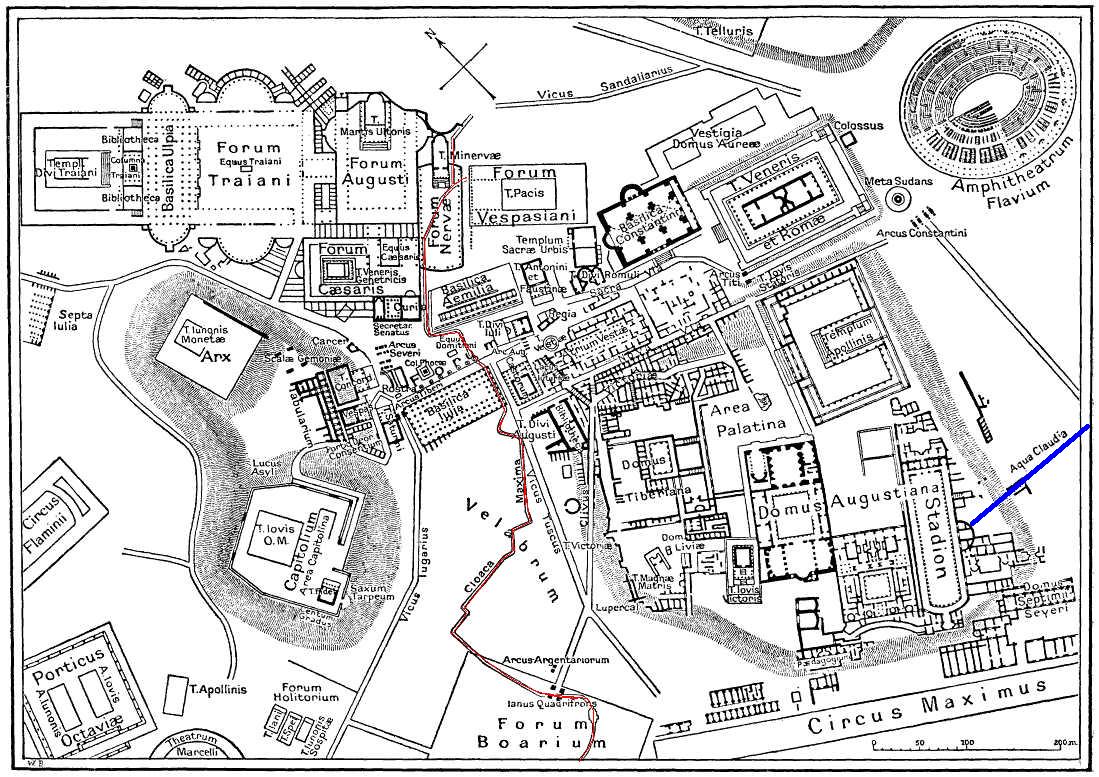
Despite overthrowing the last Etruscan king in the 6th century BCE, the Etruscan cultural impact lasted for centuries. For example, the Roman, Greek, and Etruscan pantheon shared figureheads within their religions, such as Jupiter/Zeus/Tinia or Juno/Hera/Uni. The Etruscans specifically introduced some Gods and Goddesses to Roman mythology. Menrva (Goddess of War, Art, Wisdom, and Health), the Etruscan counterpart to Greece’s Athena, is often regarded as the basis for the Roman Minerva (Goddess of Poetry, Medicine, Commerce, Weaving, Crafts, and Wisdom). Beyond religion, Etruria fashion continued to be favored in the Roman Republic and later Empire. The tabenna, worn by Etruscan men, was the predecessor to the Roman toga, as it incorporated a similar semi-circular design. As Rome evolved, the design and symbolism associated with the toga shifted, often utilizing color or style to reflect social status. Etruscan influence is also visible in Roman architecture and technology, such as the Roman sewer system Cloaca Maxima. Commissioned by King Priscus, the system was heavily based on the cuniculus, an Etruscan drainage channel. By the 1st century CE, eleven aqueducts were channeled into the Cloaca Maxima, allowing continuous running water to remove waste from the city.


The Celts
While the Hellenistic world was flourishing in Greece and the Middle East, and Rome was beginning its long climb from obscurity to power, most of Western Europe was dominated by the Celts. The Celts provide background context to the rise of Rome, since Roman expansion eventually spelled the end of Celtic independence in most of Europe.
Much less is known about the Celts than about contemporaneous cultures of the Mediterranean because the Celts did not leave a written record. The Celts were not a unified empire of any kind; they were a tribal people who shared a common culture and a set of beliefs, along with certain technologies having to do with metal-working and agriculture.
The Celts were a warrior society which seemed to have practiced a variation of what would later be known as feudal law, in which every offense demanded retribution in the form of either violence or “man gold”: the payment needed to atone for a crime and thereby prevent the escalation of violence. The Celts were in contact with the people of the Mediterranean world from as early as 800 BCE, mostly through trade. They lived in fortified towns and were as quick to raid as to trade with their neighbors.
By about 450 BCE the Celts expanded dramatically across Europe. They seem to have become more warlike and expansionist and they adopted a number of technologies already in use further south, including chariot warfare and currency. By 400 BCE groups of Celts began to raid further into “civilized” lands, sacking Rome itself in 387 BCE and pushing into the Hellenistic lands of Macedonia, Greece, and Anatolia. Subsequently, Celtic raiders tended to settle by about 200 BCE, often forming distinct smaller kingdoms within larger lands, such as the region called Galatia in Anatolia, and serving as mercenary warriors for the Hellenistic kingdoms.
Eventually, when the Romans began to expand beyond Italy itself, it was the Celts who were first conquered and then assimilated into the Republic. The Romans regarded Celts as barbarians, but they were thought to be barbarians who were at least capable of assimilating and adopting “true” civilization from the Romans. Centuries later, the descendants of conquered Celts considered themselves fully Roman: speaking Latin as their native language, wearing togas, drinking wine, and serving in the Roman armies. And they were some of the earliest converts to Christianity.

The Roman Republic
Roman society was hierarchical and class based. It was divided into the Patricians (the wealthy, upper class rulers), the Plebeians (the lower class commoners), and the slaves. There were about one hundred patrician families, descending from the men Romulus had, allegedly, appointed to the first senate. They were allied with other rich and powerful people, owners of large tracts of land, in trying to hold in check the plebeians. But the Roman Republic was not a monarchy as it differed in two basic ways. First, the Republic stood for liberty, which for the Romans meant both freedom from arbitrary power of a king and freedom for all free men to participate in public affairs. Second, the Republic was a commonwealth and it belonged to the Roman people, not to a royal family. In theory, the Roman people were sovereign, that is the people at large ruled the state. In practice though, very few Romans truly ruled the state. Roman society and culture, moreover were conservative and did not value change. Once the young Republic had its values and institutions in place, it tried to maintain them over centuries with little change. Nor did the Republic give up entirely on the old values of monarchy, as we will see.
Executive power lay in the hands of Rome’s powerful magistrates. They were elected by citizens and not chosen by lottery, as in Greek democracy. Election required campaigning, which in turn took money and connections. Magistracies were time-consuming jobs but offered no salary, unlike in Greek democracy. Thus only a wealthy few could afford to hold public office in Rome, mainly patricians. The magistrates together formed the Centuriate Assembly that created laws. The Centuriate Assembly was divided into five different classes based on wealth (a system that ensured that the wealthy could always outvote the poorer). The wealthiest class consisted of the equestrians, so named because they could afford horses and thus form the Roman cavalry; the equestrian class would go on to be a leading power bloc in Roman history well into the Imperial period. The Centuriate Assembly voted on the consuls (chief magistrates) each year, declared war and peace, and acted as a court of appeal in legal cases involving the death penalty. It could also propose legislation, but the Senate had to approve it for it to become law.
Annually, the Centuriate Assembly elected two executives called consuls to oversee the laws and ensure their enforcement. The consuls had almost unlimited power, known as imperium, including the right to inflict the death penalty on law-breakers, and they were preceded everywhere by twelve bodyguards called lictors. Consular authority was, however, limited by the fact that the terms were only a year long and each consul was expected to hold the other in check if necessary. Under the consuls there was the Senate, essentially a large body of aristocratic administrators, appointed for life, who controlled state finances. The Senate consisted of 300 men and all former magistrates. The whole system was tied closely to the priesthoods of the Roman gods, who performed divinations and blessings on behalf of the city. While the Romans were deeply suspicious of individuals who seemed to be trying to take power themselves, several influential families worked behind the scenes to ensure that they could control voting blocks in the Centuriate Assembly and the Senate.
When Rome faced a major crisis, the Centuriate Assembly could vote to appoint a dictator, a single man vested with the full power of imperium. Symbolically, all twenty-four of the lictors would accompany the dictator, who was supposed to use his almost-unlimited power to save Rome from whatever threatened it, then step down and return things to normal. While the office of dictator could have easily led to an attempted takeover, for hundreds of years very few dictators abused their powers and instead respected the temporary nature of Roman dictatorship itself.
While the Senate began as an advisory body, it later wrested real law-making power from the consuls (who were, after all, almost always drawn from its members). By 133 BCE, the Senate proposed legislation and could veto the legislation of the consuls. An even more important power was its ability to designate funds for war and public building, giving it enormous power over what the Roman government actually did, since the senate could simply cut off funding to projects it disagreed with.
Class Struggle
Rome struggled with a situation analogous to that of Athens, in which the rich not only had a virtual monopoly on political power, but in many cases had the legal right to either enslave or at least extract labor from debtors. In Rome’s case, an ongoing class struggle called the Conflict of Orders took place from about 500 BCE to 360 BCE (140 years!), in which the plebeians struggled to get more political representation. In 494 BCE, the plebeians threatened to simply leave Rome, rendering it almost defenseless, and the Senate responded by allowing the creation of two officials called Tribunes, men drawn from the plebeians who had the legal power to veto certain decisions made by the Senate and consuls. Later, the government created a Plebeian Council to represent the needs of the plebeians, approved the right to marry between patricians and plebeians, banned debt slavery, and finally, came to the agreement that of the two consuls elected each year, one had to be a plebeian. By 287 BCE, the Plebeian Assembly could pass legislation with the weight of law as well.
Roman soldiers were citizen-soldiers, farmers who volunteered to fight for Rome in hopes of being rewarded with wealth taken from defeated enemies. An important political breakthrough happened in about 350 BCE when the Romans enacted a law that limited the amount of land that could be given to a single citizen after a victory, ensuring a more equitable distribution of land to plebeian soldiers. This was a huge incentive to serve in the Roman army, since any soldier now had the potential to become very rich if he participated in a successful campaign against Rome’s enemies.
That being said, class struggle was always a factor in Roman politics. Even after the plebeians gained legal concessions, the rich always held the upper hand because wealthy plebeians would regularly join with patricians to out-vote poorer plebeians. Likewise, in the Centuriate Assembly, the richer classes had the legal right to out-vote the poorer classes – the equestrians and patricians often worked together against the demands of the poorer classes. Practically speaking, by the early third century BCE the plebeians had won meaningful legal rights, namely the right to representation and lawmaking, but those victories were often overshadowed by the fact that wealthy plebeians increasingly joined with the existing patricians to create something new: the Roman aristocracy. Most state offices did not pay salaries, so only those with substantial incomes from land (or from loot won in campaigns) could afford to serve as full-time representatives, officials, or judges – that, too, fed into the political power of the aristocracy over common citizens.
In the midst of this ongoing struggle, the Romans came up with the basis of Roman law, the system of law that, through various iterations, became the basis for most systems of law still in use in Europe today (Britain being a notable exception). Private law governed disputes between individuals (e.g. property suits, disputes between business partners), while public law governed disputes between individuals and the government (e.g. violent crimes that were seen as a threat to the social order as a whole). In addition, the Romans established the Law of Nations to govern the territories it started to conquer in Italy; it was an early form of international law based on what were believed to be universal standards of justice.
The plebeians were concerned that legal decisions would always favor the patricians, who had a monopoly on legal proceedings, so they insisted that the laws be written down and made publicly available. Thus, in 451 BCE, members of the Roman government wrote the Twelve Tables, lists of the laws available for everyone to see, which were then posted in the Roman Forum in the center of Rome. Just as it was done in Athens a hundred years earlier (and in Babylon thousands of years prior), having the laws publicly available reduced the chances of corruption. In fact, according to a Roman legend, the ten men who were charged with recording the laws were sent to Athens to study the laws of Solon of Athens; this was a deliberate use or “copy” of his idea.
The Roman Family
The fundamental societal unit of the Roman Republic was the family. This can be seen in the “Rape of Lucretia” and in the above discussion of the basics of Roman government, which many consider to have been little more than the maneuvering of a few powerful families. However, the Roman family was broader than our definition today and is better understood as an entire household or series of households connected by marriage. Romans considered their families to extend beyond those related by blood, to include slaves, animals, property, as well as ancestors.
The legal head of the family was the Paterfamilias or the oldest living male, usually the father, who exercised patria potestas or “Father’s power.” According to Roman law the paterfamilias had supreme power within the household, though he was supposed to call a council of all older male relatives for very important decisions. He even held the right of life or death over his family members, ie. he could sell family members into slavery or kill an errant wife or child. A son, no matter his age, was subject to his living paterfamilias. Adult men only became fully independent, and their own paterfamilias, at the death of their father. This respect for the paterfamilias was linked to the Roman respect for their ancestors.
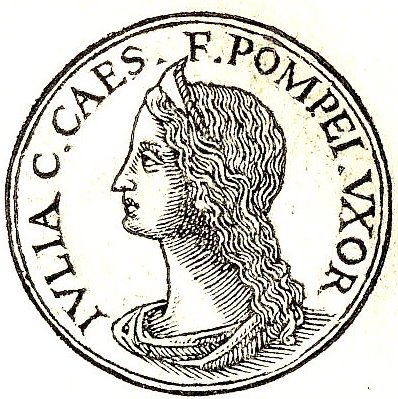
On the other hand Roman women never became legally independent, even on the death of their paterfamilias. Women were perpetually linked with their paterfamilias, from birth to death. Daughters were not given individual, unique first names, and instead were named according to their father’s gens or root name. For example, Julius Caesar’s daughter was called Julia and if he had had a second daughter her name would have literally been Julia the Second. Although fathers were supposed to support all male children, they only had to support their first daughter. In other words, they were free to “expose” their additional daughters, meaning they could leave them in the open to die, be raised as a slave, or in the best of circumstances to be adopted.

Women received little if any education, except in household duties, as they were expected to be loyal and supportive wives and mothers above all else. A father arranged his daughter’s marriage and provided her with a dowry. Once married the woman was literally “handed off” to her new paterfamilias, though he could not completely control her until the death of her own father. And women married very young. For example, the Roman statesman and lawyer, Cicero had a daughter who was engaged at 12 and married at 16, but a widow already at 22. Married women were expected to have a limited political role, helping their husbands in social activities and serving as a supportive ally in their political endeavors, as can be seen in the story of Lucretia. Women did manage the household, slaves, and kept account of their property. The most important job for a Roman woman was to instill virtue into their children. Women could inherit property, though if they married, their husbands would control said inheritance. If the woman was widowed or divorced though, she would have control of the property, with the caveat that her eldest male relative (brother usually) would be tasked with advising them on all decisions. Divorce was quite common, with both men and women legally able to initiate the procedures, though fathers would keep the children. Widows were also common thanks to the young marriage age of women, as young as 13 years old, and the death of soldier husbands. Once widowerd women were legally autonomous and continued to run households after the death of the husband.
Roman Expansion
At the beginning of the Republic, in 509 BCE, Roman territory comprised about 500 square miles. Roman expansion began with its leadership of a confederation of allied cities, the Latin League. Rome led this coalition against nearby hill tribes that had periodically raided the area, then against the Etruscans that had once ruled Rome itself. Just as the Romans started to consider further territorial expansion, a fierce raiding band of Celts swooped in and sacked Rome in 389 BCE, a setback that took several decades to recover from. In the aftermath, the Romans swore to never let the city fall victim to an attack again.
A key moment in the early period of Roman expansion was in 338 BCE when Rome defeated its erstwhile allies in the Latin League. At this point Rome controlled 2,000 square miles and was moving north into Etruscan territory. By 265 BCE Rome controlled all of the Italian peninsula to modern day Pisa, an area of about 50,000 square feet. By 146 BCE Roman provinces included Sicily, Gaul (the northernmost part of Italy), Sardinia, Corsica, and Spain. Once-great Carthage was the Roman province of Africa and once-mighty Macedon was the province of Macedonia whose governor was effectively in charge of Greece. The Seleucid kingdom was free, but weak. Rome was the supreme power between Gibraltar and the Levant. How had they achieved this great success against other powers both large and small?
Rome evolved as a militaristic society partially out of necessity. Rome was under nearly constant threat or occupied by outside forces for much of the state’s formative years. Roman magistrates other motivation for military assaults and expansion was taken from Athenian leader, Pericles. As he had used the Delian League to occupy Athenian soldiers, Rome saw war and conquest as a way to keep the plebeians quiet. However, by the 2nd century the pragmatic reasons for expansion were replaced by simple greed for increased land and wealth by Rome’s power hungry leaders. It was through military victory that magistrates continued to gain fame and prominence.
Roman soldiers were inspired by straightforward greed as well as the tremendous cultural importance placed on winning military glory. Nothing was as important to a male Roman citizen than his reputation as a soldier. Likewise, Roman aristocrats all acquired their political power through military glory until late in the republic, and even then military glory was all but required for a man to achieve any kind of political importance. The greatest honor a Roman could win was a triumph, a military parade displaying the spoils of war to the cheers of the people of Rome; many people held important positions in Rome, but only the greatest generals were ever rewarded with a triumph.
It is important to emphasize the extreme militarism and terrible brutality of Rome during the republican period. Wars were annual: with very few exceptions over the centuries the Roman legions would march forth to conquer new territory every single year. The Romans swiftly acquired a reputation for absolute ruthlessness and even wanton cruelty, raping and/or slaughtering the civilian inhabitants of conquered cities, enslaving thousands, and in some cases utterly wiping out whole populations (the neighboring city of Veii was obliterated in roughly 393 BCE, for example, right at the start of the conquest period). The Greek historian Polybius calmly noted at the time in his sweeping history of the republic that insofar as there was a deliberate intention behind all of this cruelty, it was easy to identify: causing terror.
The overall picture of Roman culture is of a society that was in its own way as fanatical and obsessed with war as was Sparta during the height of its barracks society. Unlike Sparta, however, Rome was able to mobilize gigantic armies, partly because slaves came to perform most of the work on farms and workshops over time, freeing up free Roman men to participate in the annual invasions of neighboring territories. One prominent contemporary historian of Rome, W.V. Harris, wisely warns against the temptation of “power worship” when studying Roman history. Rome did indeed accomplish remarkable things, but it did so through appalling cruelty and astonishing levels of violence.
Another factor in Rome’s impressive expansion were their military technology and tactics employed by their huge armies. First, while the Romans originally utilized the Greek Hoplite Phalanx (it suited them on the level ground of Central Italy), after a major defeat in 321 BCE in northern, mountainous Italy, the Romans adopted a new formation: the legion. Taking equipment and tactics from the Samnites, they abandoned the phalanx, which overpowered the enemy by fighting as one thickly massed unit, and adopted the more flexible and adaptable legion. Legions were drawn up into 3 lines, thirty maniples “handfuls”, and sixty “centuries” or hundreds. Each century was commanded by a centurion. A legion marched in a checkerboard pattern, leaving gaps in the lines. In battle each line closed its gaps as it attacked in turn. Unlike hoplites, who engaged the enemy at short range, legionnaires first threw their javelins at long range. Then, having broken the enemy’s order, they charged and fought with sword and shield. The semi-independence of each maniple or century, each with its own commander and banner, created a more maneuverable army than that of the phalanx and one better suited for mountain fighting. When Rome’s legion beat the Macedonian phalanx decisively in 197 BCE, military history entered a new era. For an example of Roman legions in action see the relatively accurate scene from Gladiator below.
In addition to the new organization, tactics, and maneuverability, the Roman army possessed one more advantage to most of their opponents; they were a Citizen Army. In fact, the Roman army (at least the highly trained legions, including the equestrians) was made up of ALL male citizens who served for long periods, not just during times of war, but often for up to twenty years. Thus, after a few years they were highly trained and experienced, this was no amateur army. Beginning in the 4th century the citizen soldiers also received a salary for their service, making this the first fully professional military. And in addition to their salary, legionnaires (especially the higher ranked) also received portions of conquered land. This kept the army loyal with a high morale, at least at the core of the army.

The Punic Wars
Rome’s great rival in this early period of expansion was the North-African city of Carthage, founded centuries earlier by Phoenician colonists. Carthage was one of the richest and most powerful trading empires of the Hellenistic Age, a peer of the Alexandrian empires to the east, trading and occasionally skirmishing with the Ptolemaic armies of Egypt and the Greek cities of Sicily. Rome and Carthage had long been trading partners, and for centuries there was no real reason for them to be enemies since they were separated by the Mediterranean. That being said, as Rome’s power increased to encompass all of Italy, the Carthaginians became increasingly concerned that Rome might pose a threat to its own dominance.
First Punic War, 264-241 BCE
Conflict finally broke out in 264 BCE in Sicily. The island of Sicily was one of the oldest and most important areas for Greek colonization. There, a war broke out between the two most powerful poleis, Syracuse and Messina. The Carthaginians sent a fleet to intervene on behalf of the Messinians, but the Messinians then called for help from Rome as well (a betrayal of sorts from the perspective of Carthage). Soon, the conflict escalated as Carthage took the side of Syracuse (in the face of perceived Messinian betrayal) and Rome saw an opportunity to expand Roman power in Sicily. The Centuriate Assembly voted to escalate the Roman military commitment since its members wanted the potential riches to be won in war. This initiated the First Punic War, which lasted from 264 to 241 BCE. (Note: “Punic” refers to the Roman term for Phoenician, and hence Carthage and its civilization.)
Like Rome, Carthage was guided by a wealthy elite, but it was mercantile in character rather than agrarian. Rome was a land power, Carthage a sea power. Rome had virtually no navy. Carthage commanded a great war fleet, and its merchant ships dominated the western Mediterranean and played a major role in the east. Carthage was an economic power house, exploiting the rich mines of Spain and even building large-scale plantations for the production of single crops worked by slaves (the first society to do this). Carthage also boasted brilliant generals, the most famous being Hamilcar and Hannibal Barca. At the start of the conflict, most would have favored Carthage to beat the upstart Romans. But in the end Carthage was absolutely destroyed due to unforeseen weaknesses and Roman strengths.
First and foremost, unlike Rome, Carthage did not have a citizen army. Their commanders were Carthaginian, but most of their soldiers were paid mercenaries and of questionable loyalty. Unlike Rome, which treated at least its Italian allies well, Carthage showed contempt for all its troops who were not Carthaginians. As one might expect, the mercenaries abandoned Carthage as soon as circumstances did not look in their favor. And even with their mercenaries, Carthaginian armies were still smaller than Rome’s.
Even with the benefits of a citizen army, Rome had one huge problem; at the start of the first Punic war Rome had absolutely no navy. But the Romans proved to be adaptable, tenacious, and ruthless. To win the First Punic War, Rome not only built a navy but outlasted the enemy in a long and bloody conflict. To begin Rome captured a Carthaginian ship and used it to construct their own navy, literally modeling their ships on those of Carthage. Still, Rome lost many battles as they built their fleet, but due to the long war the Carthaginian government began to run out of money, and needed to hire even more foreign soldiers/mercenaries as their forces were diminished. Meanwhile the Romans were rich and powerful enough to persist in the war effort. Additionally, Rome benefited greatly from the fact that the Carthaginians did not realize that the war could grow to be about more than just Sicily; even after winning victories there, the Carthaginians never tried to invade Italy itself (which they could have done, at least early on). The Romans eventually learned how to carry out effective naval warfare and stranded the Carthaginian army in Sicily. The Carthaginians sued for peace in 241 BCE and agreed to give up their claims to Sicily and to pay a war indemnity. The Romans, however, betrayed them and seized the islands of Corsica and Sardinia as well, territories that were still under the nominal control of Carthage. Rome then destroyed nearly all of the Carthaginian navy.
From the aftermath of the First Punic War and the seizure of Sicily, Sardinia, and Corsica emerged the Roman provincial system: the islands were turned into “provinces” of the Republic, each of which was obligated to pay tribute (the “tithe,” meaning tenth, of all grain) and follow the orders of Roman governors appointed by the senate. That system would continue for the rest of the republican and imperial periods of Roman history, with governors wielding enormous power and influence in their respective provinces.
Second Punic War, 218-202 BCE
Unsurprisingly, the Carthaginians wanted revenge, not just for their loss in the war but for Rome’s seizure of Corsica and Sardinia. For twenty years, the Carthaginians built up their forces and their resources, most notably by invading and conquering a large section of Spain, containing rich mines of gold and copper and thousands of Spanish Celts who they conscripted to serve as mercenaries in the Carthaginian armies. In 218 BCE, the great Carthaginian general Hannibal (son of the most successful general who had fought the Romans in the First Punic War, Hamilcar) launched a surprise attack in Spain against Roman allies and then against Roman forces themselves. This led to the Second Punic War (218 BCE – 202 BCE).
Rome and Carthage’s respective plans reflected their militaristic strengths. Whereas Rome opted to utilize their naval superiority, Hannibal led Carthaginian troops through the Alps into Italian territory. By marching to the Alps, Hannibal avoided the first of two Roman fleets, the second initially designated to invade Carthage in Northern Africa. Following their march, Hannibal saw victory at Ticinus in present-day Switzerland, which forced the Romans to retreat south of the Padus River. The Romans pulled the troops destined for Carthage and shifted the war front to Italian territories.


Hannibal crossed the Alps into Italy from Spain with 60,000 men and a few dozen war elephants (most of the elephants perished, but the survivors proved very effective, and terrifying, against the Roman forces). For the next two years, he crushed every Roman army sent against him, killing tens of thousands of Roman soldiers and marching perilously close to Rome. Hannibal defeated the Romans using clever tactics: he lured them across icy rivers and ambushed them, he concealed a whole army in the fog one morning and then sprang on a Roman legion, and he led the Romans into narrow passes and slaughtered them.
In 216 BCE, Rome elected Gaius Terentius Varro and Lucius Aemilus Paullus as consuls to focus on the war, as they promised to thwart Hannibal’s army. Gathered outside Cannae, the two consuls recruited an army of over 70,000 soldiers. This was the largest army Rome would ever gather on Italian territory; however, even this mass of forces did not stop Hannibal and resulted in one of the worst defeats in Roman history. Despite Hannibal’s continued victories and the wavering of allies (though none officially broke with Rome, something Hannibal was counting on to be able to take Rome), Rome rejected all peace attempts favoring Carthage. The Roman territory was reduced to that of central Italy and Sicily at their lowest point against Hannibal, but they would not give up.
Between 215 and 205 BCE, Rome deployed four to seven legions annually, conducting operations from Hispania, Africa, to the Aegean. Hannibal could not sustain battle with this onslaught of multiple armies simultaneously and opted to finally march against Rome in 211 BCE. While he could not siege Rome due to its defenses, Carthage’s attack on Rome postponed their planned expedition to Africa. However, by 209 BCE, Rome began to gain the upper hand, to reconquer most of its former cities and conquering Carthaginian territories. Between 207 and 205 BCE, Hannibal suffered three drastic losses that shifted the war in Rome’s favor. Over those three years, Hannibal lost his brother Hasdrubal at Metaurus, Rome conquered Hispania and destroyed a Carthaginian resupply fleet. Rome entered Africa by 204 BCE and quickly ambushed Carthaginian and Numidian forces. Numidia was a northwestern African monarchy, initially divided between the Massylii (east) and the Masaesyli (west). During the war, the east was initially allied with Carthage, whereas the west supported Rome; however, in 206 BCE, the new eastern king Masinissa allied with the Romans. The Roman General pursuing Hannibal, Scipio Africanus, saw numerous victories between 204 and 202 BCE. The Battle of Zama ended the Second Punic War, as Scipio undermined Hannibal’s war elephants, with his troops routing and attacking rear Carthaginian troops. Nearly 20,000 Carthaginians died over the course of the battle, compared to Rome’s 2,000. The victorious Scipio, now easily the most powerful man in Rome, became the first great general to add to his own name the name of the place he conquered: he became Scipio “Africanus” – conqueror of Africa.


The resulting peace treaty seceded all Carthaginian territories outside of Africa and inhibited future war efforts as Rome required their approval before Carthage could engage in battle. Furthermore, Carthage had to raise 10,000 troops (known as talents) for Rome over fifty years. While the war left Carthage financially devastated, citizens trusted Hannibal (who the Romans surprisingly spared) and voted him to the office of suffete (chief magistrate). In office, Hannibal reformed the tax system and stabilized the economy, resulting in prosperity and later confrontations.
Third Punic War, 149-146 BCE
An uneasy peace lasted for several decades between Rome and Carthage, despite enduring anti-Carthaginian hatred in Rome; one prominent senator named Cato the Elder reputedly ended every speech in the Senate with the statement “…and Carthage must be destroyed.” Rome finally forced the issue in the mid-second century BCE by meddling in Carthaginian affairs. The third and last Punic War that ensued was utterly one-sided: it began in 149 BCE, and by 146 BCE Carthage was defeated. Not only were thousands of Carthaginian people killed or enslaved, but the city itself was brutally sacked (the comment by Polybius regarding the terror inspired by Rome, noted above, was specifically in reference to the horrific sack of Carthage). The Romans created a myth to commemorate their victory, claiming that they had “plowed the earth with salt” at Carthage so that nothing would ever grow there again – that was not literally true, but it did serve as a useful legend as the Romans expanded their territories even further.
The end of the Third Punic War left Carthage uninhabited for over a century and contributed significantly to Rome’s expanison into Africa. In 46 BCE, Julius Caesar ordered the Romans to rebuild the destroyed city. By 1 CE, it was the second-largest city in the Western Roman Empire. The downfall of Carthage resulted in Rome’s exclusive control over most of the Mediterranean Sea; however, it was this expansion that contributed to the downfall and destabilization of the Roman Republic, paving the way for the growth of an empire.
Greece
Rome expanded eastward during the second Punic War, and in the period between the second and third wars, eventually conquered all of Greece, the heartland of the culture the Romans so admired and emulated. While Hannibal was busy rampaging around Italy, the Macedonian King Philip V allied with Carthage against Rome, a reasonable decision at the time because it seemed likely that Rome was going to lose the war. In 201 BCE, after the defeat of the Carthaginians, Rome sent an army against Philip to defend the independence of Greece and to exact revenge. There, Philip and the king of the Seleucid empire (named Antiochus III) agreed to divide up the eastern Mediterranean, assuming they could defeat and control all of the Greek poleis. An expansionist faction in the Roman senate successfully convinced the Centuriate Assembly to declare war. The Roman legions defeated the Macedonian forces without much trouble in 196 BCE and then, perhaps surprisingly, they left, having accomplished their stated goal of defending Greek independence. Rome continued to fight the Seleucids for several more years, however, finally reducing the Seleucid king Antiochus III to a puppet of Rome.
Despite having no initial interest in establishing direct control in Greece, the Romans found that rival Greek poleis clamored for Roman help in their conflicts, and Roman influence in the region grew. Even given Rome’s long standing admiration for Greek culture, the political and military developments of this period, from 196 – 168 BCE, helped confirm the Roman belief that the Greeks were artistic and philosophical geniuses but, at least in their present iteration, were also conniving, treacherous, and deficient in political organization. There was also a growing conservative faction in Rome led by Cato the Elder that emphatically emphasized Roman moral virtue over Greek weakness.
Philip V’s son Perseus took the throne of Macedon in 179 BCE and, while not directly threatening Roman power, managed to spark suspicion among the Roman elite simply by reasserting Macedonian sovereignty in the region. In 172 BCE Rome sent an army and Macedon was defeated in 168 BCE. Rome split Macedon into puppet republics, plundered Macedon’s allies, and lorded over the remaining Greek poleis. Revolts in 150 and 146 against Roman power served as the final pretext for the Roman subjugation of Greece. This time, the Romans enacted harsh penalties for disloyalty among the Greek cities, utterly destroying the rich city of Corinth and butchering or enslaving tens of thousands of Greeks for siding against Rome. The plunder from Corinth specifically also sparked great interest in Greek art among elite Romans, boosting the development of Greco-Roman artistic traditions back in Italy.


Thus, after centuries of warfare, by 140 BCE the Romans controlled almost the entire Mediterranean world, from Spain to Anatolia. They had not yet conquered the remaining Hellenistic kingdoms, namely those of the Seleucids in the Near East and the Ptolemies in Egypt, but they controlled a vast territory nonetheless. Even the Ptolemies, the most genuinely independent power in the region, acknowledged that Rome held all the real power in international affairs.
The last great Hellenistic attempt to push back Roman control was in the early first century BCE, with the rise of a Greek king, Mithridates VI, from Pontus, a small kingdom on the southern shore of the Black Sea. Mithridates led a large anti-Roman coalition of Hellenistic peoples first in Anatolia and then in Greece itself starting in 88 BCE. Mithridates was seen by his followers as a great liberator from Roman corruption (purportedly he ordered one Roman governor to have molten gold poured down his throat to symbolize the just punishment of Roman greed). He went on to fight a total of three wars against Rome, but despite his tenacity he was finally defeated and killed in 63 BCE, the same year that Rome extinguished the last vestiges of the Seleucid kingdom.
Greco-Roman Culture
The Romans had been in contact with Greek culture for centuries, ever since the Etruscans struck up their trading relationship with the Greek poleis of southern Italy. Initially, the Etruscans formed a conduit for trade and cultural exchange, but soon the Romans were trading directly with the Greeks as well as the various Greek colonies all over the Mediterranean. By the time the Romans finally conquered Greece itself, they had already spent hundreds of years absorbing Greek ideas and culture, modeling their architecture on the great buildings of the Greek Classical Age and studying Greek ideas.
Despite their admiration for Greek culture, there was a paradox in that Roman elites had their own self-proclaimed “Roman” virtues, virtues that they attributed to the Roman past, which were quite distinct from Greek ideas. Roman virtues revolved around the idea that a Roman was strong, honest, straightforward, and powerful, while the Greeks were (supposedly) shifty, untrustworthy, and incapable of effective political organization. The simple fact that the Greeks had been unable to forge an empire except during the brief period of Alexander’s conquests served as proof to the Romans that they did not possess an equivalent degree of virtue.
The Romans summed up their own virtues with the term Romanitas, which meant to be civilized, to be strong, to be honest, to be a great public speaker, to be a great fighter, and to work within the political structure in alliance with other civilized Romans. There was also a powerful theme of self-sacrifice associated with Romanitas – the ideal Roman would sacrifice himself for the greater good of Rome without hesitation. In some ways, Romanitas was the Romans’ spin on the old Greek combination of arete and civic virtue.
One example of Romanitas in action was the role of a dictator. A Roman dictator, even more so than a consul, was expected to embody Romanitas, leading Rome through a period of crisis but then willingly giving up power. Since the Romans were convinced that anything resembling monarchy was politically repulsive, a dictator was expected to serve for the greater good of Rome and then step aside when peace was restored. Indeed, until the first century CE, dictators duly stepped down once their respective crises were addressed.
Romanitas was profoundly compatible with Greek Stoicism (which came of age in the Hellenistic monarchies just as Rome itself was expanding). Stoicism celebrated self-sacrifice, strength, political service, and the rejection of frivolous luxuries; these were all ideas that seemed laudable to Romans. By the first century BCE, Stoicism was the Greek philosophy of choice among many aristocratic Romans (a later Roman emperor, Marcus Aurelius, was even a Stoic philosopher in his own right).
The implications of Romanitas for political and military loyalty and morale are obvious. One less obvious expression of Romanitas, however, was in public building and celebrations. One way for elite (rich) Romans to express their Romanitas was to fund the construction of temples, forums, arenas, or practical public works like roads and aqueducts. Likewise, elite Romans would often pay for huge games and contests with free food and drink, sometimes for entire cities. This practice was not just in the name of showing off; it was an expression of one’s loyalty to the Roman people and their shared Roman culture. The creation of numerous Roman buildings (some of which survive to this day) is the result of this form of Romanitas.
Despite their tremendous pride in Roman culture, the Romans still found much to admire about Greek intellectual achievements. By about 230 BCE, Romans started taking an active interest in Greek literature. Some Greek slaves were true intellectuals who found an important place in Roman society. Having a Greek slave who could tutor one’s children in the Greek language and Greek learning even served as an important status symbol in Rome. In 220 BCE a Roman senator, Quintus Fabius Pictor, wrote a history of Rome in Greek, the first major work of Greek literature written by a Roman (like so many ancient sources, it has not survived). Soon, Romans were imitating the Greeks, writing in both Greek and Latin and creating poetry, drama, and literature.
That being noted, the interest in Greek culture was muted until the Roman wars in Greece that began with the defeat of Philip V of Macedon. Rome’s Greek wars created a kind of “feeding frenzy” of Greek art and Greek slaves. Huge amounts of Greek statuary and art were shipped back to Rome as part of the spoils of war, having an immediate impact on Roman taste. The appeal of Greek art was undeniable. Greek artists, even those who escaped slavery, soon started moving to Rome en masse because there was so much money to be made there if an artist could secure a wealthy patron. Greek artists, and the Romans who learned from them, adapted the Hellenistic Greek style. In many cases, classical statues were recreated exactly by sculptors, somewhat like modern-day prints of famous paintings. In others, a new style of realistic portraiture in sculpture that originated in the Hellenistic kingdoms proved irresistible to the Romans; whereas the Greeks of the Classical Age usually idealized the subjects of art, the Romans came to prefer more realistic and “honest” portrayals. We know precisely what many Romans looked like because of the realistic busts made of their faces: wrinkles, warts and all.


Along with philosophy and architecture, the most important Greek import to arrive on Roman shores was rhetoric: the mastery of words and language in order to persuade people and win arguments. The Greeks held that the two ways a man could best his rivals and assert his virtue were battle and public discussion and argumentation. This tradition was felt very keenly by the Romans, because those were precisely the two major ways the Roman Republic operated – the superiority of its armies was well-known, while individual leaders had to be able to convince their peers and rivals of the correctness of their positions. The Romans thus very consciously tried to copy the Greeks, especially the Athenians, for their skill at oratory.
Not surprisingly, the Romans both admired and resented the Greeks for the Greek mastery of words. The Romans came to pride themselves on a more direct, less subtle form of oratory than that (supposedly) practiced in Greece. Part of Roman oratorical skill was the use of passionate appeals to emotional responses in the audience, ones that were supposed to both harness and control the emotions of the speaker himself. The Romans also formalized instruction in rhetoric, a practice of studying the speeches of great speakers and politicians of the past and of debating instructors and fellow students in mock scenarios.
This page titled Chapter 7: The Rise of the Roman Republic was last modified on Sun, 04 Oct 2026 05:56:49 GMT and is shared under a CC BY-NC-SA 4.0 license and was authored, remixed, and/or curated by Erin Stone via source content that was edited to the style and standards of the LibreTexts platform.
The book could not be loaded just now.