Opening the book…
Learning Objectives
- Recognize the missing issues and goals of the First and Second Waves of Feminism.
- Analyze the concerns and goals of Asian American feminists.
Asian American Feminism
The Asian American community is extremely diverse, encompassing people from China, Japan, Korea, Southeast Asia, India, Pakistan, Afghanistan, Iran, the Levant, the Arabian Peninsula, and the Philippines (sometimes included with Pacific Islanders). The Immigration Act of 1965 lifted racial bans on immigration and allowed many immigrants from Asia to enter the United States. Due to wars in Korea and Southeast Asia, many immigrants entered the United States as refugees fleeing oppressive regimes or displacement due to war. The diversity within the Asian American community means they are a very heterogeneous group in terms of language, culture, religion, family structure, and educational background.
Asian Americans are often stereotyped as the “model minority” due to the perception that they are high achievers and good at math and science as well as technology. However, this is inaccurate and paints an incomplete picture. Over half of Asian Americans are first-generation immigrants, and many adults have a Bachelor’s degree. Because health care work is respected in countries like the Philippines and India, a disproportionate number of immigrants from these countries were involved in these occupations in their home country and entered these same occupations when they immigrated. Other Asian American women, such as Vietnamese, dominate the nail technician industry, accounting for 80% of nail techs in California and nearly half nationwide (Garcia-Navarro 2019).
Asian American women have held a variety of positions within local and national government. In 1965, Patsy Mink became the first Asian American woman to serve in the House of Representatives. She co-authored Title IX of the Higher Education Act, which prohibited sex discrimination in any publicly funded educational institution. Mink paved the way for other women in politics as well as sports and other educational opportunities, thanks to Title IX. Upon the passage of this landmark law she said, “I hope that today’s generation of young girls will grow up to be the next generation of young women who fight as hard as young women have over the past 50 years.” (Quoted in Rios 2022).
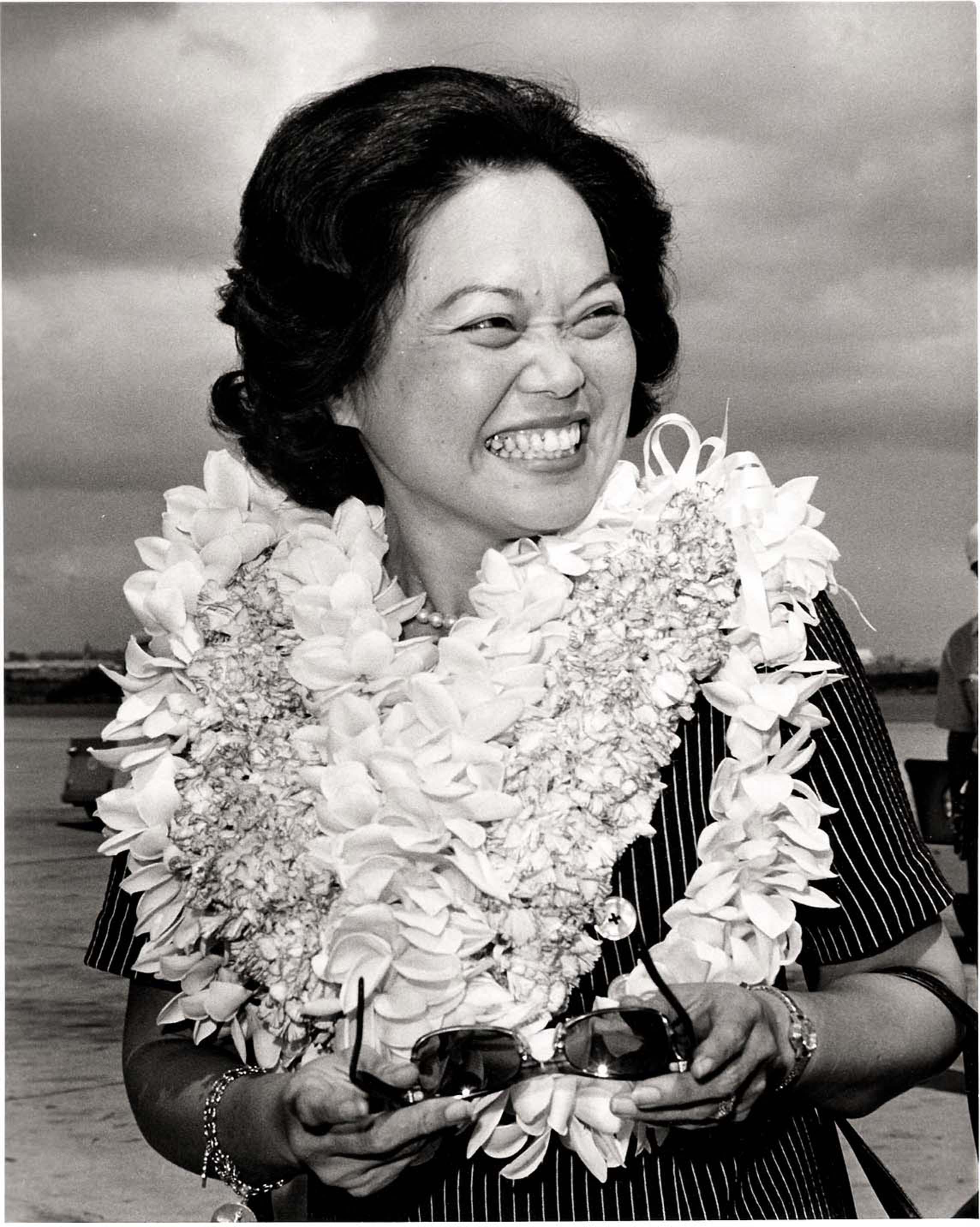
Asian American Feminists focus on the concept of the intersectionality of sexism, racism, and classism but also biculturalism and decolonization. During the Second Wave, Asian American feminists held their own meetings to create connections and address issues unique to their own community, much like other feminists of color were doing. The Asian American Feminist Collective, which is an organization of feminist writers of Asian descent, emphasizes that their power lies in bringing activists together across all Asian communities. The collective was inspired by Black feminist organizations such as the Combahee River Collective and came together during the Woman’s March in 2017.
Southwest Asian/MENA Women
Since the Immigration Act of 1965, people from the region Westerners refer to at the Middle East have entered the United States in larger numbers. The term “Middle East” is a colonial term used by Great Britain and other colonizing countries; however, the region is Southwest Asia, and scholars working to decolonize language have begun referring to this region as Southwest Asia rather than the Middle East, although the overwhelming majority of people still use the colonial name. Further, this region is historically and culturally linked to North Africa because of the Greco-Roman and Islamic Empires of the ancient and Medieval eras. Thus, many members of this group use the term Middle Eastern and North African, or MENA, and wish for this identifier to be used in U.S. census data. Currently, most MENA or Southwest Asians are classified as White or Caucasian in the United States even though they are a distinct ethnic group from other whites, which makes data collection about this group of people even more complicated.
The people of Southwest Asia are as diverse as other Asian communities. The region is the historic home to Judaism, Christianity, and Islam; therefore, most people in the region belong to one of these three faiths, although there is diversity within those as well. They also speak myriad languages, most prominently Arabic, Farsi, and Turkish, although there are many other languages spoken in the region by ethnic minorities. When Southwest Asians immigrate to the United States, they tend to form their own communities, mirroring what European immigrants did during the Gilded Age, which provides a sense of safety and cultural continuity. While there were Southwest Asians in the country prior to 1965, the vast majority have arrived since then, meaning they also arrived after the Civil Rights Movement.
Southwest Asian American women are often stereotyped as oppressed, forced to wear hijab, a veil covering their heads, and completely controlled by men. In fact, wearing a hijab is voluntary in Islam, and, of course, not all Southwest Asian American women are Muslim, and many choose not to wear it here in the United States. The hijab has become a political symbol of the prejudice and discrimination faced by the MENA community in the United States and MENA women in particular.


Conclusion
The Asian American community in the United States is a widely diverse community encompassing people from China, Japan, Korea, Southeast Asia, India, Southwest Asia, and the Philippines. Women within this community have been active in First- and Second-wave feminism, the Civil Rights Movement, business, and politics, increasing in number since 1965. Asian American feminists currently organize around intersectionality as well as decolonizing the narrative around the Asian community and bringing awareness to the unique bicultural experience of the Asian American community due to recent immigration trends.
Question to Consider
What does the quote by Patsy Mink mean to you?
This page titled 5.8: Asian American Feminism was last modified on Thu, 03 Sep 2026 02:04:40 GMT and is shared under a CC BY 4.0 license and was authored, remixed, and/or curated by Rene Miller Paredes via source content that was edited to the style and standards of the LibreTexts platform.
The book could not be loaded just now.