Opening the book…
Learning Objectives
- Describe women’s activities on the home front during WWII.
- Describe women’s military service during WWII.
- Analyze the impact of women’s work on WWII.
World War II began in Europe in 1939, when Germany, controlled by Adolf Hitler and the Nazis, invaded Poland. Together with its ally Italy, they swept through most of Europe and brought most of the region under their control within just three years. The Nazis set up forced labor camps, called concentration camps, to support its war machine, as well as death camps where it systematically murdered more than 10 million civilians as well as prisoners of war. While this is happening in Europe, the United States provided aid but did not become directly involved until December, 1941, when Japan, which had become allied with Germany and Italy in 1940, attacked Pearl Harbor, Hawaii.
Like World War I, the United States was not prepared for a global conflict in 1941, and it took months to recruit, train, and organize members of the military as well as mobilize its civilian population to support the war effort. Americans from all walks of life joined the military and took jobs in factories producing war materials such as munitions, airplanes, and ships. The people left behind dealt with rationing of food and fuel. Everyone was expected to sacrifice for the war, including the country’s women.
Women in the Military
Approximately 350,000 American women joined the military during World War II. They worked as nurses, drove trucks, repaired airplanes, and performed clerical work.
Because the military was still segregated, Women of Color who joined were placed in segregated units and often placed far behind the lines, although this did not mean that their jobs were not important. In 1945, the 6888th Central Postal Directory Battalion was assigned the daunting task of sorting a backlog of thousands of pieces of mail from servicemembers. White officers had assigned the task to Black women because they assumed they would not succeed, but they did. Within a few months, the Six Triple Eight had sorted through a backlog of over 17 million pieces of mail, ensuring that soldiers received mail from back home and that their letters were delivered to their families, which had a positive impact on morale.


Women on the Home Front
As we have learned, women have worked outside the home for wages since the early 19th century, but most of those jobs were in the textile or garment industry or restricted to “Pink Collar” jobs such as secretaries and teachers. World War II changed the type and volume of women’s work. Five million women entered the workforce between 1940 and 1945 in order to fill in for men who left to serve overseas in factories and offices, earning less than the men they were replacing. Still others took jobs in the defense industry as the United States ramped up production of ships, airplanes, and other machinery. The Federal government and contractors like Kaiser and Boeing created ad campaigns designed to entice women to work for the government and in the defense industry. The most famous of these campaigns was Rosie the Riveter, but there was also Wendy the Welder and the Government Girls, which portrayed women as ladylike yet strong and capable. While not without controversy, women working in the defense industry helped the United States win World War II.

Women of Color also answered the call to join the defense industry and government work, often in segregated shops, Kaiser Shipyards in Richmond, California, for example, ran segregated production shops for most of the war. While White women often earned less than their White male counterparts, Women of Color earned even less than their White female counterparts. Latina women joined African American women in the defense industry, sometimes working alongside them in segregated shops but, in other situations, working alongside White women. Many Indigenous women decided to leave their reservations and take defense industry jobs in urban areas far from home. Some remained in the cities when the war ended while others returned home and began to organize and agitate for better treatment for their people.

Many of the women who worked in defense industries and factories were mothers whose husbands were serving overseas, and one of their biggest challenges was childcare. Eleanor Roosevelt encouraged her husband to create government childcare facilities under the Community Facilities Act of 1942. This program created seven childcare centers across the country and served over 100,000 children. They also encouraged defense contractors to create their own childcare facilities on their campuses so that their mothers were nearby. Kaiser Shipyards operated such facilities on their campus, along with housing that allowed women and their children to live near their jobs, although these were only available to White employees. Still, many women lacked access to childcare and left their young children in the care of neighbors or on their own at home.
Japanese Internment
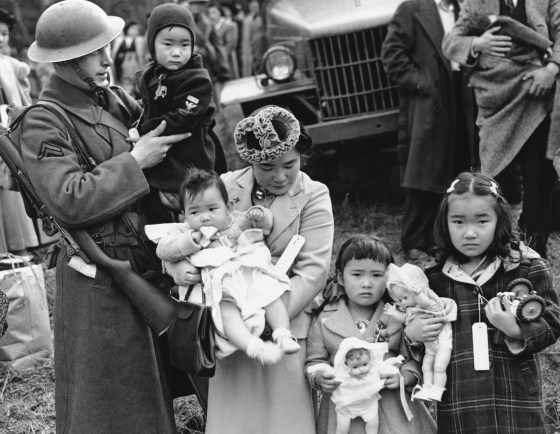
While the United States loosened its restrictions on Chinese immigration during World War II, finally lifting its ban in 1943 because China was a wartime ally, it transferred its anti-Asian sentiment to Japanese Americans following the attack on Pearl Harbor. Beginning in 1942, Japanese men, women, and children were taken from their homes, gathered at rodeo and fair grounds up and down the West Coast, and then taken to internment camps in the interior, mostly desert areas. Japanese American mothers were put in the terrible position of having to explain to their children why they were being rounded up, and they had to recreate some semblance of normalcy in overcrowded horse stalls, barns, and military barracks. Japanese Americans would begin to be released from the internment camps in early 1945, and many single women left to get defense industry jobs or join the military to try to prove their loyalty to the United States.
Conclusion
During World War II, women left their homes and traditional roles to help with the war effort. Most filled in for absent husbands, fathers, brothers, and sons on the farm; created Victory Gardens to help feed the troops; or took jobs the men in their communities had once held, usually for far less pay. Some answered the call to be Soldiers Without Guns by working in government offices or defense industries, and still others joined the Women’s Army Auxiliary Corp (WACs), the Women Accepted for Voluntary Emergency Service (WAVES), the Women Air Service Pilots (WASPs), the American Red Cross, or myriad other groups who went overseas to help with the war effort. Although technically not in combat, hundreds of women lost their lives in service to their country during World War II. Their service and sacrifice not only helped the United States win World War II, but it also transformed the women themselves and many would feel empowered enough to begin a new round of feminist activities.
Question for Consideration
How do you think women’s activities in World War II changed their perception of themselves?
This page titled 5.2: Women in World War II was last modified on Thu, 03 Sep 2026 02:04:39 GMT and is shared under a CC BY 4.0 license and was authored, remixed, and/or curated by Rene Miller Paredes via source content that was edited to the style and standards of the LibreTexts platform.
The book could not be loaded just now.