Opening the book…
Colour pigments: history and usage

Figure 3.33 Artist’s palette by Rosa Bonheur via Wikimedia Commons, in the public domain.
A timeline of colour pigments and dyes
Since pre-historic times, pigments have been used for painting and decoration. Pigments can be made from organic (plants and animals) or inorganic substances (minerals). Early pigments were made simply from grinding ochres found in earth and rocks into a powder that could be painted onto objects or bodies by mixing with water, oils or resins. Over time, cultural groups all over the world developed wider ranges of colours using more complex methods to extract colours, and they created various mediums for using these colours as paints and dyes.
Here is a list of many commonly known pigments and dyes, grouped roughly in chronological order by when they were first discovered and used. You can select any of these pigment or dye links to open a new tab with a Google search for each one, so you can begin your own research and learn more about what they are made from, where and when they were first discovered, and examples of their usage.
Timeline of pigments and dyes
Pre-history
Red, yellow and brown ochres | Lamp black | Bone black | Bone white | White chalk | Woad

Figure 3.34 Pigment by Marco Almbauer via Wikimedia Commons, licensed under, CC BY-SA 3.0
Traditional Australian Indigenous Ochres
Watch this video by Aboriginal ElderYidumduma Bill Harney to learn about traditional Australian Indigenous ochres that have been used for millennia by the Yubulyawan clan of the Wardaman people of the Victoria River region in the Northern Territory of Australia:
Media attribution: Red, White & Black Ochre, Paul Taylor on YouTube
Antiquity
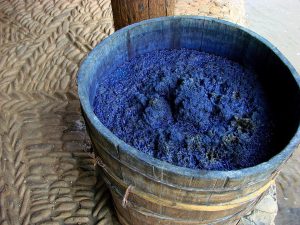
Figure 3.35, Bucket of indigo, by gitane via Wikimedia Commons, licensed under CC BY 3.0.
Watch this video to learn about Egyptian blue:
Media attribution: Egyptian Blue: How an Ancient Pigment Could Save Lives, SciShow on YouTube
Mediaeval
Ultramarine (Lapis lazuli) | Lead tin yellow* | Smalt | Vine black | Kermes | Peach black | Dragon’s blood | Graphite | Lac | Gamboge* | Arzica (weld) | Brazilwood | Verdigris | Gall ink | Walnut | Stil de grain
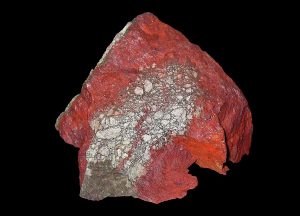
Figure 3.36. Cinnabar by H. Zell via Wikimedia Commons, licensed under CC BY-SA 3.0.
Watch this video to learn more about Dragon’s blood (jump to 3:02 for the start of the lecture):
Media attribution: Saturday University: Dragon’s Blood and the Blood of Dragons Seattle Art Museum on YouTube
Renaissance & Enlightenment
Burnt Sienna | Burnt umber | Copper resinate | Naples yellow (antimony)* | Van Dyke brown | Cobalt green | Potter’s pink | Blue verditer | Mummy brown (caput mortuum) | Bistre | Logwood

Figure 3.37. Cobalt Oxide Green pigment by Stephhzz via Wikimedia Commons, licensed under CC BY-SA 3.0.
Media attribution: Raw vs Burnt Earth Colors, Walcott Fine Art on YouTube
Industrial Age and Modern
Prussian blue | French ultramarine | Chrome yellow | Chrome orange | Alizarin crimson | Cobalt blue | Cobalt yellow | Cobalt violet | Manganese violet | Scheele’s green* | Emerald green* | Cadmium red | Cadmium yellow | Lemon yellow | Viridian | Cerulean blue | Zinc white | Titanium white | Mars colours | Indian yellow | Mauvine (aniline purple) | International Klein Blue | Fluorescent pigments | Phosphorescent pigments

Figure 3.38. Stamp by Post of Aden via Wikimedia Commons, in the public domain.
Watch this video to learn more about the different types of white pigment used in artists’ paints:
Media attribution: Artist’s White paint: Zinc White Issues Malcom Dewey on YouTube
Contemporary (late 20th Century +)
YInMn blue | Vantablack | MIT black | Pinkest Pink | Thermochromic pigments (colour-change with heat) | Photochromic pigments (colour-change with light) | Bio-pigments from bacteria | Pearlescent pigments | Interference pigments (different colours from different angles)

Figure 3.39. Mas Subramanian, YInMn Blue – cropped(opens in new tab), CC BY-SA 4.0

Watch this video to learn more about the recently developed YInMn blue pigment and other colours created by Mas Subramanian:
Media attribution: A Beautiful New. Blue Makes Its Debut, Oregon Public Broadcasting on YouTube
*toxic pigment
For more detailed information on pigments and how they are created and used, you can read this book, Chromatopia by David Coles, which has a detailed history of colour pigments and includes recipes for many colours you can make yourself:
There’s also a fun infographic: History of pigments by Korwin Briggs, that gives a humorous summary of selected pigments mentioned on this page.
Other references:
Mixing paint pigments
Pigments are not pure primary colours
Chapter 1 covered a history of colour theory that included the development of different systems of primary colours – like RYB, RYGB, RGB and CMYK. Learning about primary colours can help us understand how to mix different colours, but it doesn’t always help us to understand how subtractive colour mixing works in real and practical ways.
Most pigments (and dyes) are not pure primary colours. Pigments are made from substances that have a mixture of atoms that reflect a range of light waves. Paint mixing skills are important to learn in your creative practice.

A basic set of paint colours includes a mixture of warm and cool colours, and opaque and transparent colours.
Some examples of this might include:
- Two different reds: cadmium red is an opaque, yellowish red, and alizarin crimson is a transparent, blueish red.
- Two different blues: Prussian blue is dark, cool, and transparent, and cobalt blue is intense, warm and opaque.
- There are also many types of yellows and greens that are cool or warm, opaque or transparent.
- There are also different types of black and white paint, and a range of earthy colours like umbers, siennas, ochres and browns.
- You might also have violets and oranges in your paint set that can’t be mixed by combining other paint pigments.
- There are also other special paints that might have metallic or pearlescent pigments mixed with other colours or different paint mediums.
You can add to your basic paint set if you want more colours. Art materials suppliers have a large range of artists’ paints with many colours to choose from. However, you probably don’t need every colour available. Your particular colour palette will ultimately depend on the colours you want to use in your artworks. It’s good to learn how to mix your own colours and avoid only using pre-made colours straight from the paint tube or pot.
If you are studying painting, you will learn how to mix the different pigments in your paint set to achieve a wide range of colours and avoid muddy or dull colours – unless you want neutral or subtle monochrome colours. You can learn to mix many tints, shades and tones of warm and cool greys or browns from your paints. Learn more about colour properties from the Colour wheel in this resource.
There are different paint mixing methods to create many colours in your artwork, such as:
- physical mixing of two or more paints to create a different colour
- glazing, which is overlaying transparent layers of different coloured paints to create a new colour
- or by using methods similar to the Impressionist painters, who placed small dots or patches of colour next to each other to give the impression of another colour when viewed at a distance.
Artists’ paints are pigments that are mixed with different mediums:
- Watercolour paints are pigments mixed with gum arabic.
- Gouache paints are similar to watercolour but thicker and more opaque.
- Inks can be made with pigments or dyes and can have different mediums, like water, solvents, gels, gum arabic, or shellac.
- Acrylic paints are pigments mixed with an acrylic medium and there are different materials you can add to acrylics to make different textures for your paints.
- Oil paints are pigments mixed with an oil base, like linseed oil, but can also include waxes, pumice and solvents to create different thicknesses or textures.
- Enamels and lacquers are traditionally oil-based, with a hard, glossy finish – but you can also get acrylic resin-based versions.
- Resin – traditional resins were made from natural materials like tree sap. Synthetic resins use a two-part epoxy system that has a synthetic polymer and a hardener. Once combined, a chemical reaction occurs which turns the two liquids into a hard, solid material.
- Encaustic paint has a hot wax medium with pigments added to it.
- Other types of paint include: Tempera (egg yolk) and Fresco (wet plaster), which are not often used in contemporary creative practice because they must be made at the time of painting and are not practical to store or transport.
You can use more than one type of paint medium in an artwork, but it’s important to learn which ones work together. For example, you can put oil paint on top of acrylic paint, but not the other way around. You can, in some cases, use different oil-based paints together, and different water-based paints together, but depending on the thickness or glossiness of the paint medium, this doesn’t always work well. There is a lot to learn about painting methods and techniques!
Why does red and blue make brown?
Watch this video to learn more about colour pigment mixing…
Media attribution: Why Red and Blue Make Brown: Color Wheel Myth Dispelled, WriteArt on YouTube
You can also read this book to learn more about paint mixing:
Wilcox, Michael. Blue and Yellow Don’t Make Green. [2nd ed.]. Bristol: School of Colour, 2001. Print
David Briggs has a very detailed and technical explanation of colour mixing on his website: The Dimensions of Colour: Modern Colour Theory. Read the section about Mixing of Paints for more information.

The artist’s palette as a colour system
You can learn quite a lot about colour and painting techniques by studying the artworks of others. Some artists and art historians also like to delve deeper into an artist’s methods and processes by studying the paint pigments that the artist has used, and how they arrange their painting palettes to mix colours before applying them to their paintings.
Photographer Matthias Schaller has created a series of photographs of famous artists’ paint palettes – Das Meisterstück (The Masterpiece). He considers these to be a reflection of the artists’ work and has created over 200 of these images. You can view some examples on his website and in this Hyperallergic magazine article .
Digital tools have also been used to analyse the basic colour palettes of famous paintings to help artists and designers learn about colour relationships – view some examples here:
Colour dyes: a (very) short history of dyes from around the world

Figure 3.41 Juana Gutierrez grinding indigo at the Porfirio Gutierrez family workshop in Teotitlan del Valle, Oaxaca, Mexico. Image by Thelmadatter via Wikimedia Commons, licensed under CC BY-SA 4.0.
Throughout history and across cultures and continents, dyes have been used for thousands of years to colour materials. Many dyes were originally used to colour textiles – fibre-based materials such as threads, yarns or fabrics that are woven or knitted and made from plant or animal fibres, such as cotton, linen, flax, hemp, grasses, wool, silk, human hair, etc. Dyes were also used to stain wood, pottery, and animal hides.
Dyes are different to pigments because they are soluble (they can dissolve in water) and traditionally were mostly made from organic substances (plants or animals). Dyeing processes can also be more complex than working with paint pigments because the dye must be absorbed and held fast in the material it is colouring. Different techniques were developed over time to bind dye colours with the material to prevent the dye from washing out or fading too quickly.
Many of the discoveries for improving dyes throughout history relate to developing chemical processes for creating more vibrant colours, and for creating colours that last longer, which includes lightfastness and colourfastness properties, and the ability to bind with materials they are absorbed into. The development of fixatives (known as mordants) was a necessary innovation to prevent dyes from being washed out of textiles, enabling long-lasting colour. Some methods were more successful than others, and evidence has been discovered of ancient textiles that still have some colour from dyeing.
Ancient discoveries
Archeologists have discovered examples of dyed textiles that date back to Neolithic times. One example is from around 10,000 BCE, in the Timna Valley, South Israel, where ancient copper and ore mining sites have been uncovered. [1].
Another archeological example is the discovery of 30,000 year-old flax textiles found in Dzudzuana cave, located in the foothills of the Caucasus region in Georgia, Europe. The flax was dyed in many different colours, including “yellow, red, blue, violet, black, brown, green and khaki.”[2]
The Silk Road was an ancient trading route that ran from the Roman civilisation on the Mediterranean, through Afghanistan, the Levant and India, to the Xi’an region in northern China. This route was over 6,400 kilometres long! It was a pathway for trading between east and west cultures in many products such as spices, textiles, and precious metals. It was also the pathway for trading dyestuffs and knowledge about dyeing processes., accessed 03/01/2023, https://www.britannica.com/topic/Silk-Road-trade-route ">[3]
Because of the Silk Road, and ancient maritime trade routes, many cultures had access to dyes that were not made from plants native to particular areas – including indigo, woad, saffron, madder, and safflower. Here are some (very) short stories about the history of selected dyes from locations around the world:
China and Japan
In ancient Chinese silk production, colouring the thread began right from the first stage when the silkworm creates silk thread to form a cocoon. By feeding the silkworm white garden mulberry or wild mulberry leaves, the silk produced could be either white or yellow. Creating different coloured silk threads often involved bleaching it first by boiling threads in the ash of Lian tree fruit. Blue dye was made by fermenting indigo, black from iron vitriol, red from madder root or safflower, and yellow from Jinzi fruit.
The Ming (1368–1644) and Qing (1644–1911) Dynasties in China created very detailed records of types of dye and the dyeing methods and processes used. These records are an important historical resource for understanding how different natural substances were used to achieve the diverse and vibrant colours we associate with Chinese silk and other textiles.[4]
Japan has a long tradition of dyeing materials such as textiles, paper and wood, going back 2000 years. There are also records going back to the 7th century that document textiles dyed with red, blue, and other colours. These dyes were made from natural materials native to Japan, but also those that came via the Silk Road, maritime trade, and from the influences of Chinese and Korean textiles and dyeing methods. Evidence exists of textiles dyed with vermilion, sappanwood, cinnamon and Gunjyo – a blue pigment made from mining a mineral ore that had copper in it., accessed 04/01/2023, https://www.aic-color.org/resources/Documents/jaic_v5_gal2nar.pdf ">[5]
Japan is also known for its indigo dye and textiles called Aizome. Indigo was introduced to Japan in the Heian period around the 7th Century CE. Since that time, techniques for creating indigo textiles have developed to become culturally significant, and Japanese indigo textiles are highly valued around the world.
South-East Asia
Although Batik (wax resistance dyeing) is historically found in many places around the world, its origins in Java, Indonesia, are significant. Indonesian Batik was recognised by UNESCO in 2009 and placed on the Representative List of the Intangible Cultural Heritage of Humanity.
Watch this video to learn more about the history and techniques of Batik:
Media Attribution: What is Batik? Historically Speaking, Ours For All on YouTube
India
India’s ancient history of dyes is significant. Not only did they produce many dyes and techniques for achieving vibrant colours, but they also developed mordants and processes to fix the dyes, which were closely guarded secrets for a long time. Indian textiles were highly prized across Europe. The name “Indigo” is a reference to India, where the plant Indigofera Tinctoria was grown, although it was also found in much of Asia and parts of Africa too.
The ancient Sanskrit texts, known as the Vedas (meaning “knowledge”), are the oldest Hindu texts known to exist – from around 1500-500 BCE. These contain details about textiles and clothing worn at different times of the year or at religious ceremonies, with reference to multiple colours. From these texts, we know that Indian dyeing techniques for creating vibrantly coloured fabrics existed around that time.
Tie-dye, known as Bahndani (meaning “to tie up”), is also accredited to Indian culture, going back thousands of years. Other techniques like Batik and Ikat were also used with dyed yarn or woven fabrics. India was one of the first places to produce cotton in large quantities, and produced many dyed cotton textiles that were traded in other countries.
This video discusses the complex and problematic history of Indigo dye beyond South Asia (see also North America below for more details about the creation of blue jeans):
Media Attribution: A Short History of the Colour Indigo, National Gallery UK, on YouTube
Egypt and Persia (North Africa & Middle East)
Ancient Egyptians wore mostly white linen textiles, but they also dyed fabrics in a range of colours. They used Madder for red dye, Safflower for yellow, Indigo or woad for blue, and Murex snails for purple (Tyrian purple was originally made by the Phoenicians).
Ancient Persians also developed rich colours using dyes like runas (madder), red grain (kermes or cochineal beetles), walnut, neel (indigo), vine leaves, and other plant materials. Methods for dyeing wool and silk with these diverse colours coincided with the creation of woven and knotted carpets – something we still associate with Persian culture today.
The first carpets date back over two thousand years and were created by nomadic tribes and royal courts. Each group would have their own designs and colours which reflected the history and symbolism that was important to the creators. Carpets created during the Safavid Empire (1501-1736) are world famous for their intricate designs using intense colours, and there are many examples held in museums around the world – here is one example shown in Figure 117.

Figure 3.42. Hunting Carpet made by Ghyath ud-Din Jami, Wool, cotton and silk, 1542–1543, Museo Poldi Pezzoli, Milan. Image attribution: Ghyas el Din Jami – Weaver (Persian) Born in North-West Persia. Died in North-West Persia.
Google Art Projectでのアーティストの詳細, Ghyas el Din Jami – Tabriz (?) – Google Art Project, marked as public domain, more details on Wikimedia Commons

Watch this video to see the restoration of a Safavidic carpet:
Media Attribution: Conserving the Emperor’s Carpet, The Met on YouTube
West and South Africa
There are many different types of dyes and textile designs that come from the many countries and regions in Africa. Groups develop their own designs with colours that have symbolic and cultural meanings. Techniques such as batik and tie-dyeing developed in African cultures, and common dyes included indigo, kola nut (brown), annatto (a yellow and orange colour), and earth colours.
Visit this website: The Fabric of Africa , on Google Arts and Culture, to see many beautiful and diverse examples of African textiles from different parts of Africa.
This video shows the work of artisans who practice West African (Nigeria, Ghana and Mali) ancient textile traditions: Adire, Adinkra and Bogolan ‘Mud cloth’. (19 minutes)
Media Attribution: West African Textiles, BurroGrande Films on YouTube
Greek, Roman and other Mediterranean civilisations
Ancient Greek, Roman and neighbouring civilisations used a range of plant and animal dyes to create coloured textiles. Plant dyes included crocus sativus (ochres), madder, woad, weld (yellow), walnut hulls, oak gall (brown and black), orchil lichen (pink/purple), alchanet (red), and saffron crocus (yellow).
Animal dyes included kermes beetles (red/cochineal) and seashell creatures such as Hexaplex trunculus, Bolinus brandaris, and Stramonita haemastoma, which created a purple dye similar to the Murex sea snail that was used by the Phoenicians and Romans to create Tyrian purple., accessed 21/12/2022, https://artextiles.org/en/content/dyes ">[6].
Watch this video for more details about how Tyrian purple was created:
Media Attribution: Tyrian Purple | History of Colours, Little Art Talks on YouTube
British Isles and North/West Europe
Civilisations from the British Isles and Western Europe used a range of plant materials to create diverse dye colours. Despite being grown across southern Europe and the Caucasus, Britain is primarily known for its woad (Isatis Tinctoria) dye, perhaps because of the legends of Boudicca and the Iceni tribe, who painted their faces with the blue dye. The Celts also used it as body paint and possibly tattoo ink – Romans referred to the Celts as “Picts” (Picti means painted people in Latin) because of their blue tattooed bodies. Evidence of plant materials goes back as far as the Iron Age, and the plant was used for medicinal purposes as well as dye.
Vikings created their own dyes from local plant materials, but they also traded for colours like woad, indigo, madder and cochineal to create more vibrant colours than they could make from local ingredients. They used small amounts of dyes to create decorative edgings on their textiles rather than dyeing entire fabrics. They also used a range of available mordants to fix the dye colour, such as iron, tin, copper, and alum.
Watch this video to learn about traditional dyeing methods, including the use of different mordants that would have been available during the Iron Age (1200 – 550 BCE) in Europe.
Media Attribution: Iron Age Dyes: Woad, Weld & Madder, Sally Pointer on YouTube
North America
Many plants were used by Indigenous Northern Americans to create a wide range of dye colours, such as sumac, bloodroot, alder, cottonwood and black walnut. Early western colonisers noted that native coloured textiles tended to fade quickly, so it is thought that coloured dyes were used in a direct or substantive dyeing method where mordants were not used. accessed 02/01/2023, https://www.fs.usda.gov/wildflowers/ethnobotany/dyes.shtml ">[7]
Blue Jeans, Denim and Dungarees
‘Bleu de Gênes’ was made from “bastard indigo”, a plant related to Indigofera, called Amorpha Fruticosa. It was used to produce a blue dye for sail cloth that became known as ‘Bleu de Gênes’ (the blue of Genoa – from Italy), shortened to “jeans“.
‘Tenue de Nîmes’ (Clothes from Nîmes – from France), short name “de Nîmes”, was a textile developed in the 17th century that had a twill weave using one light thread and one dark thread, so the fabric was dark on the outside and light on the inside. The English and Americans eventually turned the name of this textile into what we now know as ‘denim.’, accessed 01/01/2023, https://medium.com/@tsbojer/the-history-of-indigo-dyeing-and-how-it-changed-the-world-35c8bc66f0e9 ">[8].
The term “dungarees” most likely comes from a sturdy cotton textile made in Dungri, Gujarat, India, that was often coloured with indigo dye.
Although they originated in Europe and India, these blue textiles are now associated with American culture due to the production of the clothing item we call “blue jeans”. In 1853 a German immigrant, Levi Strauss founded his company in San Francisco, USA, which stocked “denim” fabric. In 1873, Latvian emigrant and tailor Jacob Davis and Levi Strauss patented and manufactured the “XX” pants, which became known as Levi 501s. These are claimed to be the world’s first blue jeans. These jeans had metal rivets on the pockets and a button-fly, which made them tough and suitable as workwear.
Claims that Levis were the first “blue jeans” are disputed by some historians who point to evidence that similar garments were first created by enslaved black people working the indigo and cotton plantations in Southern states. These enslaved plantation workers needed tough working clothes for the hard labour that was part of plantation life. They had ready access to the cotton that came from the plantations to produce the fabric, and they had the cultural knowledge from their African homelands to know how to dye the fabric with indigo – which also had anti-fungal and antibacterial properties.
According to these historians, Davis and Strauss merely added metal rivets to their work pants design and patented the product. , accessed 23/12/2022, https://www.phillytrib.com/commentary/michaelcoard/enslaved-blacks-invented-blue-jeans/article_57de5262-5b78-534d-a133-bfc406f87a78.html ">[9]
Watch this video for an overview of the origins of blue jeans:
Media Attribution: Where Did Blue Jeans Begin? | Riveted: The history of Jeans, American Experience | PBS on YouTube
Central and South America
Indigo was used in Central and South American civilisations. There is evidence that it was used in the Andes as far back as 6200 years ago – which predates its use in India, Egypt and other ancient civilisations.[10]
Maya blue was “made by burning incense made from tree resin and using the heat to cook a mixture of indigo plants and a type of clay called palygorskite”. The process of mixing the indigo and tree resin with clay created a long-lasting colour that didn’t fade. In fact, the discovery of artefacts containing this dye has led to physicists developing their own modern version that is resistant to fading and weathering. accessed 03/01/2023, https://phys.org/news/2010-07-ancient-mayans-modern-proof-dye.html ">[11].
Relbun (similar to madder) was used to create red dye over 2000 years ago, but the advent of using cochineal beetles around the 5th Century CE changed dye production in places likes Mexico and Peru. Cochineal became a valuable commodity used for trading and was worth as much as silver to Spanish colonisers. For many years, the Spanish claimed that cochineal was a seed and hid the fact that it was an animal product – to prevent others from breaking their trading monopoly.
Watch this video to learn more about cochineal:
Media Attribution: Cochineal Origins, Harvard Museums of Science and Culture on YouTube
Australia
Australia has Indigenous cultures that have used dyes from a variety of plants, minerals and animal products to colour fibres used for textiles, basket weaving, knotting, and other products for many thousands of years. Different language groups around the continent developed their own knowledge bases using different methods and diverse local materials they found in their geographic locations.
Sally Blake, an Australian artist based in Canberra, studied eucalypts at the Australian National Botanical Gardens, specifically for their dye properties. She has produced an extensive database of Eucalyptus dye colours, which shows the wide range of colours achieved by using the different eucalyptus species, different parts of the plant such as leaves or bark, use of different mordants such as alum, iron or copper, and use with different textiles – wool, silk and linen.
Select the link below to watch this video on YouTube, which shows the bundle dyeing technique using native plants to colour fabric – from Boon Warrung, Wurundjeri and Ngarluma Country. Included are eucalyptus leaves, for yellow, grey or purple colours, eucalyptus bark for purples, and acacia leaves, which can create orange or red colours:
Create unique coloured patterns on fabric using native plants | My Garden Path | Gardening Australia on YouTube

Figure 3.43. Eucalyptus tereticornis buds, capsules, flowers and foliage, Rockhampton, Queensland. Image attribution:L Ethel Aardvark, Eucalyptus tereticornis flowers, capsules, buds and foliage, CC BY 3.0

Further resources (RMIT Library search)
Abel, A. 2012, “The history of dyes and pigments: From natural dyes to high performance pigments” Colour Design: Theories and Applications. pp.433-470. 10.1533/9780857095534.3.433. https://rmit.primo.exlibrisgroup.com/permalink/61RMIT_INST/4t5l5f/cdi_knovel_primary_chapter_kt011G8M02
Samanta, Ashis Kumar, Nasser Awwad, and Hamed Majdooa Algarni. Chemistry and Technology of Natural and Synthetic Dyes and Pigments. Edited by Ashis Kumar Samanta, Nasser Awwad, and Hamed Majdooa Algarni. London: IntechOpen, 2020. https://rmit.primo.exlibrisgroup.com/permalink/61RMIT_INST/1adn3cm/alma9922172764201341
Delamare, Francois., and Bernard. Guineau. Colour : Making and Using Dyes and Pigments. London: Thames & Hudson, 2000. https://rmit.primo.exlibrisgroup.com/permalink/61RMIT_INST/1adn3cm/alma9911669840001341, https://rmit.primo.exlibrisgroup.com/permalink/61RMIT_INST/1adn3cm/alma9911669840001341
Papadakis, Raffaello. Dyes and Pigments : Novel Applications and Waste Treatment. Edited by Raffaello Papadakis. London: IntechOpen, 2021. https://rmit.primo.exlibrisgroup.com/permalink/61RMIT_INST/1adn3cm/alma9922172633201341
- Sukenik N, Iluz D, Amar Z, Varvak A, Workman V, Shamir O, Ben-Yosef E. "Early evidence (late 2nd millennium BCE) of plant-based dyeing of textiles from Timna, Israe"l PLoS On,. 2017 Jun 28;12(6):e0179014. doi: 10.1371/journal.pone.0179014. PMID: 28658314; PMCID: PMC5489155. https://www.ncbi.nlm.nih.gov/pmc/articles/PMC5489155/
- Kvavadze, Eliso, Bar-Yosef, O., Belfer-Cohen, A. Boaretto, E., Jakeli, N., Matskevich, Z., and Meshveliani. T. 2009. "30,000 Years old wild flax fibers - Testimony for fabricating prehistoric linen", Science 325(5946): 1359. p.2. http://nrs.harvard.edu/urn-3:HUL.InstRepos:4270521
- Britannica, T. Editors of Encyclopaedia. 2023 "Silk Road." Encyclopedia Britannica, <https://www.britannica.com/topic/Sil...ad-trade-route>, accessed 03/01/2023, https://www.britannica.com/topic/Silk-Road-trade-route
- Han, J. and Quye, A. 2018, "Dyes and Dyeing in the Ming and Qing Dynasties in China: Preliminary Evidence Based on Primary Sources of Documented Recipes". Textile History. 1-27. 10.1080/00404969.2018.1440099. https://www.researchgate.net/publication/323917857_Dyes_and_Dyeing_in_the_Ming_and_Qing_Dynasties_in_China_Preliminary_Evidence_Based_on_Primary_Sources_of_Documented_Recipes
- Yoshioka, s. 2010, "History of Japanese Colour: Traditional Natural Dyeing Methods", Colour: Design & Creativity, Society of Dyers and Colourists p. 1, <https://www.aic-color.org/resources/...v5_gal2nar.pdf>, accessed 04/01/2023, https://www.aic-color.org/resources/Documents/jaic_v5_gal2nar.pdf
- Artextiles.org, 2017, "Dyes", Artext: Hellenic Centre for Research and Conservation of Archeological textiles,<https://artextiles.org/en/content/dyes>, accessed 21/12/2022, https://artextiles.org/en/content/dyes
- U.S. Forest Service, "Native Plant Dyes", U.S. Forest Service, United States Department of Agriculture, <https://www.fs.usda.gov/wildflowers/...any/dyes.shtml> accessed 02/01/2023, https://www.fs.usda.gov/wildflowers/ethnobotany/dyes.shtml
- Stege Bojer, T. 2007, "The History of Indigo Dyeing and How It Changed the World", Medium.com, <https://medium.com/@tsbojer/the-hist...d-35c8bc66f0e9>, accessed 01/01/2023, https://medium.com/@tsbojer/the-history-of-indigo-dyeing-and-how-it-changed-the-world-35c8bc66f0e9
- Coard, M. 2022, "Enslaved Blacks invented blue jeans", The Philedelphia Tribune, March 1, 2022 <https://www.phillytrib.com/commentar...406f87a78.html>, accessed 23/12/2022, https://www.phillytrib.com/commentary/michaelcoard/enslaved-blacks-invented-blue-jeans/article_57de5262-5b78-534d-a133-bfc406f87a78.html
- Annalee Newitz - Sep 15, 2016 8:53 pm U.T.C. (2016) World's most valuable dye existed in Peru 1,800 years before anywhere else, Ars Technica. Ars Technica. Available at: https://arstechnica.com/science/2016...anywhere-else/ (Accessed: January 9, 2023). https://arstechnica.com/science/2016/09/worlds-most-valuable-dye-existed-in-peru-1800-years-before-anywhere-else/
- Powell, D. "Ancient Mayans Inspire Modern Fade Proof Dye", Phys.org, July 30, 2010 <https://phys.org/news/2010-07-ancien...proof-dye.html> accessed 03/01/2023, https://phys.org/news/2010-07-ancient-mayans-modern-proof-dye.html
Colour dyes: methods and processes

Figure 3.44. Wool coloured with natural dyes by Himalayan Weavers. Image by Alamcsd at wts wikivoyage via Wikimedia Commons, in the public domain.
Early dye processes involved soaking and boiling textiles in coloured solutions made from substances such as roots, berries, bark, leaves, wood, fungi, and animal products in a direct or substantive dyeing method. However, these dyed textiles may not have had a very lasting colour. It was eventually discovered that different methods could be used to create stronger colours and to fix the colours so they didn’t fade or wash out so quickly.
Some methods used fermentation to create a strong colour, as with Indigo, woad and madder. For example, the indigo plant isn’t actually blue. The blue colour only comes from soaking the leaves to release the indican amino acid, which is then fermented by other plant enzymes – a process called indoxyl. It is left to dry in the air, which oxidises it, creating a blue colourant. An indigo dye bath looks green – it’s only when the dyed material is brought into the air that it oxidises and turns blue before your eyes.
Dyes like Madder can also be turned into pigments by “laking” (hence the term “madder lake”) – which means the dye is combined with a mineral salt to produce an oil-soluble substance that can be used like a paint pigment.
A mordant, which was often a type of mineral salt like sodium chloride (table salt), alum or copper vitriol, or another substance like vinegar, or even stale urine, was used to fix the dye so it wouldn’t wash out of the fabric.
Many of these processes smell terrible!
Synthetic dyes changed the complex and labour-intensive methods of natural dyeing. Many synthetic dyes are made from petrochemical processes, or from other chemicals that can be manufactured in large quantities in industrial settings like factories, and are relatively inexpensive in comparison with some natural dyes. There are many types of synthetic dyes, such as reactive dyes, disperse dyes, base and acid dyes, sulphur dyes, aniline dyes, azo dyes etc. Different types of dyes and dyeing methods suit different types of materials.
Most dyeing processes today are for textile production. The three types of fibres that are commonly used for textiles today are:
- Cellulose: cotton, flax, linen, hemp, viscose/rayon/modal (made from bamboo or other plant fibres)
- Protein: wool, mohair, silk
- Synthetic: nylon, polyester, acrylic, acetate
Here are some of the common dyes and dye techniques used in industry today:
Reactive dyeing method
Fibre-reactive dyes are commonly used for fabrics made from cotton, linen, viscose wool and silk. This type of dye “reacts” with the fibre it is colouring because of a chromophore that creates a chemical link with the fibre, binding the colour to it. The colour then becomes part of the fibre. It usually has a good level of colour fastness. Cold water dyes like Procion dyes are fibre reactive and use soda ash in the dyeing process. They do not need mordants and are non-toxic.
Disperse dyeing method
This is a high-temperature dye made from fine, insoluble dye particles that are from a suspension. They are suited to hydrophobic fibres (they don’t absorb water) such as synthetics.
Direct dyeing method
Also called Substantive dye, this method is used for cotton, and although lightfast, washes out easily. It’s called “direct” because the dye is absorbed into the fibres without help from other chemicals, such as mordants.
Vat dyeing method
Vat dyeing is still used for some textiles. Natural Indigo is one of the original vat dyeing methods, where textiles are soaked in the vat until the right colour strength is achieved. This may require more than one soaking in the vat to deepen the colour.
Basic and acid dyes
Basic (alkaline) and acid dyes are water-soluble dyes. Basic dyes are used for acrylic fibres, and acid dyes are used for wool, silk and nylon fibres.
Sulfur dye
Sulfur dyes are used for cotton and other cellulose fibres, and also for blended fibres that contain cotton mixed with polyester or acrylic fibres.
Chrome dye
Chrome dyes were synthetic dyes developed in the early 20th Century and commonly used on wool for carpet manufacture, with the use of a chemical to allow the dye to penetrate the fibre. They have good light and colour fastness properties.
Azo dye
Azo dyes are synthetic dyes used in a variety of products, including textiles, leather, foods, cosmetics and carpets. Certain Azo dyes are considered harmful because they can break down into a carcinogenic compound called Aromatic Amines (including benzidine), and can trigger toxic effects such as allergic reactions, tumours, and endocrine disruptions. Although Azo dyes are banned in the UK and restricted in the USA, they are allowed in Australia., accessed 08/01/2023, https://www.productsafety.gov.au/products/chemicals/azo-dyes ">[1]
Learn more about the dangerous history of synthetic dyeing methods and processes from this video:
Media Attribution: Fashion that SLAYED!? A History of Fabric Dyes (and all the damage early chemical dyes did), Emily Snee on YouTube
- Australian Competition and Consumer Commission(ACCC), c.2021, "Azo Dyes", Product Safety Australia, <https://www.productsafety.gov.au/pro...icals/azo-dyes>, accessed 08/01/2023, https://www.productsafety.gov.au/products/chemicals/azo-dyes
Test yourself: is this a feature of pigments or dyes?
A multiple choice quiz to test your understanding of pigments and dyes
(5 minutes or less)
How did you go?
If you need to learn more about this topic, you can read this section again: 3.4 Colour systems: pigments and dyes
Colour dyes: synthetic colours and sustainability
Impact of synthetic colour development
Egyptian blue[1] was one of the first synthetically created pigments, made from crushed blue glass (silica and copper) over two thousand years ago. Although synthetic pigments and dyes have existed throughout history, it wasn’t until the industrial era that there was a boom in chemical synthetic colours that were relatively cheap and easy to make and therefore used in industry for the mass production of paints and dyes, which were used in products like textiles, paper, plastics, and many other materials.
Prussian blue was the first chemical synthetic colour accidentally created by Johann Jacob Diesbach in 1704. One of the first synthetic dyes to be mass-produced was a mauve colour called Mauveine (also known as Aniline purple and Perkin’s mauve). It was also accidentally discovered by William Henry Perkin in 1856 while he was trying to create the chemical quinine, which was used at that time for the treatment of malaria.
Mauvine
#8D029B

Many of the synthetic colours we now use in artist paints and industrial practices (Figure 3.45) are safer and cheaper options than the equivalent pigments from the past. Older colours like realgar, vermilion and emerald green are highly toxic due to their chemical compounds which include lead, mercury, arsenic or other dangerous materials that are harmful to human health. Many people became ill or died from the creation and use of pigments and dyes containing these toxic substances. Learn more about this in Special colours, controversial colours and interesting facts on the next page.

Hair dyes
People have been dyeing their hair for thousands of years too! Ancient cultures used natural dyes like Henna, Indigo, Tumeric, Senna, Walnut and Cochineal to dye their hair a range of colours, such as red, orange, yellow, black, brown, or even green. Some ancient people like the Celts also bleached their hair with lime or other substances that would strip the hair of colour.
Natural dyes can create unpredictable results because they may have different amounts of reactive substances and colourants, and they also tend to fade over time. Some products, like “black henna” (which is not actually henna), can cause extremely serious allergic reactions and are banned in many countries.
Synthetic hair dyes were first developed in the late 19th century. French company L’Oréal was the first company to manufacture synthetic hair dyes around 1907, and the German company Schwarzkopf was the first to create at-home hair dyes in 1947. Today, hair dye products are a huge industry and are available in a wide range of colours – in fact, all the colours of the spectrum (Figure 3.46), as well as natural colours and treatments that bleach or lighten the hair.
There are temporary and permanent dyes that can be used to colour hair (including facial hair). However, some colours are more lightfast than others, and even colours classed as “permanent” can still wash out or fade – especially colours like violets, blues and greens, which are more fugitive dye colours. You can also now get hair dyes that fluoresce in UV light – known as blacklight-reactive hair dyes.

Sustainability, waste and pollution from making and using dyes
Dye production and usage (both natural and synthetic dye) has had a problematic history due to the use of petrochemicals to create synthetic colours, the use of water in the dyeing process, and the creation of wastewater from the washing process.
Since the advent of industrial and synthetic dye-making processes (Figure 3.47), and industrial use of dyes for producing textiles and other materials, industries working with dyes have caused a lot of pollution and used great quantities of clean water.
New methods are being developed that seek to reduce waste in dye production and usage, to create a more sustainable industry. This also impacts broader issues in the fashion industry relating to clothes wastage and sustainability.
These articles have more information on this topic:
- Pailliè-Jiménez M E, Stincone P, Brandelli A 2020, “Natural Pigments of Microbial Origin”, Frontiers in Sustainable Food Systems, Vol 4, 2020, viewed 07/12/2022, <https://www.frontiersin.org/articles/10.3389/fsufs.2020.590439>, DOI=10.3389/fsufs.2020.590439, accessed December 21, 2022
- Bealle, A. (2020) Why clothes are so hard to recycle, BBC Future. BBC. <https://www.bbc.com/future/article/20200710-why-clothes-are-so-hard-to-recycle>, accessed: January 3, 2023
- Lellis, B. Zani Fávaro-Polonio, C. Alencar Pamphile, J. Cesar Polonio, J, 2019, “Effects of textile dyes on health and the environment and bioremediation potential of living organisms”, Biotechnology Research and Innovation, Vol 3, Issue 2, 2019, Pages 275-290,
ISSN 2452-0721, https://doi.org/10.1016/j.biori.2019.09.001.<>, accessed 04/01/2023

- Pradell, T., Salvado, N., Hatton,G.D., Tite, M.S., 2006, "Physical Processes Involved in Production of the Ancient Pigment, Egyptian Blue", Journal of the American Ceramic Society, Volume89, Issue4, April 2006, pp. 1426-1431, https://doi-org.ezproxy.lib.rmit.edu...6.2005.00904.x, https://ceramics.onlinelibrary.wiley.com/doi/abs/10.1111/j.1551-2916.2005.00904.x
Special colours, controversial colours and interesting facts

Figure 3.48. Painting with fluorescent colours which glow under black light. Beo Beyond via Wikimedia Commons, licensed under CC BY 3.0.
The history and stories of some pigments and dyes are curious, and sometimes controversial. Here are a selection of interesting colours and fun facts:
Topics covered
Luminescent and special effects pigments and dyes
In Chapter 2, the page about Luminescence explains the chemistry of fluorescence and phosphorescence. But making fluorescent and phosphorescent pigments involves complex processes that involve both chemistry and physics. There are also special effects pigments that change colour under different conditions.
There are different kinds of fluorescent and phosphorescent colourants that can react with UV light as well as visible sunlight. Some can even react with infrared light waves. Capturing fluorescent or phosphorescent effects requires very specific treatment of the pigment particles. Theses types of pigments must be mixed with a stable medium that can be used as a paint or printing ink that will last.
Fluorescent pigments
Fluorescent pigments (See Figure 3.48 at the top of the page) can be made from organic or inorganic substances. The pigments don’t fluoresce in their solid state, but if they are dissolved in a thermoplastic or thermoset carrier resin and then ground into a fine powder, they become fluorescent pigments [1].
Phosphorescent pigments
We are familiar with phosphorescent pigments that are used as “glow-in-the-dark” paints and pigments that can be mixed with plastics (Figure 3.49). These pigments are made from phosphors that capture light (photons) and store the energy, emitting it slowly as photons over a period of time after light exposure. An example of this would be a glow-in-the-dark toy that absorbs sunlight or even artificial light, and then releases it at night-time or when all lights are removed.
Copper-activated zinc sulfide, called GS phosphor, is often used as the phosphor in toys, whereas a more powerful substance like strontium aluminate is used for road signs, road surface lines, and warning signs. Phosphorescent pigments can be mixed into paint mediums, waxes or plastics. They have many different uses.

Photochromic and Thermochromic dyes and pigments
Photochromic pigments and dyes have a reversible (or sometimes irreversible) colour change when exposed to light rays. Some can go from transparent to coloured, as in optical lenses (transition lenses) that get darker when worn outside in sunlight, and become clear again when entering a darker space. Other common examples can be found in nanofibres in smart textiles, in toys, and as UV warnings for sunburn.
Photochromic pigments contain microencapsulated photochromic dye mixed into a synthetic resin. The colour change happens when light exposure triggers a chemical reaction that changes which light waves are reflected and absorbed, thus changing the colour. When the light is removed, the chemical reaction dissipates and the pigment goes back to its original colour.
Thermochromic pigments have a reversible (or sometimes irreversible) colour change when heat is applied to the pigment. Applied heat triggers a chemical reaction to occur that changes the light waves that are reflected and absorbed, thus changing the colour. Examples include textiles, objects like coffee cups, toys, and food packaging. Colour change labels can detect if food packages have been exposed to temperatures that might spoil the edible contents. Figure 3.50 shows a short video clip of a thermochromic coffee mug changing colour when boiling water is poured into it.
**** insert a coffee mug video **
Pearlescent and Interference pigments – structural colouration
Pearlescent and interference pigments are usually created with complex and multi-layered paints that appear to have different colours when viewed from different angles.
You might have noticed similar phenomena like oil slicks, soap bubbles and peacock tail feathers that appear to have rainbow colours or two or three different colours when moving. It’s an optical phenomenon where surfaces appear to change colour depending on the angle they are viewed from.
Iridescence (also known as goniochromism – from the Greek gonia = angle, chroma = colour) is the name for this effect.
This example in Figure 3.51 is called ChromaFlair – it’s a pigment for automotive paint. You can see in the image that the paint finish on this car appears to be different colours depending on the angle you are viewing the surface from. The curves of the car body show different colours because they are at different angles to the camera. This type of effect is also called Structural colouration .


Trademarked colours
There are certain colour pigments that have been developed by individuals or organisations who have tried to limit the use of their colour with trademarking. Many companies have tried to trademark their logo colours or signature product colours, but this has only been partly successful. One successfully trademarked colour is Tiffany Blue , which is a colour developed by Pantone for the jewellery company Tiffany & Co. This colour can’t be used by anyone except Tiffany for their packaging.
Yves Klein: International Klein Blue
Around 1960, French artist Yves Klein collaborated with artist paint maker Edouard Adam to develop a deep and vibrant blue pigment with a matte, powdery quality, which is similar in colour to a synthetic ultramarine. Klein called the pigment International Klein Blue (IKB) and he used the pigment mixed with resin in many monochromatic artworks – some abstract (Figure 3.52), and others figurative, often using naked female models covered in the paint who would then press their bodies onto canvas. Klein registered the pigment so that others couldn’t use it. However, Adam still sells this pigment today under the name Médium Adam 25.

Figure 3.52. Artwork L’accord Bleu by Yves Klein, 1960, using International Klein Blue pigment. Image attribution: Jaredzimmerman (WMF), L’accord bleu (RE 10), 1960, CC BY-SA 3.0

Vantablack (Anish Kapoor controversy)
Sculptor Anish Kapoor bought exclusive rights to use the paint Vantablack, which was developed by Surrey NanoSystems in 2014 and originally created for use in military and astronautical industries. Vantablack was the “blackest” black pigment at that time, which could absorb up to 99.965% of light. This means that it barely reflects any light, so objects that are covered in this pigment look like a void or black hole (Figure 3.53).
Kapoor’s actions caused controversy in the art world because a lot of artists and critics don’t think that art materials should be restricted. Many believe materials like this should be available for anyone to use.


Stuart Semple’s Pinkest Pink and other liberated colours
Multidisciplinary artist Stuart Semple has made it his mission to make quality artist pigments that are available to everyone. He dislikes the proprietary way that Kapoor and others attempt to limit who can access certain artist pigments. Semple’s pigment PINK: The world’s pinkest pink was initially created as a reaction to Kapoor’s Vantablack. Semple’s Pinkest Pink can be used by everyone except Anish Kapoor. You can purchase this pigment by agreeing to the following:
*Note: By adding this product to your cart you confirm that you are not Anish Kapoor, you are in no way affiliated to[sic] Anish Kapoor, you are not purchasing this item on behalf of Anish Kapoor or an associate of Anish Kapoor. To the best of your knowledge, information and belief this paint will not make its way into that[sic] hands of Anish Kapoor.
However, Kapoor did get access to the Pinkest Pink pigment and posted a photograph online with his middle finger covered in the pink powdered pigment. The feud continued with Semple creating Black 2.0 and then Black 3.0 pigments which rival Vantablack as the “blackest black”, and more recently, he has created a range of pigments with sparkling, pearlescent or interference pigments which are freely available to purchase from his online store. He has also made a copy of International Klein Blue that he calls EASY KLEIN – IKB Incredibly Kleinish Blue , and a copy of Tiffany Blue called Tiff Blue.
Read this related article in The Collector online magazine .

MIT black and Musou black
In 2019, MIT produced a pigment that is even blacker than Vantablack, called MIT black . It can absorb even more light than Vantablack – 99.995% – and is also more durable. It’s made from vertically aligned carbon nanotubes (CNTs), which are grown on aluminium.
Recently, another very black paint called Musou Black was developed in Japan. It absorbs 99.4% of light, making it the darkest black paint that is available on the market. This paint comes as a water-based acrylic, and anyone can purchase it online.
Watch this video to see what Musou black looks like in the real world (8 minutes):
Media attribution: I Painted My Entire Room With Musou Black—The World’s Blackest Paint, by The Action Lab on YouTube
- The Chemistry and Physics of Special-Effect Pigments and Colorants for Inks and Coatings, Paint and Coatings Industry, https://www.pcimag.com/articles/85016-the-chemistry-and-physics-of-special-effect-pigments-and-colorants-for-inks-and-coatings
Problematic colours
Some pigments and dyes have a problematic history due to how they were created and used, which was harmful to humans or animals, or because they contain toxic substances that poisoned people who were working with them, causing serious health problems and death.
The Library of Rare Colours
View this video to learn about a rare collection of pigments (including some problematic ones): the Forbes Pigment Collection at Harvard Art Museums in the USA (5 minutes)
Media attribution: The library of rare colours by Tom Scott on YouTube
Problematic and dangerous colours
Read on to learn about some problematic pigments and their stories…

Mummy brown
Also called Mumia or Caput Mortuum (Latin meaning dead head), Mummy brown was a rich brown pigment made from grinding up real mummified humans and animals. Eventually, the supply of mummified bodies declined, and people began realising how the pigment was made and found it distasteful, so it was no longer produced or used. The modern artists’ pigment called Mummy brown is made from inorganic earthy substances.
Note: There is another colour known as Caput Mortuum Violet, which has a more purplish, mauve-brown colour, like dried blood. It was made from iron oxide and used by the Romans.
Read more about Mummy brown in this Harvard Museum article
Figure 3.55. Painting by Martin Drolling, 1815 showing use of Mummy brown pigment. Image attribution: Martin Drolling artist QS:P170,Q3295410, Martin Drolling – Interior of a Kitchen (detail) – WGA6679, marked as public domain, more details on Wikimedia Commons. Select image to enlarge.


Indian yellow
Indian yellow has a controversial history. It was claimed that the pigment was produced from the urine of cows that were fed only mango leaves, but this story was disputed by some sources. The story claims that cows were malnourished and sickly as a result of the diet and that this practice was outlawed in 1908 due to animal cruelty. Investigations into this story revealed no evidence to support it. However, more recent chemical analyses of pigment samples from the past, going back to 1400 CE, have shown that in some cases, the origin of this pigment was from cow’s urine, so historically, the pigment was produced this way. Today Indian yellow (Figure 3.56) is made by synthetically producing euxanthic acid – which is the main component.
Learn more about Indian yellow
Figure 3.56. Indian Yellow Pigment. Image attribution: Shisha-Tom, Indisch-Gelb, CC BY-SA 3.0. Select image to enlarge.


Scheeler’s green and emerald green (also known as Paris green – Figure 3.57)
These pigments are very toxic due to the main ingredient, which is arsenic. This type of green paint and dye became popular as wallpaper and as a textile colour for women’s dresses and accessories in the Victorian era. It soon became clear that emerald green fabric and furnishings caused terrible health problems associated with arsenic poisoning, such as skin blisters and sores, nausea and vomiting, and death. Despite this, many still wore the colour, as it was so fashionable at the time.
Emerald green was also a popular artist-quality pigment used by Van Gogh, Cezanne and other Post-Impressionists around the late 1800s. After its toxic effects were discovered, the pigment was no longer used for making textiles and furnishings. However, it continued to be used as rat poison.
Learn more about dangerous fashion from this book: Matthews David, Alison. Fashion Victims: The Dangers of Dress Past and Present. London: Bloomsbury Publishing USA, 2017
Figure 3.57. Old tin of Paris Green paint. Image attribution: Chris goulet at English Wikipedia, Paris Green (Schweinfurter Grün), CC BY-SA 3.0. Select image to enlarge.


White Lead (or lead white)
This was a common pigment made from lead carbonate, and its use dates back at least as far as 300 BCE. It was created using what was called “the Dutch method”, where lead was exposed to vinegar for long periods of time, which would corrode the lead and turn it white (the smell was supposed to be terrible). This white substance would then be scraped off and ground into a powder. It was highly toxic because of the lead content.
White lead (Figure 3.58) was popular as an artist’s oil paint due to its opacity and smooth texture. It was also used in cosmetics as a face paint or powder. Both uses were dangerous, causing health issues and death for those who had ongoing contact with the pigment. Perhaps because of its toxicity, it was used in the 18th century to paint wooden ship hulls and floors because it helped to prevent infestation by shipworm – a pest that would eat the ship’s timber. Lead white pigment is now banned in most countries, although an artist’s material known as Flake white or Cremnitz white does still exist and can be purchased in some formats. Some artists still prefer lead white to zinc white or titanium white because it’s more translucent, not as flat, and mixes well with other coloured pigments. A lead-free flake white is now also available that contains a mixture of other kinds of white pigments.
Figure 3.58. Old tin of Dutch Boy white lead paint. Image attribution: Thester11, LeadPaint1, CC BY 3.0. Select image to enlarge


Vermilion/cinnabar
Also known as Sindoor, vermilion is a bright red pigment that is highly toxic because of its mercury content (mercury sulphide is its main element). Vermilion made from cinnabar was used across many cultures since prehistoric times in paintings and objects. It is well known as Chinese Red for the red lacquer paint applied to furniture and objects. It was a very popular artist’s pigment during the Middle Ages and Renaissance, although it was very expensive. It has also been used in cosmetics since ancient times, across Asia, Europe and the Middle East in products like lipstick and cheek rouge because of its vibrant red colour. Mining, working with, and wearing the pigment caused mercury poisoning.
As an artist’s pigment, it wasn’t very lightfast, so was prone to fading over time (see Figure 3.59). Today, it has been replaced by Cadmium red as a safer and more stable option.
Read this article on How Stuff Works to learn more about cinnabar toxicity.
Figure 3.59. Painting by Joshua Reynolds – the vermilion cloak has faded from a vibrant red to a pale pink over time. Image attribution: Joshua Reynolds artist QS:P170,Q194402, Charles Coote, 1st Earl of Bellamont, marked as public domain, more details on Wikimedia Commons. Select image to enlarge.


Cochineal
This is a scarlet-red dye or pigment made from cochineal beetles (Figure 3.60). While not toxic or unethically produced like the other pigments listed here (unless you are vegan), the failed attempt to create a cochineal industry in Australia in the late 1700s led to the imported prickly pear plant Opuntia running wild and becoming a restricted and prohibited weed (it was brought to Australia as a food source for the beetles).
Eventually, in the early 1900s, another insect, the cactoblastis moth, was brought to Australia as part of a prickly pear reduction program. These moth larvae were very successful in destroying the plant, which had an enormous impact on the land and enabled settlement of areas previously infested with prickly pear. It is still regarded as one of the most successful weed eradication programs using biological means instead of harmful chemicals. Learn more about the prickly pear story here .
There is some controversy over the use of cochineal as a food colouring, which, if not specifically disclosed, is a problem for vegans, vegetarians, Muslims and other people who choose not to eat insect-based products.
Figure 3.60. Cochineal pigment production. Image attribution: Thelmadatter, GutierrezWorkshopTeotitlan055, CC BY-SA 4.0. Select image to enlarge.


Indigo
Indigo is not a toxic dye, but indigo plantations have an unethical historical association with the African slave trade in North America and elsewhere around the world. Many people were forced to work in indigo plantations under terrible conditions with cruel mistreatment by plantation owners and managers. Other crops like cotton, tobacco, sugar and coffee have similar histories.
The development of synthetic indigo meant the end of indigo plantations. However, there is a return to more sustainable and environmentally friendly methods of dye production that don’t use petrochemicals. Natural indigo (Figure 3.61) may yet have a resurgence in popularity, although with more ethical and sustainable production processes.
Learn more about the history of indigo in this article: The Dark History of Indigo, Slavery’s Other Cash Crop by Jesslyn Shields, HowStuffWorks.com, Feb 7, 2020
Figure 3.61. Indigo plant (Indigofera tinctoria) Image attribution: Kurt Stüber, Indigofera tinctoria1, CC BY-SA 3.0. Select image to enlarge.


Luminous radium paint
Known as the Radium Girls, many girls and women in the early 20th century were poisoned by working with luminous paint that contained radium (which glowed in the dark), to create watch, clock and instrumentation dials (Figure 3.62). The women engaged in this factory work were encouraged to lick the tips of their brushes to create a fine point, thereby ingesting the radium, which caused terrible health conditions, including dental problems, fertility problems, necrosis of the jaw, anaemia and cancer.
Figure 3.62. Photograph of a factory scene from 1922, United States Radium Corporation showing women and girls using radium paint with no protection or warnings. Image attribution: Unknown author, All women or girls using radium paint with no protection or warnings in 1922, from- USRadiumGirls-Argonne1,ca1922-23-150dpi (cropped), marked as public domain, more details on Wikimedia Commons. Select image to enlarge.

Further reading
You can find more information about the topics on this page by reading:
or visit this website: Pigments Through the Ages.
3.5: Colour Systems- Pigments and Dyes is shared under a CC BY-NC 4.0 license and was authored, remixed, and/or curated by Lisa Cianci.
The book could not be loaded just now.