Opening the book…
The Moche civilization prospered along the coast and inland valleys of Peru from 100 CE to 750 CE. The Moche people were not a vast empire; instead, they were groups of people sharing common culture rich in iconography and architecture. The agricultural society used irrigation canals to divert water from the rivers running out of the Andes Mountains for their crops, sustaining the population.

The Moche left behind two 50-meter-high large pyramids (5.31) made from over 140 million adobe bricks with multiple levels, a pitched rooftop, and ramps for easy access. The pyramids were probably used for tombs; however, the Spanish invaded, taking any trace of artifacts from the tombs.
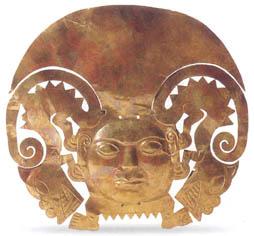
The sophisticated culture of the Moche produced art expressing their daily lives with detailed scenes of ceremonies. The Moche have accomplished artists and metal workers, using gold for headdresses (5.32), chest plates and icons, a gold whistle (5.33) representing a warrior, and inlaid with turquoise. Clay portrait vessels (5.34) were made in molds and decorated with reds and cream colors to resemble a warrior or other figure.


This page titled 5.8: Moche (100 CE – 800 CE) was last modified on Thu, 26 Dec 2024 20:24:55 GMT and is shared under a CC BY 4.0 license and was authored, remixed, and/or curated by Laura Kramer.
The book could not be loaded just now.