Opening the book…
Many of your professors will expect you to use academic research databases for research papers in college. Getting used to doing research in an academic database can be challenging, especially if you have only used Google for research. Becoming familiar with the way that research databases work can take some time. However, with some understanding of what academic research databases can do for you, and with some practice and tinkering around, you will soon be more comfortable doing your research in these databases instead of Google.
The guidelines offered in the videos below offer basic but important information about using research databases effectively. While the content on the rest of this page applies most specifically to Academic Search Complete (also called EBSCO), the tips are relevant to any research database.
How Can You Use an Academic Research Database Effectively?
- Avoid typing your whole research question into the search field. Use only keywords, in various combinations
- Use several keywords at once, and be willing to change each word for a synonym if you hit a dead end with one set of words
- Use “AND” or “OR” to retrieve more results or to limit your results
- Use the database’s own Subject Terms to help you to refine your searches within that database
The video below explains what doing all of those things means in a practical sense.
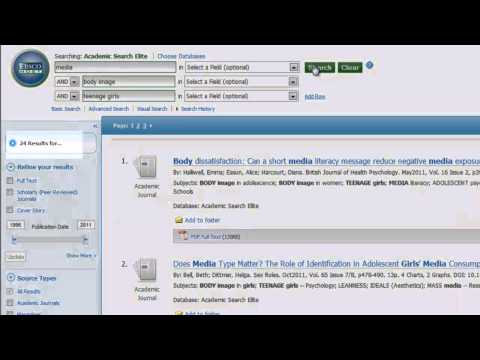
A YouTube element has been excluded from this version of the text. You can view it online here: https://pressbooks.ulib.csuohio.edu/csu-fyw-rhetoric/?p=50
What is Academic Search Complete?
Academic Search Complete is one of the more user-friendly databases for conducting college research. It is a great “starter” database for several reasons. In Academic Search Complete, you can find popular articles from some of the more credible newspapers and magazines. You can also locate scholarly articles from a variety of academic disciplines. Academic Search Complete provides a wide array of information on a range of topics, and chances are that you will find something useful for your project there.
When you realize how many filters you can apply to your search query so that you only get certain types of information, you will see how valuable this database (or database researching in general) can be.
The video below offers a quick overview of how you can use Academic Search Complete to
- Limit your search results to only get peer reviewed (scholarly) articles
- Limit your search results to get articles that are accessible via download
- Refine your searches so that you get the information most relevant to your research project
- Refine your search to specific dates so that only articles from a certain time period are found
- Access articles that you find
- Locate article abstracts
- Find subject terms and understand how they can be useful to your research strategy
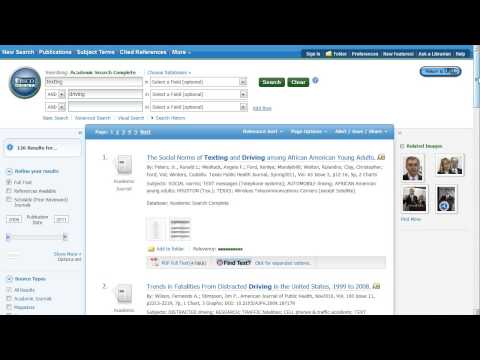
A YouTube element has been excluded from this version of the text. You can view it online here: https://pressbooks.ulib.csuohio.edu/csu-fyw-rhetoric/?p=50
A Note about Google Scholar vs Academic Search Complete
Many students report using and liking Google Scholar. If Google Scholar works for you – and it certainly can work well – then by all means continue to use it along with Academic Search Complete. What may happen, however, is that while you can find article titles via Google Scholar searches, you may not get access to the full article because you do not have a paid subscription to the journal in which the article is published.
Academic Search Complete, and the many, many other academic research databases that can be accessed from the university library “Research Databases” page, will give you access to most articles. If you find a title via Google Scholar that you cannot access, try to find it in Academic Search Complete or another database.
This page titled 8.4: Basic Guidelines for Research in Academic Databases was last modified on Sun, 24 Aug 2025 16:49:07 GMT and is shared under a CC BY-NC-SA license and was authored, remixed, and/or curated by Melanie Gagich and Emilie Zickel via source content that was edited to the style and standards of the LibreTexts platform.
The book could not be loaded just now.