Opening the book…
NMR is used to help identify the product of nearly every reaction run in the laboratory. For example, we said in Section 8.5 that hydroboration–oxidation of alkenes occurs with non-Markovnikov regiochemistry to yield the less highly substituted alcohol. With the help of NMR, we can now prove this statement.
Does hydroboration–oxidation of methylenecyclohexane yield cyclohexylmethanol or 1-methylcyclohexanol?
The 1H NMR spectrum of the reaction product is shown in Figure \(\PageIndex{1}\)a. The spectrum shows a two-proton peak at 3.40 δ, indicating that the product has a –CH2– group bonded to an electronegative oxygen atom (–CH2OH). Furthermore, the spectrum shows no large three-proton singlet absorption near 1 δ, where we would expect the signal of a quaternary –CH3 group to appear. (Figure \(\PageIndex{1}\)b) gives the spectrum of 1-methylcyclohexanol, the alternative product.) Thus, it’s clear that cyclohexylmethanol is the reaction product.
Exercise
How could you use 1H NMR to determine the regiochemistry of electrophilic addition to alkenes? For example, does addition of HCl to 1-methylcyclohexene yield 1-chloro-1-methylcyclohexane or 1-chloro-2-methylcyclohexane?
- Answer
-
1-Chloro-1-methylcyclohexane has a singlet methyl absorption.
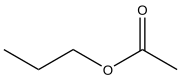
Determine the structure for the unknown molecule with the molecular formula of C5H10O2.
1H NMR: The ratio of protons is 2:3:2:3. J = 7 Hz for all coupling.

- Answer
-
Determine the structure for the unknown molecule with the molecular formula of C5H10O2.
1H NMR: The ratio of protons is 1:1:1:1:3:3. The peak at 9.5 ppm is a singlet. The peak at 2.41 ppm is sextet (J = 7 Hz). The peak at 1.72 ppm is a multiplet (J = 7Hz, 25 Hz). The peak at 1.53 ppm is a multiplet (J = 7 Hz, 25 Hz). The peak at 1.20ppm is a doublet (J = 7 Hz). The peak at 0.95 ppm is a triplet (J = 7 Hz).

- Answer
-

Note: The -CH2- protons are diastereotopic, so they show up differently in 1H NMR spectra.
Determine the structure for the unknown molecule with the molecular formula of C10H12O2.
1H NMR: The ratio of protons is 5:1:3:3. The peak at 7.5 ppm is a multiplet. The peak at 3.70 ppm is a quartet (J = 7 Hz). The peak at 3.58 ppm is a singlet. The peak at 1.48 ppm is a doublet (J = 7 Hz).

- Answer
-

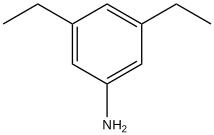
Determine the structure for the unknown molecule with the molecular formula of C10H15N.
1H NMR: The ratio of protons is 1:2:2:4:6. The peak at 7.3 ppm is a triplet (J = 2Hz) and the peak at 6.24 ppm is a doublet (J = 2 Hz).

- Answer
-
Determine the structure for the unknown molecule with the molecular formula of C7H14O.
1H NMR: The ratio of protons is 1:3:2:3:2:3. The peak at 4.36 ppm is a triplet of quartets (J = 17 Hz and 7Hz). The peak at 3.37 ppm is a singlet. The peak at 2.04 ppm is a doublet of triplets (J = 17 Hz and 7Hz). The peak at 1.56 ppm is a doublet (J = 7 Hz). The peak at 1.48 ppm is a sextet (J = 7 Hz). The peak at 0.85 ppm is a triplet (J = 7 Hz).

- Answer
-

This page titled 14.8: Uses of ¹H NMR Spectroscopy was last modified on Thu, 21 May 2026 19:46:05 GMT and is shared under a CC BY-NC-SA 4.0 license and was authored, remixed, and/or curated by Sol Parajon Puenzo (Cañada College) via source content that was edited to the style and standards of the LibreTexts platform.
The book could not be loaded just now.