32.4.14: Chapter 15

Organic Chemistry · LibreTexts

0%

Contents

    Text

    Size
    100%
    Theme
    Typeface
    Line length
    Spacing

    Read aloud

    How

    Speed: 1×
    Light up
    Highlight

    Symbols: Mulberry Symbols, © 2018–2026 Steve Lee, CC BY-SA 4.0 (licence, the set), the site's own copies.

    From LibreTexts, under CC BY-NC-SA 4.0, as the source states it; its equations are written in TeX, which the PDF shows typeset. This page at LibreTexts.

    32.4.14: Chapter 15
    Problem 15-1
    (a) Meta
    (b) Para
    (c) Ortho
    Problem 15-2
    (a) m-Bromochlorobenzene
    (b) (3-Methylbutyl)benzene
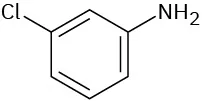
    (c) p-Bromoaniline
    (d) 2,5-Dichlorotoluene
    (e) 1-Ethyl-2,4-dinitrobenzene
    (f) 1,2,3,5-Tetramethylbenzene
    Problem 15-3
    (a) In a benzene ring, C 1 and C 4 are bonded to a bromine atom and a chlorine atom, respectively.
    (b) In a benzene ring, C 1 and C 4 are bonded to a bromine atom and a methyl group, respectively.
    (c) In a benzene ring, C 1 and C 3 are bonded to an amine group and a chlorine atom, respectively.
    (d) In a benzene ring, C 1 is bonded to a chlorine atom. C 3 and C 5 are each bonded to a methyl group.
    Problem 15-4

    Pyridine has an aromatic sextet of electrons.

    Pyridine has three lobes around nitrogen. One lobe has an unpaired electron and one lobe has a lone pair of electrons. Upper lobe of each carbon has an unpaired electron.
    Problem 15-5 Cyclodecapentaene is not flat because of steric interactions.
    Problem 15-6 All C – C bonds are equivalent; one resonance line in both 1H and 13C NMR spectra.
    Problem 15-7 The cyclooctatetraenyl dianion is aromatic (ten π electrons) and flat.
    Problem 15-8 The energy levels of the cyclopentadienyl cation show two unpaired electrons. That of the radical shows one unpaired electron, and the anion does not have any unpaired electrons.
    Problem 15-9 The orbital representation of furan shows an oxygen atom with three lobes. Two of the lobes each carry a lone pair. Upper lobe of each carbon carries an unpaired electron.
    Problem 15-10

    The thiazolium ring has six π electrons.

    The orbital representation of thiazolium ring shows two lobes around sulfur each with a lone pair and upper lobes of the remaining atoms of the ring each with an unpaired electron.
    Problem 15-11

    Yes, it's aromatic.

    Two resonance structures of azulene, separated by a double-headed arrow.
    Problem 15-12 The three nitrogens in double bonds each contribute one; the remaining nitrogen contributes two.

    This page titled 32.4.14: Chapter 15 was last modified on Thu, 09 May 2024 14:47:52 GMT and is shared under a CC BY-NC-SA 4.0 license and was authored, remixed, and/or curated by OpenStax via source content that was edited to the style and standards of the LibreTexts platform.