Opening the book…
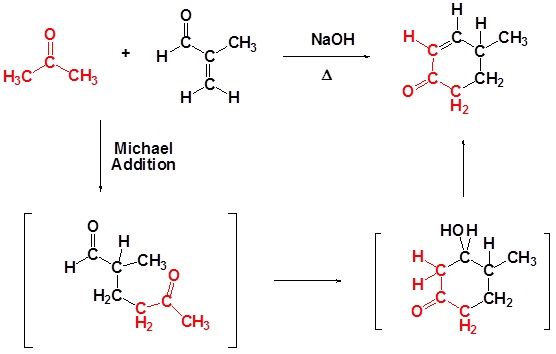
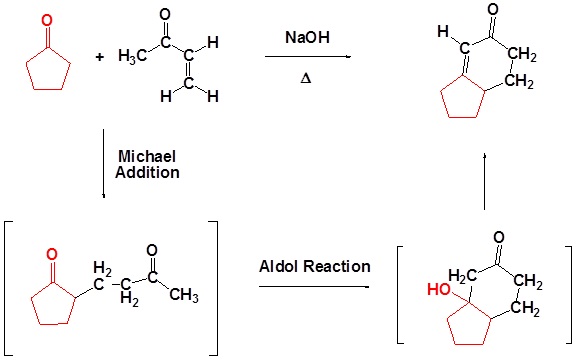
Many times the product of a Michael addition produces a dicarbonyl which can then undergo an intramolecular aldol reaction. These two processes together in one reaction creates two new carbon-carbon bonds and also creates a ring. Ring-forming reactions are called annulations after the Latin work for ring annulus. The reaction is named after English chemist Sir Robert Robinson (1886-1975) who developed it. He received the Nobel prize in chemistry in 1947. Remember that during annulations five and six membered rings are preferred.
Examples of Robinson Annulations
Contributors
- Prof. Steven Farmer (Sonoma State University)
22.9: The Robinson Annulation is shared under a CC BY-NC-SA 4.0 license and was authored, remixed, and/or curated by LibreTexts.
The book could not be loaded just now.