Opening the book…
After you have completed Chapter 8, you should be able to
- fulfill all of the detailed objectives listed under each section.
- design a relatively simple, multistep synthesis using the reactions introduced in this chapter, given the structure, name, or both, of the starting material and product. For example, show how you would convert 1-bromobutane to
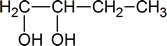
- deduce the structures of a number of compounds involved in a certain reaction sequence, given sufficient information. In other words, solve so-called road-map problems.
- define, and use in context, the key terms introduced in this chapter.
As you have seen, addition reactions dominate the chemistry of alkenes. This chapter shows how a variety of reagents can add to alkenes; how hydrogen bromide can be made to add to alkenes in a non-Markovnikov manner; and how alkene molecules can be cleaved into easily identifiable parts. First, you will examine the preparation of alkenes by elimination reactions.
8: Alkenes- Reactions and Synthesis is shared under a CC BY-NC-SA 4.0 license and was authored, remixed, and/or curated by LibreTexts.
The book could not be loaded just now.