Opening the book…
Chromatography is a technique used to separate the components of a mixture. It can be used as an analytical technique to gain information about what is present in a mixture, or as a purification technique to separate and collect the components of a mixture. Chromatography in the organic chemistry laboratory can be classified into several broad categories:
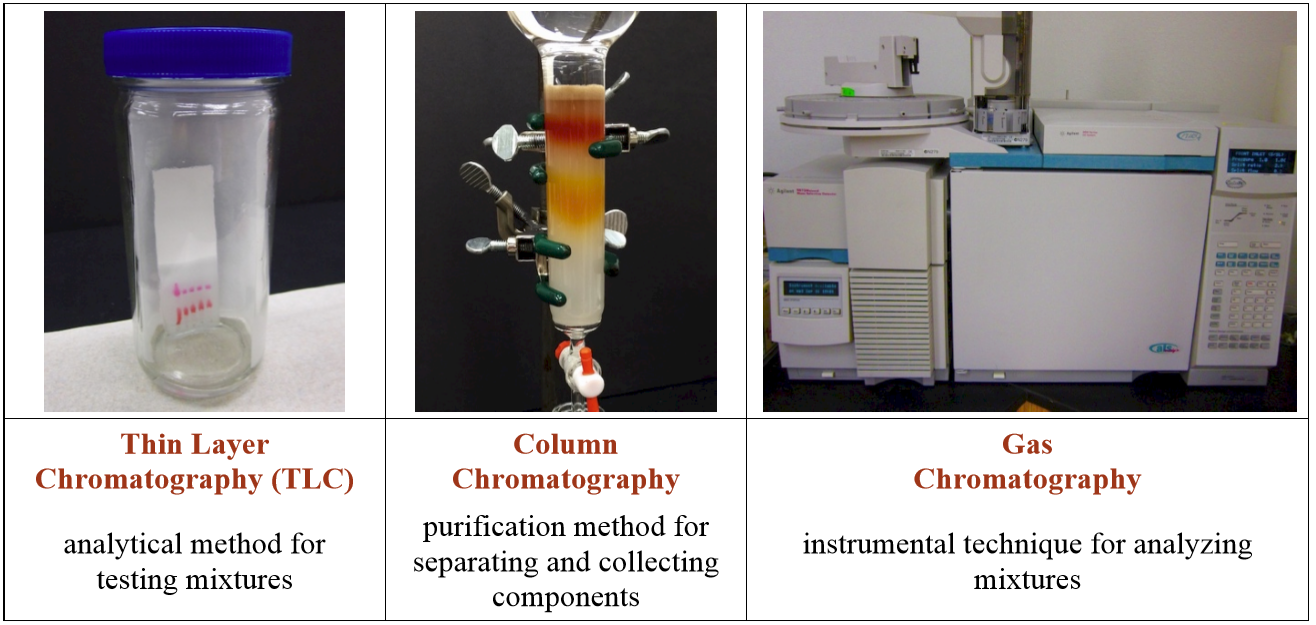
Table 2.1: Variations of chromatography.
These techniques follow the same general principles in terms of how they are able to separate mixtures, and so will be discussed collectively in this section. Details specific to each technique will then be further discussed in their own sections.
- 2.2A: Overview of Chromatography
- The first uses of chromatography involved separating the colored components of plants in the early 1900's. The pigments in a plant can be separated into yellow, orange, and green colors (xanthophylls, carotenes and chlorophylls respectively) through this method. The Greek name for color is chroma, and graphein is 'to write,' so chromatography can be thought of as "color writing."
- 2.2B: General Separation Theory
- In all chromatographic methods, a sample is first applied onto a stationary material that either absorbs or adsorbs the sample: adsorption is when molecules or ions in a sample adhere to a surface, while absorption is when the sample particles penetrate into the interior of another material.
This page titled 2.2: Chromatography Generalities was last modified on Tue, 11 Aug 2020 09:35:27 GMT and is shared under a CC BY-NC-ND license and was authored, remixed, and/or curated by Lisa Nichols via source content that was edited to the style and standards of the LibreTexts platform.
The book could not be loaded just now.