Opening the book…
Nucleophilic Addition
question \(\PageIndex{1}\)
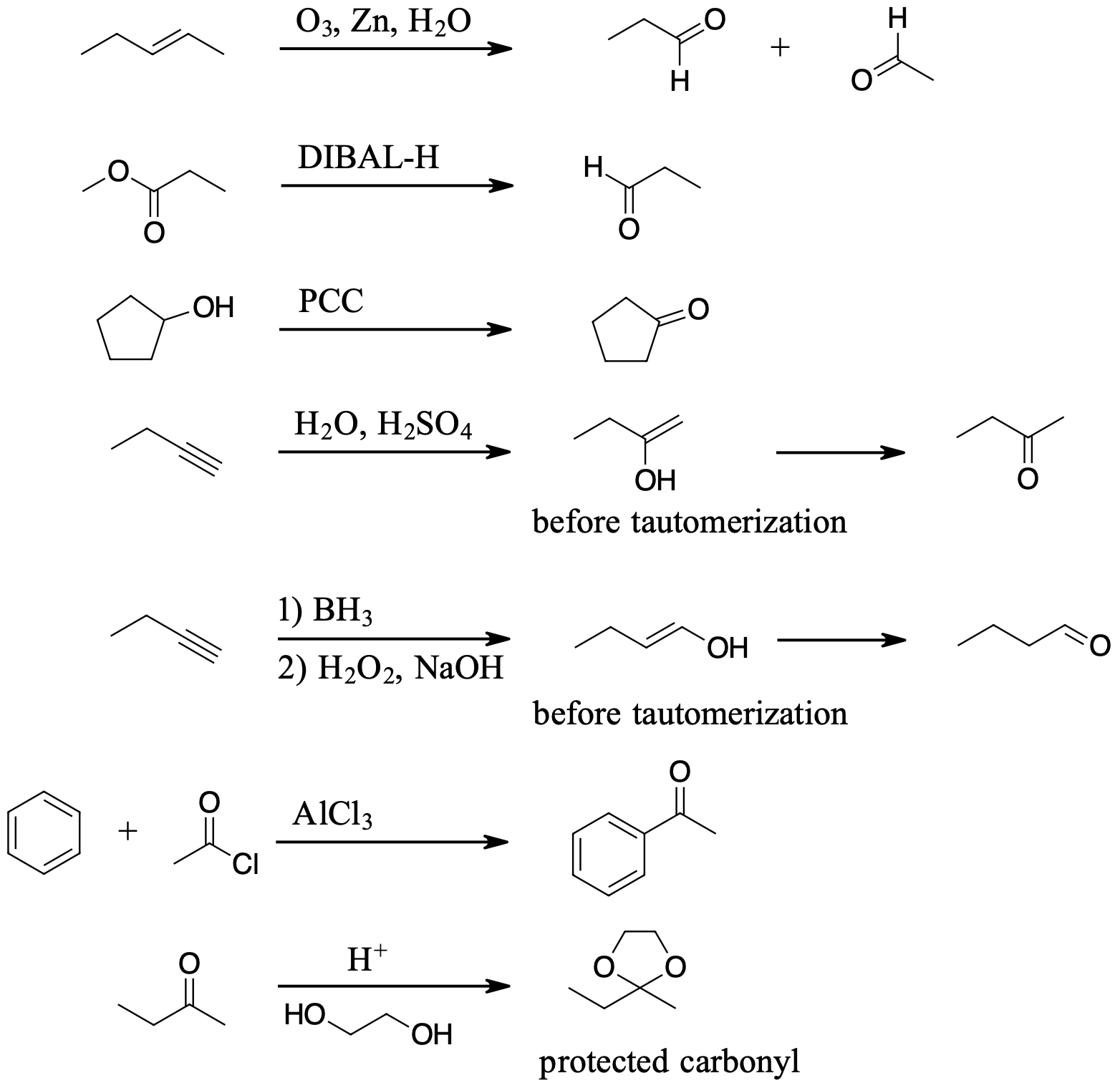
Determine products of the following reactions

- Answer
-
The products are shown below

Question \(\PageIndex{2}\)
Draw the likely mechanism for the following reaction

- Answer
-


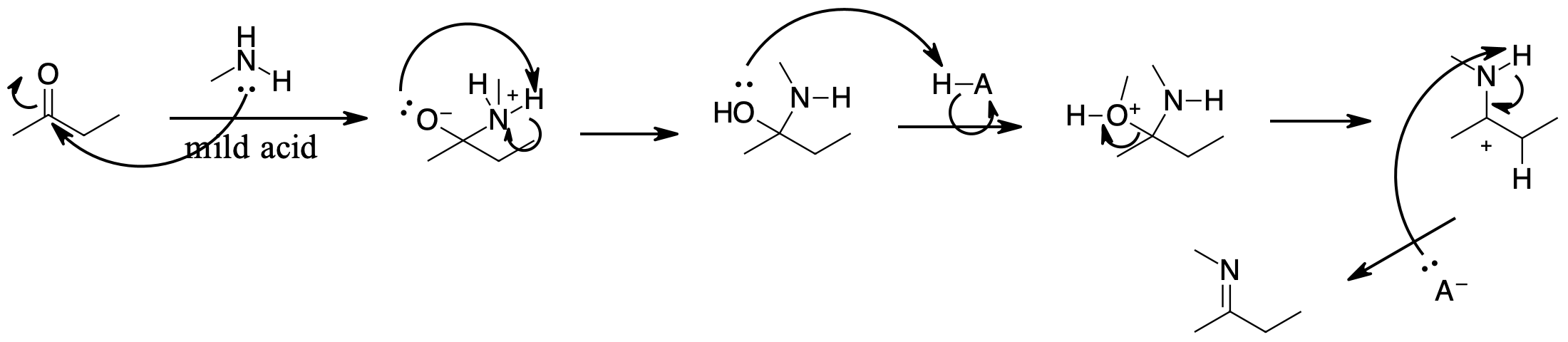
question \(\PageIndex{3}\)
Draw the likely mechanism for the following reaction

- Answer
-

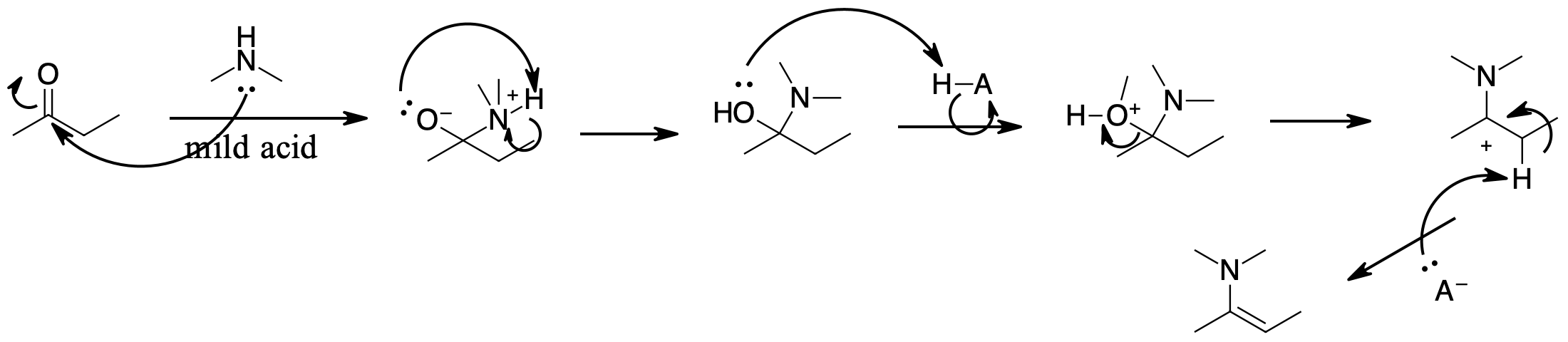
question \(\PageIndex{4}\)
Draw the likely mechanism for the following reaction

- Answer
-

Exercise \(\PageIndex{5}\)
Show in multiple steps how the following synthesis could be carried out.

- Answer
-
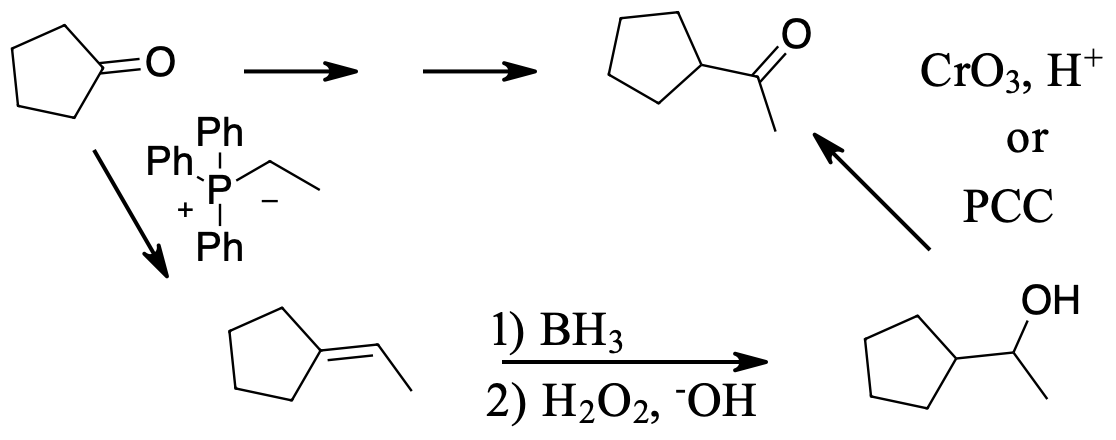
A Wittig reaction can convert the ketone into the alkene while adding two carbons. Hydroboration oxidation will oxidize the less substituted end of the alkene to an alcohol. Finally chromium oxidation with either chromic acid or pyridinium chlorochromate will oxidize the alcohol to the product ketone.

Contributors
- Layne Morsch (University of Illinois Springfield)
This page titled Chapter 21q: Practice Quiz was last modified on Thu, 27 Feb 2020 16:13:30 GMT and is shared under a not declared license and was authored, remixed, and/or curated by Layne Morsch.
The book could not be loaded just now.