Opening the book…
IR Spectra
The carbonyl stretching vibration band C=O of saturated aliphatic ketones appears:
- C=O stretch - aliphatic ketones 1715 cm-1
- ?, ?-unsaturated ketones 1685-1666 cm-1
Figure 8. shows the spectrum of 2-butanone. This is a saturated ketone, and the C=O band appears at 1715.
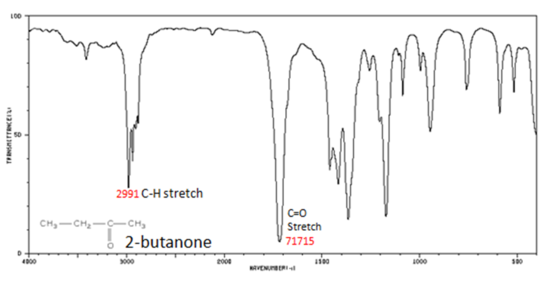
Figure 8. Infrared Spectrum of 2-Butanone
If a compound is suspected to be an aldehyde, a peak always appears around 2720 cm-1 which often appears as a shoulder-type peak just to the right of the alkyl C–H stretches.
- H–C=O stretch 2830-2695 cm-1
- C=O stretch:
- aliphatic aldehydes 1740-1720 cm-1
- alpha, beta-unsaturated aldehydes 1710-1685 cm-1
Figure 9. shows the spectrum of butyraldehyde.
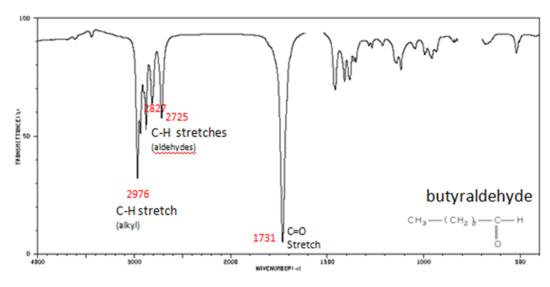
Figure 9. Infrared Spectrum of Butyraldehyde
NMR Spectra
Hydrogens attached to carbon adjacent to the sp2 hybridized carbon in aldehydes and ketones usually show up 2.0-2.5 ppm.
.
Aldehyde hydrogens are highly deshielded and appear far downfield as 9-10 ppm.
Example
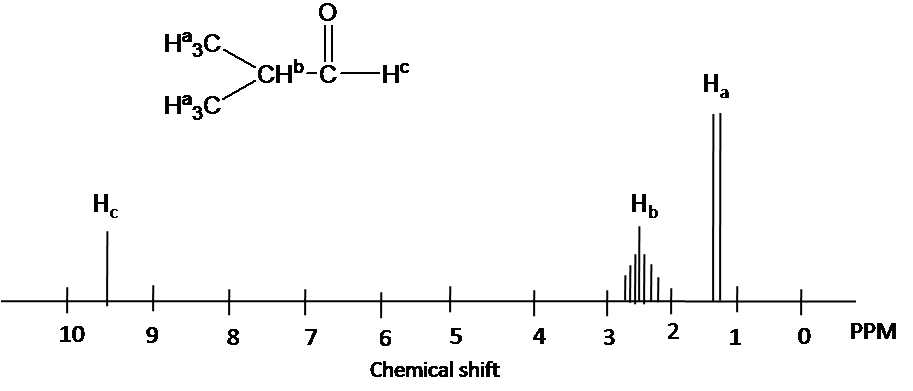
Chemical shift of each protons is predicted by 1H chemical shift ranges (Ha): chemical shift of methyl groups (1.1 ppm). (Hb) The chemical shift of the -CH- group move downfield due to effect an adjacent aldehyde group: (2.4 ppm). The chemical shift of aldehyde hydrogen is highly deshielded (9.6 ppm).
4) Splitting pattern is determined by (N+1) rule: Ha is split into two peaks by Hb(#of proton=1). Hb has the septet pattern by Ha (#of proton=6). Hc has one peak.(Note that Hc has doublet pattern by Hb due to vicinal proton-proton coupling.)
Contributors
William Reusch, Professor Emeritus (Michigan State U.), Virtual Textbook of Organic Chemistry
Prof. Steven Farmer (Sonoma State University)
This page titled 21.4: Spectroscopic Properties was last modified on Wed, 05 Jun 2019 18:45:43 GMT and is shared under a CC BY-NC-SA 4.0 license and was authored, remixed, and/or curated by Layne Morsch.
The book could not be loaded just now.