Opening the book…
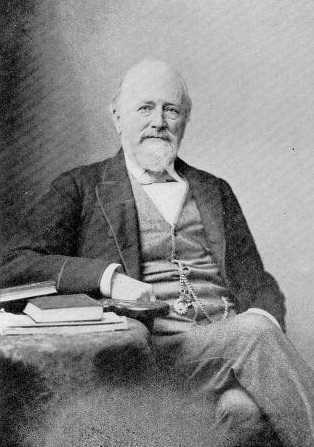
The first dialkyl zinc derivatives, Me2Zn and Et2Zn, were prepared in 1848 by Edward Franklin. He also prepared the monoalkyl derivatives, RZnX.
Initially alkyl zinc compounds were used in organic synthesis, however, their use diminished significantly once Grignard reagents had been discovered. Little further was investigated of their chemistry until their use in the growth of electronic materials developed in the 1980’s.
RZnX
The monoalkyl derivatives are not widely used, but were historically the first to be prepared (Equation 5.3.1).
\[ \text{RX + Zn} \rightarrow \text{RZnX}\]
While the iodide derivatives can be isolated as unsolvated derivatives, the chloride and bromides need to be prepared in the presence of dimethylformamide (DMF) or dimethyl sulfoxide (DMSO). Alternative methods of synthesis involve the reaction with a Grignard reagent, (Equation 5.3.2), or electrochemical synthesis with a zinc electrode.
\[ \text{ZnX}_3 \text{ + RMgX} \rightarrow \text{RZnX + MgX}_2\]
In the solid state RZnI exists as cage oligomers or polymeric chain structures. These structures are broken by the addition of strong Lewis bases to form Lewis acid-base complexes. In solution there exists a Schlenk equilibrium (equation 5.3.3) whose presence has been determined by IR and Raman spectroscopy (Table \(\PageIndex{1}\)).
\[ \text{RZnI} \leftrightharpoons \text{R}_2\text{Zn + ZnI}_2 \]
| Stretch | IR (cm-1) | Raman (cm-1) |
|---|---|---|
| symmetric C-Zn-C | Not observed | 477 |
| asymmetric C-Zn-C | 551 | Not observed |
| C-Zn-I | 510 | 510 |
Table \(\PageIndex{1}\): IR and Raman spectroscopic characterization of the components of the Schlenk equilibrium,
R2Zn
Dialkyl zinc compounds are prepared via the monoalkyl derivatives (Equation 5.3.4). The Schlenk equilibrium is shifted at high temperatures by the distillation of the volatile R2Zn derivative. The zinc is usually alloyed with copper (10%) to improve the reaction rate.
\[ \text{2 Zn + 2 RX} \rightarrow \text{2 RZnX} \xleftrightarrow{\Delta} \text{R}_2\text{Zn + 2 MgX}_2 \]
Alternative preparation methods include the reaction of ZnX2 with a Grignard (Equation 5.3.5) or by metal-metal exchange (Equation 5.3.6).
\[ \text{2 RMgX + ZnX}_2 \rightarrow \text{R}_2\text{Zn + 2 MgX}_2\]
\[ \text{R}_2\text{Hg + Zn} \rightarrow \text{Hg + R}_2\text{Zn}\]
Bibliography
- E. von Frankland. Justus Liebigs Ann. Chem., 1849, 71, 171.
- J. J. Habeeb, A. Osman, and D. G. Tuck. J. Organomet. Chem., 1980, 185, 117
This page titled 5.3: Organometallic Chemistry of Zinc was last modified on Tue, 08 Sep 2020 08:51:36 GMT and is shared under a CC BY 3.0 license and was authored, remixed, and/or curated by Andrew R. Barron (CNX) via source content that was edited to the style and standards of the LibreTexts platform.
The book could not be loaded just now.