Opening the book…
The water demand by a plant can vary depending on the growth stage of the plant. A newly germinated plant is small and has a relatively low water demand as compared to the same plant weeks later as it undergoes vigorous growth. New flushes of leaves or flowers, or engorgement of fruit can dramatically increase the water demand. For deciduous perennial plants, the springtime flush of new leaves creates a heavy demand for water. To help meet this demand tree will produce larger diameter vessel elements - transport cells in the xylem. As the need drops off in late spring/summer the diameter of the vessel element decreases (Figure 6-17).

Daily changes in the weather can change the water needs of a plant. You might think that a hot, still day would create the highest water demand. Not necessarily true. The slight breeze that may feel good to us on a warm day can strongly impact water demand. Under still conditions, the water vapor leaving the plant stays close to the leaf. This effectively humidifies the air boundary adjacent to the plant. With the adjacent air humidified, water evaporates from the leaf more slowly. Even a moderate breeze will strip this humid boundary away from the leaf, leaving the dryer air that leads to higher evaporation rates. And remember, the reason for most water loss is the need for gases exchange to keep photosynthesis going. So, on heavy overcast days, plants are more likely to hold onto water than lose it to when low photosynthetic efficiency is likely.
If water demand is not met, plants will close their stomata pores and sacrifice photosynthetic efficiency in favor of water efficiency. If water loss continues to outstrip uptake, plants will wilt as water loss impacts rigidity of herbaceous plants. Plants can recover if water is supplied prior to the plant reaching a stage referred to as permanent wilt. Once permanent wilt is reached, no amount of water will stimulate recovery. Wilt is less visible in woody plants where the ridged xylem maintains the support not hydrostatic pressure. However, loss of water will take its toll on large trees even when leaves look normal. Large branches can break without warning due to large cavitation (breaking of the water columns within the xylem transport cells).
Water pressure (turgor pressure) powers cell expansion (Figure 6-18). Following cell division, animal cells must manufacture cytoplasm to increase in size. Plant cells increase to their “adult” size with the addition of water into the central vacuole. The cellulose microfibrils of the plant cell wall restricts the enlargement of the cell along a single axis. From the experiment shown in Figure 6-18, you can see that the bead placed on the surface of the cells are further apart following a period of growth. The growth is accompanied by a nastic movement – a non-directional response to stimuli – that results in a slight twisting of the stem during cell expansion.

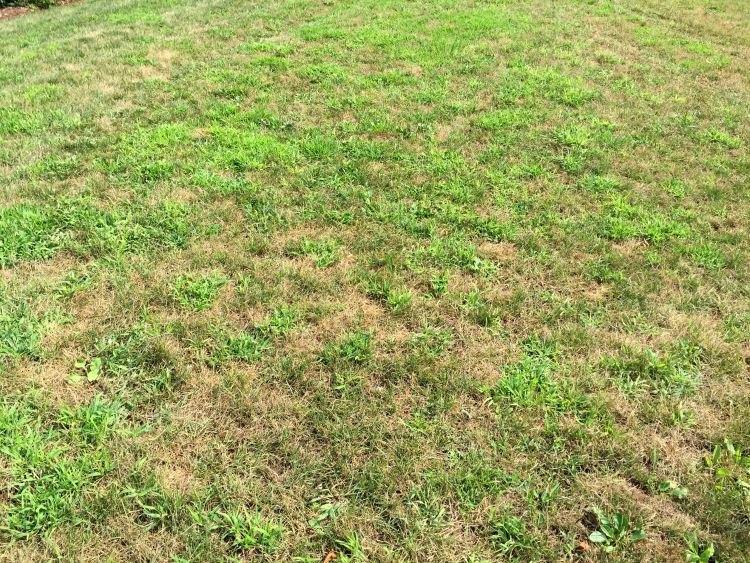
For crops, the water need can vary with developmental stage, crop type and even by cultivar. Some crops inherently need more water than others. In Figure 6-19, crabgrass is surviving drought condition while other grasses fail. Crops such as rice and sugarcane need more water than crops like beans and wheat. However, modern techniques such as creation of genetically modified cultivars may lessen the differences.
This page titled 6.3.2: Shifting Needs was last modified on Fri, 13 Nov 2026 18:38:00 GMT and is shared under a CC BY-NC-SA 4.0 license and was authored, remixed, and/or curated by Stephanie Harvey.
The book could not be loaded just now.