Opening the book…
There are two main types of hydroponic systems: liquid systems which use no medium, and aggregate systems which use an inert medium to provide mechanical support. Common media include perlite, vermiculite, coco coir, gravel, sand, peat, and sawdust. These media help buffer the plant roots from dramatic shifts in pH and nutrient concentrations in the solution. The inert media provide anchorage and moisture retention while allowing oxygen diffusion to the roots. Systems can also be categorized as either open systems or closed systems. In open systems, once the nutrient solution is delivered to the plant roots, it is not reused. In closed system, surplus nutrient solution is recovered, recycled, and periodically replenished.
Bag culture is a type of aggregated hydroponics that uses a plastic bag or sack as the growing container (Figure 10-13). The bag is filled with an inert porous growing medium like perlite, vermiculite, coconut coir, pine bark or even shredded Styrofoam. The nutrient solution is delivered into the bag and allowed to wick through the medium to the plant roots.

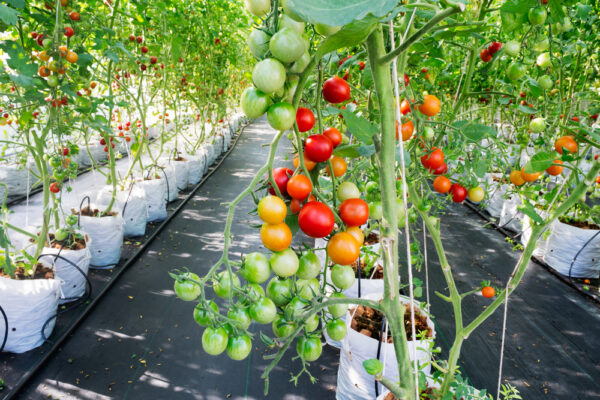
There are several advantages to bag culture hydroponics. The bags are lightweight compared to other containers, making handling and transport simpler. The bags allow the entire root system to be moved. Plants can be shifted to follow the sunlight, to adjust spacing with growth or for pest/disease control. Bags come in a range of sizes from 1 gallon to over 100 gallons to fit different horticultural needs. These plastic bags are an inexpensive container option compared to pots or troughs. The medium can be reused too. Aeration is critical for root health. Depending on the medium used in the bag, this type of hydroponic can provide good aeration. For plant that do not handle “wet feet” (root submerged in water), this is a viable technique. With readily available nutrients, algae growth can be a problem in hydroponic system. The opaque bags prevent light from reaching the nutrient solution, inhibiting algae growth.
Bag culture systems require good drainage holes at the bottom of the bags. Drip irrigation or periodic flooding/drainage works well for wetting the medium. While other materials can be used for bags, the plastic helps retain moisture between irrigations and can withstand repeated wetting and pressure from the root ball. Since the nutrients are not recycled, less monitoring of the nutrient solution pH and electrical conductivity (EC) is needed. Each batch is freshly mixed so there is no concern of depletion. Overall, bag culture offers a flexible, low-tech, low-cost hydroponic method suitable for small and large-scale producers.
Deep water culture (DWC) is one of the most popular hydroponic techniques used by home and commercial growers. Also known as the reservoir method, DWC is a liquid, closed system that involves suspending plant roots directly into a container of oxygenated nutrient solution (Figure 10-14).

The central component of DWC systems is the reservoir, which is filled with the nutrient solution. Common containers used include plastic buckets, tubs, or trays of various dimensions. The reservoir should be opaque to block light and reduce algae growth. Plant pots or slots for net pots (net pots are containers pre-punched with small slits all over the sides and bottom) are incorporated in the reservoir lid or cover. This allows the roots to be submerged in the nutrient solution below while the shoot system is supported above. Clay pebbles, perlite, or vermiculite can be used as medium in the net pots (if so, system it technically aggregate).
A key aspect of DWC is oxygenation of the nutrients. One or more air pumps continuously provide air flow through air stones placed at the bottom of the reservoir. The rising bubbles oxygenate the solution and create circulation, providing excellent conditions for root development. The water level is maintained within a suitable range by adding fresh nutrient solution, normally on a weekly basis. The old solution can be drained and refreshed to avoid excessive salt buildup. The pH and EC (dissolved salts) of the solution must be monitored to ensure the nutrients remain optimal.
With direct root immersion and oxygenation, DWC allows rapid growth rates. The system facilitates easy root inspection and maintenance. Drawbacks include increased disease risk if hygiene is not maintained. Additionally, plants are sensitive to “wet feet” preform poorly in this system.
This page titled 10.3.1: Bag and Deep Water Culture was last modified on Sat, 14 Nov 2026 17:56:33 GMT and is shared under a CC BY-NC-SA 4.0 license and was authored, remixed, and/or curated by Stephanie Harvey.
The book could not be loaded just now.