Opening the book…
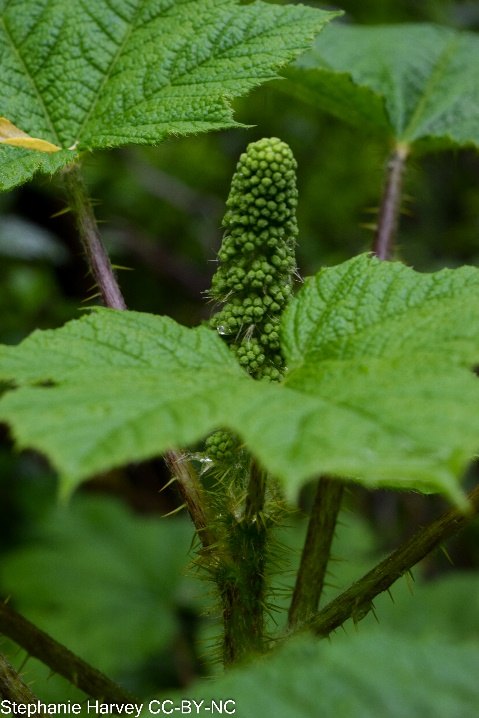
In plants, growth, development, and regulation is governed by hormones (Figure 4-27). Hormones are signal molecules that at extremely low concentrations illicit a response in a target tissue. Plant hormones – called phytohormones are slightly different than animal hormones in that the target tissue for plants can be the same tissue (tissue of origin) in which the hormone was produced. For Animal hormones the target tissue must be different from the tissue of origin.
This may seem like a dramatic change in focus, but it is these signaling molecules that regulate, and control, may of the processes we discuss earlier in this chapter.
Historically, there were five phytohormones: abscisic acid, auxin, cytokinins, ethylene and gibberellins. However, in recent years four more have been added to the list: brassinosteroids, jasmonates, salicylic acid and strigolactones.
Table 4-2 lists these nine phytohormones and their general activity. Please note that for most plant growth, development and regulations, there are multiple phytohormones involved and it is their relative concentration that effects change in the plant or plant tissue.
| Hormone class | Abbreviation | General activity |
|---|---|---|
| Abscisic acid | ABA | Growth inhibitor, drought responses |
| Auxins | IAA, IBA, IPA | Cell enlargement, bud formation and root initiation |
| Brassinosteroids | BR | Cell division and growth regulation (potential cancer treatment?) |
| Cytokinins | CK | Cell division and shoot formation |
| Ethylene | C2H4 | Fruit ripening; cell growth and cell shape |
| Gibberellins | GA | Promotes seed germination, internode elongation |
| Jasmonates | JA | Plant defense; seed germination |
| Salicylic acid | SA | Plant defense; response to abiotic stress |
| Strigolactones | SL | Promotes growth of mycorrhizal fungi; shoot branching |
Auxins
Auxins were the first of the major phytohormones discovered. This class of phytohormones was first described by Frits Went in the 1920’s although their effects were noted far earlier. In general, auxins are often described as juvenility hormones due to their roles in growth and development. There are a number of different forms of auxin (IAA, IBA, IPA). Auxin is present in all plant tissues. The concentration of auxin (relative to other phytohormones) at specific locations is critical to guiding plant development and response to the environment.
In terms of plant growth, auxins trigger cell elongation (particularly in combination with gibberellins) and cell division (if cytokinins are present). From a developmental standpoint, auxins are critical to the formation and organization of the vascular tissue (xylem and phloem) and are important in root initiation. They also induce shoot apical dominance which impact the architecture of the plant. They also play a role in fruit growth, development, and delays fruit senescence (dropping from the tree).
Auxins also turn up in other places. In Figure 4-28, the tumor-like growth as crown galls that have formed due to a bacterial pathogen (Agrobacterium tumefaciens). The bacteria excrete auxin and cytokinin in ratios that trigger cell division leading to the formation of these tumors. Another interesting place to find auxins is in herbicides. At high concentrations, auxins will kill plants. The herbicides 2,4-D and 2,4,5-T are synthetic auxins.

Gibberellins
Gibberellins (Gibberellic Acid or GAs) were first discovered in rice plants infected with fungi. The fungus produced exogenous GAs that induced the rice plants to grow extremely tall. The condition was called “foolish-seedling disease” because the plants grew so tall that when they produced seeds, they could not support the added weight and fell over. Similar compounds were discovered to naturally occur in plants and to induce stem elongation via internode elongation. GAs are involved in the natural process of breaking dormancy and other aspects of germination.
GA and GA inhibitors are used in multiple horticultural industries to control plant and fruit development. For example, GAs are applied to table grapes to trigger internode elongation within fruit cluster so that there is more room to produce larger grapes. Alternatively, many ornamental plants (like mums) are treated with GA inhibitors to prevent internode elongation. This creates tight, compact plants that are visually appealing (Figure 4-29). It is thought that the “green revolution” of the 1960 was due in part to selectively breed plants deficient in GAs and thus creating higher yielding cultivars.

Brassinosteroids
Brassinosteroids are a class of plant hormones that were first discovered in the 1970's by researchers studying plant growth. The first brassinosteroid identified was brassinolide, which was isolated from rapeseed pollen. Since their discovery, over 50 different brassinosteroids have been identified in plants. Since Brassinosteroids are found throughout the plant kingdom and are essential for normal plant growth and development, they were added eventually added to the list of phytohormones.
The key role of brassinosteroids is to regulate cell elongation and cell division. Brassinosteroids cause cells to elongate and divide, stimulating growth (Figure 4-30). They interact with other plant hormones like auxins and gibberellins to control developmental processes like germination, photomorphogenesis, and flowering. Brassinosteroids are especially important for stem elongation, vascular differentiation, and fruit development. Mutant plants unable to synthesize brassinosteroids show stunted growth and abnormal development. The application of brassinosteroids can rescue these defects, underscoring their significance as growth-promoting hormones in plants.

Cytokinins
Cytokinins are a class of plant hormones that promote cell division and were first discovered in the 1950's. The first cytokinin compound identified was kinetin, which was isolated from autoclaved herring sperm DNA. Since then, over 25 naturally occurring cytokinins have been found in plants. Cytokinins are synthesized in actively growing tissues like roots and shoots and can move to other parts of the plant.
The key functions of cytokinins include regulation of cell division and shoot initiation and growth. Cytokinins stimulate the formation and activity of shoot meristems, areas of cell division that enable plant growth. They also promote chloroplast development and delay leaf senescence. Cytokinins interact with other plant hormones like auxins to coordinate plant development. Some key developmental processes regulated by cytokinins include embryogenesis, apical dominance, root growth, and nutrient mobilization. Mutant plants with reduced cytokinin synthesis or signaling capacity exhibit stunted shoot growth and defects in vascular development. Exogenous application of cytokinins can restore normal growth, highlighting their essential role in plant growth and morphology. Recent research indicates they may also play a role in pathogen resistance.
Ethylene
Ethylene is an interesting phytohormone because it is a gas. At trace levels it stimulates/regulates ripening of fruits, opening of flowers and abscission of leaves. Ethylene is autocatalytic – that is, exposure to ethylene triggers (up-regulates) production of ethylene. This can be problematic in postharvest situations since ethylene is also produced in response to wounding. So, if a single apple is bruised or punctured during transport, it begins to produce high levels of ethylene which will trigger all the surrounding apples to produce ethylene thus speeding up their own ripening and eventual spoilage. This scenario is where the saying “one rotten apple can spoil the whole barrel” comes from.
Being able to control ethylene and thus the ripening process has made some fruits more marketable. For example, bananas can now be harvested when mature but not ripe, shipped in containers that scrub (absorb) ethylene released and then ripened by exposure to ethylene at their destination. In other fruits, it does not induce ripening but does cause de-greening. Most of our fresh market citrus is treated with ethylene to produce a nice, uniform orange color (Figure 4-31).

Abscisic Acid
Abscisic Acid (ABA) is important in several processes. It often works antagonistically to growth stimulating hormones like cytokinins, auxins and gibberellins. ABA (as its name suggests) was once thought to be involved in the abscission of plants organs (leaves, buds, fruits) but is now known that this is true in only a few plants. ABA induces dormancy in buds by slowing the growth of within the bud and forces the formation of bud scales that protect the delicate bud tissues throughout winter. Another winterizing effect is that ABA inhibits the cells of the vascular cambium from dividing. This helps the plant adjust to cold conditions by suspending primary and secondary growth.
ABA also inhibits seed germination and can prevent the loss of seed dormancy. The relative concentrations of the ABA to GA determines if the seed will break dormancy or not. In most cases, seed remain dormant while attached to the parent plant. In mangrove plants (Figure 4-32), a drop in ABA trigger seed germination early. This produces an elongated spike-like root. When the seed falls the spike sticks into the mud and prevents the seed/seedling from washing away with the tides.

In addition, ABA plays an important role in a plant’s response to environmental stresses such as drought, salinity, wounding, and extreme temperatures. Under water stress situations for example, ABA induces stomatal closure (overriding the blue-light signal to open them) and stimulated root production. This minimizes water loss and improves the plant’s ability to uptake water.
Jasmonates
Jasmonates (JA) are critical for plants defenses against herbivory. They, like ABA, also play a role in the plants’ ability to respond to biotic and abiotic stress. Some JA are volatiles organic compounds (VOCs). Released into the air in response to damage by a pathogen or herbivore, JA communicates the danger to adjacent plants. The adjacent at-risk plants are able to up-regulate their defense mechanisms.
Salicylic Acid
Salicylic Acid is involved in the system acquired resistance (SAR) seen in plants. SAR is often likened to the immune system seen in animals, although it lacks the specificity seen in our immune system. When a pathogen attacks part of a plant, salicylic acid is released and induces the production of special proteins and induces resistance to the pathogen in other parts of the plant. The signal can also move to nearby plants as salicylic acid is modified to a volatile form.
Strigolactones
Strigolactones are a new class of plant hormones that were first discovered in the 1960's during studies on seed germination. Strigolactones were originally isolated as germination stimulants for parasitic plant seeds. It was not until the 2000's that strigolactones were identified as a new class of plant hormones in plants. Since then, over 20 naturally occurring strigolactones have been found across the plant kingdom.
The primary role of strigolactones is to inhibit shoot branching. They suppress the growth of axillary buds, limiting the outgrowth of new shoots. This helps regulate above-ground architecture and branching patterns. Strigolactones also promote root growth and root hair elongation, enabling better nutrient scavenging. They interact with other plant hormones like auxins and cytokinins to control plant development. Mutant plants unable to synthesize strigolactones show excessive shoot branching and reduced root growth. Exogenous strigolactone application restores normal branching patterns, demonstrating the key growth regulatory effects of this hormone class in plants. Strigolactones also facilitate beneficial symbiotic associations between plant roots and mycorrhizal fungi.
Interactions
Early on in the study of phytohormones, scientists were looking for signal molecules that would control specific aspects of plant growth. Today, we know that plant responses, growth and development are typically under the control of several hormones. The developmental direction a tissue takes is determined by the ratio of multiple hormones. For example, in tissue culture the ratio auxin to cytokinin will determine if cells develop into shoots or roots.
In Figure 4-33, a purple coneflower (Echinacea purpurea) exhibits the condition of phyllody. This is a plant abnormality that occurs when leaf-like structures replace the floral organs. Phyllody is caused by a hormonal imbalance.

This page titled 4.4: Plant Hormones was last modified on Thu, 12 Nov 2026 21:26:19 GMT and is shared under a CC BY-NC-SA 4.0 license and was authored, remixed, and/or curated by .
The book could not be loaded just now.