Opening the book…
Bacteria are small, single-celled organism that reproduce through binary fission. They are prokaryotic cells and thus lack a nucleus or other membrane bound organelles. Most bacteria that are associated with plants are saprotrophic and do no harm to the plant itself. Some are beneficial to plant growth. However, a small number, around 100 known species, can cause disease. Phytopathogenic bacteria damage important food and fiber crops, resulting in major economic losses worldwide. Bacterial diseases are much more prevalent in subtropical and tropical regions of the world where warm temperatures allow them to flourish.
Phytopathogenic bacteria mainly enter plants through natural openings like stomata or wounds. Motility and high reproduction assist invasion and spread within plant tissues through the apoplast (the area between plant cells) of the plant and xylem. In order to be able to colonize the plant they have specific pathogenicity factors. Five main types of bacterial pathogenicity factors are known: uses of cell wall–degrading enzymes, toxins, effector proteins, phytohormones and exopolysaccharides. Enzymes like cellulases break down physical barriers. Toxins alter cell physiology or cause electrolyte leakage. Polysaccharides clog plant vascular tissues. Some bacteria inject effector proteins directly into plant cells to suppress defenses. For example, pathogens such as Erwinia species use cell wall–degrading enzymes to cause soft rot. Agrobacterium species change the level of auxins to cause tumors to form with phytohormones (Figure 11-28).
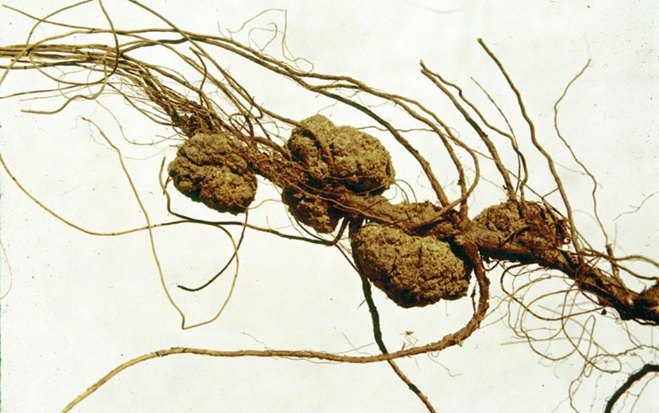
Bacterial diseases have characteristic symptoms like vascular wilts, soft rots, leaf spots, scabs, and galls or tumors. Wilts cause drooping, yellowing, and death as bacteria clog water-conducting xylem. Soft rots affect fruits, tubers, and fleshy tissues, turning them mushy and slimy through cell wall-degrading enzymes. Leaf spots, often with distinct zonation, expand as bacteria multiply in the intercellular spaces. Scabs form corky, rough lesions on roots, tubers, and stems. Galls or knot-like overgrowths result from cell hyperplasia induced by bacterial toxins and hormones.
There is extremely limited chemical control of bacterial pathogens in plants. Some copper-based sprays have been effective, but resistance bacteria have arisen. The best control for bacterial diseases is to minimize factors that favor bacterial growth. Environmental factors influence bacterial plant diseases. Most bacteria prefer environments with high humidity, so try to keep humidity levels lower (when possible), limit moisture sitting on leaves (don’t water late in the evening when water will sit on the leaves until then next day) and don’t crowd plants so that there is poor air circulation around the plants to prevent pockets of air with high humidity. Plants transplanted in the wrong size pot (or those that have grown too large for a pot) can favor bacterial growth due to poor drainage or inadequate water holding. Any of the numerous other factors that can induce plant stress can make more favorable conditions for bacterial growth including fluctuations of water or temperature, low light intensity, deficiency, or excess application of nitrogen. Tissue injuries from wind, hail, insects, or cultural practices provide entry points.
Best practices should reduce pathogen populations and avoiding infection conditions. Good sanitation removes inoculum sources. Avoiding injury minimizes infection opportunities. Controlling irrigation can limit spread of waterborne bacteria. Promoting plant health through balanced fertilization and soil management practices will minimize disease. Implementation of crop rotation and use of resistant cultivars disrupt disease cycles. Protective chemicals include antibiotics, bactericides, and copper compounds can be used when appropriate. An integrated program combining cultural, physical, biological, and chemical tactics is most effective for controlling bacterial diseases. Understanding the nature of bacteria, their mechanisms of infection, and interactions with plants is key for effective integrated management of bacterial plant diseases.
This page titled 11.3.2: Bacteria was last modified on Sat, 14 Nov 2026 18:16:22 GMT and is shared under a CC BY-NC-SA 4.0 license and was authored, remixed, and/or curated by Stephanie Harvey.
The book could not be loaded just now.