Opening the book…
Giardia lamblia
Resides: Proliferates within the small intestine
Transmission: Acquired by inadvertent ingestion of water contaminated with cysts
Disease: Causes Giardiasis (also known as beaver fever or traveler’s diarrhea)
Other Information:
- Freshwater flagellate
- Beavers, nutria, and other aquatic mammals are known to be asymptomatic carriers
- Protected by an outer shell - allows the parasite to survive for long periods of time outside of the body and is highly resistant to chlorination, may be found in public pools,
hot tubs, etc.


Source: Jerad M Gardner, MD , Wikimedia Commons, CC BY-SA 3.0,


Trichomonas vaginalis
Resides: Vagina and urethra of women; urethra, prostate, and seminal vesicles of men Transmission: Sexual intercourse (lack of cyst stage requires direct transmission)
Disease: Trichomoniasis (Females - vulvitis, vaginitis, cervicitis, salpingitis; Males - urethritis, prostatitis, epididymitis))
Other Information:
- Exists only in the trophozoite form
- Worldwide distribution
- May infect both males and females, but more common in females
- Most infections are asymptomatic or mild


Source: Alexander J. da Silva, PhD; Melanie Moser, CDC PHIL, Public Domain
Trypanosoma brucei
Resides: Blood
Transmission: Acquired through the bite of a tsetse fly
Disease: African sleeping sickness (African Trypanosomiasis)
Other Information:
- There are two variants of Trypanosoma brucei
- Trypanosoma brucei gambiense - occurs primarily in western Africa; cattle and sheep serve as reservoirs
- Trypanosoma brucei rhodesiense - occurs in eastern and southern Africa; several species of wild animals serve as reservoirs
- Patients with this infection generally lapse into a coma
- If left untreated is always fatal


Source: Zephyris, Wikimedia Commons, CC BY 4.0

Trypanosoma cruzi
Resides: Blood, thus the parasite is known as a hemoflagellate
Transmission: Acquired through the bite of
a Reduviid bug (also known as the “kissing bug”) Disease: Chaga’s disease
Other Information:
- Normally found in South and Central America
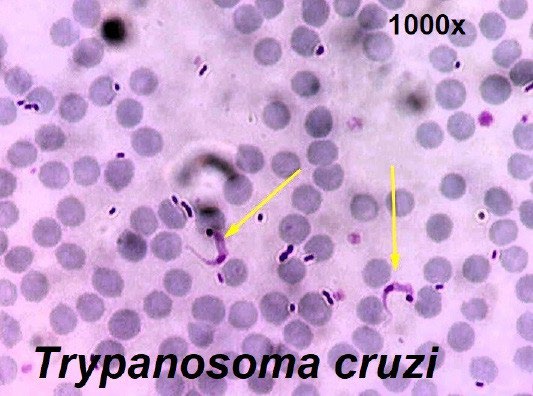

Source: Alexander J. da Silva, PhD; Melanie Moser, CDC PHIL, Public Domain
This page titled 6.2.3: Subphylum Mastigophora (Flagellates) was last modified on Sat, 25 Jul 2026 03:43:06 GMT and is shared under a CC BY 4.0 license and was authored, remixed, and/or curated by Sherry Smith.
The book could not be loaded just now.