Opening the book…
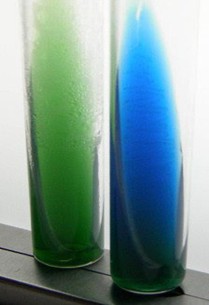
The citrate utilization test is performed in order to determine if a bacterium is able to use citrate as a sole source of carbon. Citrate (citric acid) can be transported into some bacterial cells that have the enzyme citrate permease. Such bacteria are capable of importing citrate into their cells and then convert the citrate to pyruvate to be utilized as a carbon source. The citrate test is performed using Simmons Citrate agar, which contains sodium citrate as the only carbon source in the media, ammonium phosphate as a nitrogen source, and bromothymol blue as a pH indicator. Bromothymol blue is green at pH 6.9 and blue at 7.6. Bacteria capable of using citrate as a source of carbon produce sodium carbonate. These organisms are also able to metabolize the ammonium salts present in the media converting them to the alkaline product ammonia. Both the sodium carbonate and ammonia raise the pH of the media resulting in a color change from green to blue, indicating that the bacteria can use citrate as a carbon source.
| Positive for Citrate Utilization | Negative for Citrate Utilization |
|---|---|
| Examples: Enterobacter aerogenes Klebsiella pneumoniae Salmonella typhimurium |
Examples: Escherichia coli Proteus vulgaris |

Materials Needed:
- Bunsen burner
- Inoculating needle
- Bacterial agar cultures (2 different species - instructor will provide names of species to be tested)
- Simmons Citrate Agar Slants (2 tubes)
- Test tube rack
This page titled 3.4.5: Citrate Test was last modified on Sat, 25 Jul 2026 03:42:59 GMT and is shared under a CC BY 4.0 license and was authored, remixed, and/or curated by Sherry Smith.
The book could not be loaded just now.