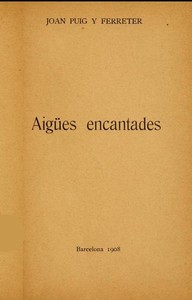
Aigües encantades
Human-made only is on in this browser, so Project Gutenberg's machine summaries are left out. Settings.
"Aigües encantades" by Joan Puig i Ferreter is a Catalan stage drama written in the early 20th century. Set in a mountain village gripped by drought, it pits religious tradition and sacred legends about “enchanted” waters against a modern, rational bid to capture and distribute that water. The central figures include the rebellious student-teacher Cecilia, her devout parents Pere Amat and Juliana, the wavering schoolmaster Vergés, the forceful priest Mossèn Gregori, and a persuasive outsider who promises practical salvation. The result is a charged portrait of faith, fear, progress, and community power. The opening of the play presents a tense home scene: while bells toll for a penitential procession, Cecilia rejects the village’s rites, sparring with Vergés and clashing bitterly with her authoritarian father and sorrowful mother. News spreads of a well-spoken foraster who claims the village can draw real water from the supposedly sacred pools, and Mossèn Gregori quietly prepares to neutralize him. A scandal erupts when Amat reports that Cecilia has publicly embraced the newcomer, hardening his resolve against her. In the next scene, at the shepherd Romanill’s courtyard, villagers gather; the batlle and Amat try to intimidate the host, but a crowd floods in as the outsider—an engineer—insists he brings peace and a practical plan, not an assault on belief. The people waver between curiosity and hostility as he begins to explain that the “enchanted” waters are living and accessible, and the confrontation remains unresolved as tensions crest.
AI-generated Summary written by Project Gutenberg, by machine.
- Language
- Catalan (Català)
- On Project Gutenberg since
- 17 December 2025
- Read in the last 30 days
- 336 times at Project Gutenberg